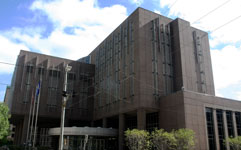
Hennepin County Jail
County Jail | Hennepin County — Minnesota | Adult Detention Center | Hennepin County Sheriff's Office
Hennepin County Jail is a minimum through maximum security correctional facility located in Minneapolis, Hennepin County County, Minnesota. Operating under the Minnesota Department of Corrections and led by Sheriff Richard W. Stanek, the jail operates two separate facilities in downtown Minneapolis: the City Hall location at 350 South 5th Street with a capacity of 509 inmates, and the Public Safety Facility at 401 South 4th Avenue with capacity for 330 inmates. Combined, these facilities house a total of 839 inmates and accommodate both male and female detainees across all security classifications, serving as the primary detention center for Hennepin County. Families can search criminal records to verify current incarceration status and access public records.
Families of those held at Hennepin County Jail can conduct a Hennepin County Jail inmate search to locate their loved ones, review Hennepin County Jail arrest records for booking information, and send money to Hennepin County Jail for commissary accounts. The downtown Minneapolis location makes the facility accessible for families traveling from throughout Hennepin County and the greater Twin Cities metropolitan area who need to schedule visits or deliver approved mail to inmates.
Hennepin County Jail serves as the largest county detention facility in Minnesota, operating two distinct campuses in downtown Minneapolis to manage the substantial pre-trial and sentenced population from the state's most populous county. The dual-facility structure allows administrators to separate inmates by security classification and gender more effectively than single-building operations. The City Hall facility, with its 509-bed capacity, primarily houses lower-security detainees and those awaiting court proceedings, while the Public Safety Facility accommodates 330 inmates requiring higher security levels. This operational model enables Hennepin County to process thousands of bookings annually while maintaining appropriate classification protocols. The jail's location in the heart of Minneapolis places it within walking distance of Hennepin County District Court, streamlining inmate transportation for legal proceedings and reducing logistical challenges common at more remote correctional facilities throughout Minnesota.
Hennepin County Jail houses a diverse inmate population spanning minimum through maximum security classifications, with the majority consisting of pre-trial detainees awaiting court proceedings rather than sentenced offenders. Inmates are held on charges ranging from misdemeanor offenses to serious felonies, including property crimes, drug-related offenses, assault, domestic violence, and probation violations. As the detention center for Minneapolis and surrounding Hennepin County communities, the facility reflects the demographic diversity of Minnesota's largest metropolitan area. The jail maintains specialized housing units for vulnerable populations, including inmates requiring protective custody due to the nature of their charges or threats from other detainees. Medical and mental health populations receive separate classification and housing, with dedicated staff providing crisis intervention and ongoing psychiatric care. Female inmates are housed separately from the male population, with gender-specific programming and services available at both the City Hall and Public Safety Facility locations throughout Hennepin County County.
Living conditions at Hennepin County Jail vary according to security classification and the specific facility where inmates are housed. The City Hall and Public Safety Facility locations both feature a combination of single cells and multi-person housing units, with maximum security detainees typically assigned to individual cells while minimum security inmates may be housed in dormitory-style pods with multiple bunks. Each housing unit includes common areas for dining and recreation, with meals served three times daily according to nutritional standards established by the Minnesota Department of Corrections. Inmates receive access to indoor recreation areas and, depending on security level and facility capacity, may have scheduled outdoor recreation time in secured yards. Medical care is provided on-site through contracted healthcare staff who conduct intake screenings, manage chronic conditions, dispense medications, and respond to emergencies. Mental health services include crisis intervention, psychiatric evaluations, and ongoing treatment for inmates with diagnosed conditions. The jail maintains a formal grievance process allowing inmates to report concerns about housing conditions, medical care, safety issues, or staff conduct. Temperature control, lighting, and sanitation standards are maintained according to Minnesota correctional regulations across both Minneapolis facilities.
Hennepin County Jail offers educational and rehabilitative programs designed to serve the needs of its pre-trial and sentenced population. GED preparation classes are available for inmates lacking high school diplomas, with testing coordinated through approved educational providers. Substance abuse treatment programs address the needs of inmates struggling with chemical dependency, a common factor in many arrests throughout Minneapolis and Hennepin County. Cognitive behavioral therapy groups help participants develop decision-making skills and address thinking patterns that contribute to criminal behavior. Faith-based programming includes religious services, pastoral counseling, and volunteer-led Bible studies representing multiple faith traditions. Re-entry planning services connect sentenced inmates with community resources, housing assistance, and employment referrals to support successful reintegration upon release. Due to the short-term nature of many jail stays, programming focuses on crisis intervention, assessment, and connection to longer-term services rather than extensive vocational training. Program availability may vary between the City Hall and Public Safety Facility locations based on space constraints and security considerations at each site.
Work assignments at Hennepin County Jail provide inmates with structured activities while supporting facility operations. Eligible inmates may be assigned to kitchen duty, assisting with meal preparation and service for the jail population across both Minneapolis facilities. Laundry workers process uniforms, bedding, and towels, maintaining sanitation standards required by the Minnesota Department of Corrections. Maintenance assignments include cleaning housing units, common areas, and administrative spaces under staff supervision. Trustees who demonstrate appropriate behavior and meet security classification requirements may receive additional privileges and responsibilities. Work credit policies allow sentenced inmates to reduce their time in custody through consistent work performance, though pre-trial detainees do not earn sentence reductions. Given the jail's security range from minimum through maximum, only lower-security classified inmates qualify for work assignments outside secured housing units. Participation in work programs is voluntary but highly sought after, as assignments provide structure, reduce idleness, and offer small commissary stipends.
Hennepin County Jail has served Minneapolis and the surrounding county as the primary detention facility for decades, though the exact founding date of the current facilities is not definitively documented in available records. The jail system evolved significantly as Minneapolis grew into Minnesota's largest city, necessitating expanded capacity and modernized facilities to handle increasing booking volumes. The current dual-facility model emerged as Hennepin County invested in both the City Hall location and the purpose-built Public Safety Facility to separate populations and improve security classification protocols. Sheriff Richard W. Stanek's administration has overseen operations during a period of significant focus on pre-trial reform, mental health services, and reducing unnecessary detention in Minnesota's most populous county. Throughout its operational history, Hennepin County Jail has adapted to changing correctional standards, court decisions affecting detention practices, and community demands for accountability and transparency. Today, the facility continues to play a central role in the Minnesota correctional system as the intake and detention center for the state's largest metropolitan area.
Hennepin County Jail visiting hours are established separately for the City Hall and Public Safety Facility locations, with specific schedules varying by housing unit and security classification. You can also look up arrest records to confirm an inmate's current housing status before visiting. Visitors must present valid government-issued photo identification such as a driver's license, state ID, or passport during the check-in process. The dress code prohibits revealing clothing, items resembling inmate uniforms, clothing with offensive language or images, and anything that could compromise facility security. Prospective visitors should verify they appear on the inmate's approved visitor list before traveling to either Minneapolis facility, as only pre-approved individuals will be admitted. The registration process typically requires submitting personal information and passing a background check before approval. Scheduling visits may require advance appointment booking depending on current jail policies and capacity limitations. During entry screening, visitors pass through metal detectors and may be subject to additional searches if security concerns arise. Families should contact Hennepin County Jail directly to confirm current visiting hours and obtain the most up-to-date visitor requirements before making the trip to downtown Minneapolis.
To contact an inmate at Hennepin County Jail, families must use the correct mailing address format based on which facility houses their loved one. To find booking details or verify housing, search public records using public records. For inmates at the City Hall location, mail should be addressed with the inmate's full name and booking number to Hennepin County Jail, 350 South 5th Street, Minneapolis, MN 55415. For those at the Public Safety Facility, use Hennepin County Jail, 401 South 4th Avenue, Suite 100, Minneapolis, MN 55415. All incoming mail undergoes inspection for contraband and prohibited items. Books and magazines must typically be shipped directly from approved vendors or publishers rather than sent by family members. Inmates can receive phone calls through collect calling systems or prepaid telephone accounts that families establish through the jail's contracted provider. Some electronic communication services such as email messaging or video visitation may be available, though families should verify current technology options with facility administrators in Hennepin County County, Minnesota.
Sponsored and Powered by our Partner TruthFinder
Quick Facts
Should I Be Concerned? — Family Guide
Hennepin County Jail operates with both minimum and maximum security units, allowing appropriate classification of inmates based on offense level and behavior. With 0 reported staff assaults, the facility maintains a stable safety record. However, as a county jail housing pre-trial detainees, population dynamics can change. Visitors should arrive during designated visiting hours with valid ID, expect security screening, and follow all facility dress codes and conduct rules to ensure a safe visit.
Neighborhood & Getting There
Hennepin County Jail is situated in downtown Minneapolis, the largest city in Minnesota and major regional hub. The City Hall facility is located in the heart of downtown on South 5th Street, while the Public Safety Facility is nearby on South 4th Avenue. The area is accessible via Interstate 35W and Interstate 94, approximately 10-15 minutes from Minneapolis-St. Paul International Airport. Downtown Minneapolis offers numerous hotels, restaurants, and services within walking distance. The neighborhood has good public transportation via Metro Transit light rail and bus systems, making it accessible for family visits from across the Twin Cities metropolitan area.