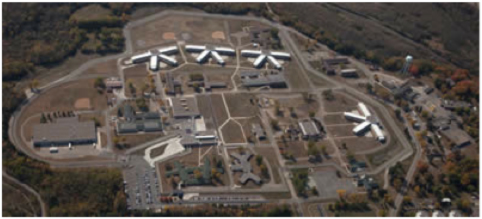
Minnesota Correctional Facility Faribault
State Prison | Rice County — Minnesota | MDOCF
Minnesota Correctional Facility Faribault is a minimum to medium security state prison located at 1101 Linden Lane in Faribault, Rice County, Minnesota. Operated by the Minnesota Department of Corrections since 1989, this facility houses approximately 2,012 male offenders. Under the leadership of Warden Eddie Miles, MCF-Faribault serves as a critical component of Minnesota's correctional system, providing secure housing and comprehensive programming for inmates at varying custody levels.
Families seeking information about inmates housed at MCF-Faribault can access inmate search tools through the Minnesota Department of Corrections. The facility provides multiple methods for families to stay connected with incarcerated loved ones, including visitation opportunities, phone communication systems, and mail correspondence. Understanding the facility's specific policies regarding sending money, scheduling visits, and accessing arrest records helps families maintain important connections during incarceration.
Minnesota Correctional Facility Faribault distinguishes itself within the Minnesota correctional system through its dual-level security classification, operating both minimum and medium security housing units under one administration. This structural flexibility allows the facility to accommodate inmates with varying custody requirements and behavioral classifications while maintaining appropriate security protocols. The facility's location in Faribault positions it within a community with a long correctional heritage, allowing for established relationships with local service providers and community organizations that support reentry initiatives. MCF-Faribault's ability to house inmates transitioning between security levels provides continuity of care and programming as offenders progress through their sentences and demonstrate positive behavioral change.
MCF-Faribault houses approximately 2,012 male offenders classified at minimum and medium security levels. The inmate population includes individuals convicted of various felony offenses, ranging from property crimes and drug-related charges to violent offenses that meet medium security criteria. The facility primarily holds sentenced offenders serving terms within the Minnesota Department of Corrections system rather than pretrial detainees, who are typically housed in county jails. The population includes inmates at different stages of their sentences, from those beginning longer terms at medium security to those nearing release who have earned minimum security status. MCF-Faribault's dual security levels allow for housing inmates who demonstrate varying levels of institutional adjustment and community readiness, creating opportunities for incentive-based progression through custody levels.
Inmates at MCF-Faribault are housed in units appropriate to their security classification, with minimum security residents typically experiencing less restrictive living environments than those in medium security housing. The facility provides three daily meals prepared according to nutritional standards and accommodating religious and medical dietary requirements. Recreation opportunities include both indoor and outdoor activities, with access levels depending on security classification and behavioral status. Medical services are available through on-site healthcare staff who address routine medical needs, chronic care management, and emergency situations, with outside hospital transfers arranged when necessary for specialized treatment. Mental health services include crisis intervention, counseling, and psychiatric care for inmates experiencing mental health challenges. The facility maintains a formal grievance process allowing inmates to address concerns about conditions, staff conduct, or policy applications through written submissions reviewed by institutional administrators. Daily routines include structured schedules for meals, recreation, programming, work assignments, and counts, with expectations for compliance clearly communicated to the inmate population.
MCF-Faribault offers educational programming including Adult Basic Education and GED preparation for inmates seeking to complete their high school equivalency credentials. Vocational training opportunities provide hands-on skill development in trades that align with employment opportunities upon release. Substance abuse treatment programs address the addiction issues that contribute to criminal behavior for many inmates, utilizing evidence-based curricula and group therapy approaches. Religious programming accommodates various faith traditions through volunteer chaplains and spiritual advisors who provide worship services, study groups, and individual counseling. Reentry preparation programs help inmates develop release plans, including housing arrangements, employment strategies, and community support connections. Cognitive-behavioral interventions target criminal thinking patterns and help participants develop prosocial problem-solving skills. Program availability and eligibility may vary based on security level, sentence length, and individual case factors determined through classification assessments.
Inmates at MCF-Faribault participate in various work assignments that support facility operations and provide vocational experience. Inside job assignments include food service positions in the kitchen and dining areas, janitorial and maintenance work throughout the facility, laundry operations, and porter duties in housing units. Some inmates work in administrative support roles or facility maintenance requiring specialized skills. Work assignments provide structure to daily routines while teaching workplace responsibility, punctuality, and cooperation. Participation in work programs may also provide modest compensation and opportunities to develop employment references for post-release job searches. Assignment availability depends on security classification, behavioral record, and facility operational needs.
Minnesota Correctional Facility Faribault was established in 1989 to expand the Minnesota Department of Corrections' capacity to house male offenders at minimum and medium security levels. The facility was constructed during a period of prison population growth that required additional bed space beyond what existing Minnesota institutions could provide. Located in Faribault, a city with historical ties to corrections and human services institutions, the facility benefited from community familiarity with correctional operations. Over more than three decades of operation, MCF-Faribault has evolved its programming and operational practices to reflect contemporary correctional best practices and evidence-based approaches to rehabilitation. The facility continues to serve as an important component of Minnesota's correctional infrastructure, housing a significant portion of the state's male prison population while providing comprehensive services aimed at successful community reintegration upon release.
Visitation at MCF-Faribault requires all visitors to complete an approval process before their first visit. Visitors must present valid government-issued photo identification upon arrival, and all visitors are subject to search procedures. Dress code policies prohibit clothing that resembles inmate uniforms, revealing attire, or items that could pose security concerns. Visitation schedules vary based on housing unit assignments and security classification, with specific days and times designated for different inmate populations. Visitors should arrive during scheduled visiting hours and understand that visits may be subject to capacity limitations or institutional lockdowns. Contact visits are typically permitted for approved visitors in minimum security areas, while medium security visits may have different contact restrictions. Families should contact the facility in advance to confirm current visitation policies, schedule requirements, and any specific restrictions that may apply to their situation.
Mail correspondence should be addressed with the inmate's full legal name and Department of Corrections identification number, sent to Minnesota Correctional Facility-Faribault, 1101 Linden Lane, Faribault, Minnesota 55021-6400. All incoming mail is inspected for contraband and must comply with facility regulations regarding permissible contents. Books and publications must typically be shipped directly from approved vendors or publishers rather than sent by individuals. Inmates have access to phone accounts that allow them to make collect or prepaid calls to approved phone numbers, with families responsible for associated costs. Phone call availability and duration are subject to facility schedules and behavioral restrictions. Families should verify current communication policies and any available electronic messaging systems with facility staff to ensure compliance with all correspondence requirements.
Sponsored and Powered by our Partner TruthFinder
Quick Facts
Should I Be Concerned? — Family Guide
Minnesota Correctional Facility Faribault maintains a stable security environment with zero reported staff assaults, indicating effective management and safety protocols. The minimum-medium security designation means inmates have varying custody levels with appropriate supervision and structured daily activities. Visitors should expect standard security procedures including identification verification and bag checks; plan visits during designated hours and follow facility guidelines for a safe, respectful experience.
Neighborhood & Getting There
Minnesota Correctional Facility Faribault is located in Faribault, a historic city in Rice County in south-central Minnesota, approximately 40 miles south of Minneapolis-St. Paul. The facility sits on Linden Lane with convenient access to Highway 60 and I-35. Faribault offers several hotels and dining options for visiting families, with the closest major metro area being the Twin Cities, roughly 45-50 minutes away by car. The region features rural Minnesota character with regional shopping and services nearby.