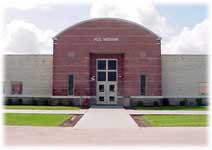
Federal Correctional Institution (FCI) - Coleman Medium
Federal Prison | Sumter County — Florida | FCI-CM | Federal Bureau of Prisons
Federal Correctional Institution Coleman Medium is a medium-security federal prison located in Sumterville, Sumter County, Florida. As part of the larger Coleman Federal Correctional Complex, this facility operates under the Federal Bureau of Prisons rather than the Florida Department of Corrections. The institution houses approximately 1,474 male inmates convicted of federal offenses requiring medium-security housing. The Coleman Complex represents one of the largest federal prison concentrations in the United States.
Families seeking information about inmates at FCI Coleman Medium can conduct inmate searches through federal databases, arrange visitation, send money through approved federal channels, and access arrest records. Understanding the facility's federal status is important as procedures differ from state-level Florida correctional institutions.
FCI Coleman Medium is distinguished as part of the expansive Coleman Federal Correctional Complex, which includes multiple facilities of varying security levels on approximately 4,000 acres in Central Florida. Unlike state facilities, this medium-security institution operates exclusively under federal jurisdiction, housing inmates convicted of federal crimes rather than state offenses. The Coleman Complex's consolidated location allows for efficient resource sharing between facilities while maintaining appropriate security separations. FCI Coleman Medium specifically focuses on inmates requiring medium-security custody, implementing controlled movement, electronic surveillance, and reinforced perimeter security typical of federal medium-security standards.
FCI Coleman Medium houses approximately 1,474 male inmates convicted of federal crimes requiring medium-security custody. The population typically includes individuals convicted of federal offenses such as drug trafficking, firearms violations, white-collar crimes, immigration offenses, and other federal statute violations. Unlike county jails, this facility holds sentenced inmates serving federal prison terms rather than pre-trial detainees. The medium-security classification indicates inmates have demonstrated behavioral patterns requiring more supervision than low-security facilities but less restrictive than high-security or maximum-security institutions. The population may include inmates with longer sentences who have progressed from higher security levels, as well as those initially designated to medium security based on their criminal history and sentence length.
FCI Coleman Medium provides medium-security housing configurations with inmates typically residing in cells or dormitory-style housing units depending on their specific classification within the medium-security range. Inmates receive three meals daily prepared in accordance with federal nutrition standards, with accommodations for medical diets and religious dietary requirements. Recreation opportunities include outdoor exercise yards, indoor gymnasium facilities, and organized sports activities during designated recreation periods. Medical services are provided on-site with basic healthcare, prescription medications, dental care, and emergency medical response capabilities, with more serious medical conditions referred to specialized facilities or outside hospitals. Mental health services include counseling, psychiatric evaluation, and crisis intervention for inmates requiring psychological support. The facility maintains a formal grievance process allowing inmates to address concerns about conditions, treatment, or policy applications through the federal administrative remedy system, which provides multiple levels of review.
FCI Coleman Medium offers educational programs including GED preparation and testing for inmates without high school credentials, along with English as a Second Language courses for non-native speakers. Vocational training opportunities provide inmates with marketable job skills in various trades to improve employment prospects upon release. Substance abuse treatment programs address addiction issues through residential drug treatment programs and non-residential counseling services, recognizing that many federal inmates have substance abuse histories. Religious services accommodate multiple faith traditions with chaplaincy services, worship opportunities, and religious study groups. Re-entry programming helps inmates prepare for release through courses covering financial literacy, job readiness, parenting skills, and community resource navigation. Participation in these programs can positively impact custody classification and demonstrate rehabilitation efforts.
Inmates at FCI Coleman Medium participate in various work assignments that maintain facility operations and provide job skills. Inside work assignments include food service positions in the kitchen and dining halls, janitorial and maintenance duties throughout the facility, laundry operations, and commissary services. Some inmates work in administrative support roles, recreation department positions, or facility maintenance crews performing repairs and upkeep. Federal prison industries through UNICOR may offer manufacturing or production work opportunities where inmates gain experience in structured work environments while earning modest wages. These work assignments teach responsibility, punctuality, and vocational skills while contributing to facility operations.
The Coleman Federal Correctional Complex was developed in the 1990s as part of a major federal prison expansion to address growing incarceration needs. The complex was strategically located in Central Florida on land that could accommodate multiple facilities of varying security levels. FCI Coleman Medium was constructed as part of this multi-facility development plan, designed to federal medium-security architectural standards with appropriate housing units, security infrastructure, and program spaces. The Coleman Complex grew to become one of the largest federal prison concentrations in the country, with several institutions sharing the same general geographic area while maintaining separate operations. Over the years, the facility has adapted to evolving federal correctional standards, implementing enhanced security technologies and expanding programming options. Today, FCI Coleman Medium continues its role as a significant component of the Federal Bureau of Prisons system, housing federal inmates from throughout the southeastern region and beyond.
Visitation at FCI Coleman Medium requires advance approval through the federal visitor application process, where prospective visitors must complete forms and undergo background checks. Approved visitors must present valid government-issued photo identification upon arrival. The facility enforces strict dress code requirements prohibiting revealing clothing, items resembling inmate attire, and clothing with offensive graphics. Visitation schedules are typically organized by inmate housing unit with specific days and times assigned. Visitors should expect security screening including metal detectors and possible pat searches. The visiting room allows limited physical contact at the beginning and end of visits. Vending machines are available for purchasing snacks and beverages during visits. Families should call the facility well in advance to confirm current visitation procedures, schedules, and any special requirements or restrictions.
To mail correspondence to an inmate at FCI Coleman Medium, address letters with the inmate's full name and register number followed by FCI Coleman Medium, Federal Correctional Institution, P.O. Box 1032, Coleman, FL 33521. All incoming mail is inspected for contraband and prohibited items. Books and publications must be sent directly from approved vendors or publishers rather than individual senders. Inmates can make telephone calls through the facility phone system using pre-established telephone lists and prepaid accounts managed by families. The federal TRULINCS email system may be available, allowing inmates to send and receive electronic messages through a secure monitored system funded through inmate accounts.
Sponsored and Powered by our Partner TruthFinder
Quick Facts
Should I Be Concerned? — Family Guide
FCI Coleman Medium maintains medium security standards with a zero staff assault record, indicating a relatively stable operational environment. Medium security facilities balance inmate access with controlled supervision, making them generally safer for both residents and visitors. The facility's clean safety record is a positive indicator. When visiting, expect standard security procedures including ID verification, pat-downs, and restricted item policies—arrive early and follow all facility guidelines.
Neighborhood & Getting There
FCI Coleman is located in Sumterville, an unincorporated community in rural Sumter County, Florida, approximately 80 miles northwest of Orlando and 45 miles south of Ocala. The area is primarily rural and agricultural. Visitors should plan for a rural drive with limited immediate lodging; the nearest significant amenities are in Wildwood (15 miles) or Ocala (45 miles). I-75 provides highway access from major Florida metros. Bring cash and plan for longer travel times from urban centers.