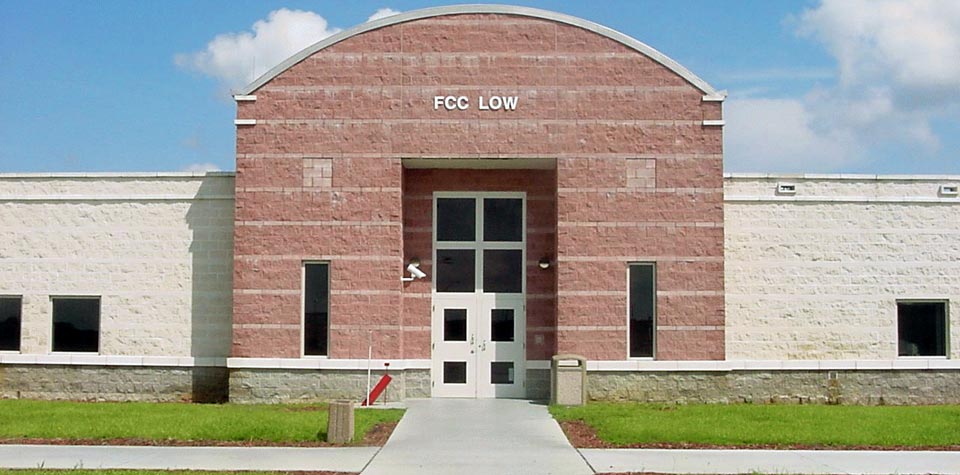
Federal Correctional Institution - Coleman Low
Federal Prison | Sumter County — Florida | FCI - CL | Federal Bureau of Prisons
Federal Correctional Institution - Coleman Low is a low-security federal prison for male inmates located in Sumterville, Sumter County, Florida. The facility is part of the Federal Bureau of Prisons system and currently houses 1,949 inmates, significantly exceeding its designed capacity of 1,536. Warden Tamyra Jarvis oversees daily operations at this federal institution, which serves as one of multiple facilities within the Coleman Federal Correctional Complex in central Florida.
Families seeking information about incarcerated loved ones can use the Federal Bureau of Prisons inmate locator to conduct searches. The facility provides various services for families including visitation programs, approved methods to send money to inmates, and telephone communication systems. Understanding the facility's specific mailing address and procedures helps families maintain important connections during incarceration.
Federal Correctional Institution - Coleman Low operates as part of the larger Coleman Federal Correctional Complex, one of the most extensive federal prison facilities in the United States. This complex houses multiple institutions with different security levels on a shared campus in central Florida. FCI Coleman Low specifically serves the low-security population within this complex, distinguishing it from the medium-security and higher-security facilities nearby. The Coleman Complex's location in Sumterville provides a consolidated federal presence in Florida, allowing for efficient resource sharing and administrative coordination across multiple institutions while maintaining security-level separation for appropriate inmate classification.
FCI Coleman Low houses 1,949 male inmates classified as low-security risks within the federal system. The population consists primarily of sentenced federal offenders who have been convicted of crimes including white-collar offenses, drug trafficking, immigration violations, and non-violent federal crimes. Inmates at this security level typically have less serious criminal histories and longer time remaining on their sentences compared to minimum-security camps. The facility does not house pre-trial detainees, focusing instead on serving sentenced federal prisoners. With the current population exceeding designed capacity by approximately 400 inmates, the facility manages crowding through efficient housing allocation and program scheduling to maintain security and services for this substantial inmate population.
Inmates at FCI Coleman Low reside in multi-level housing units designed for low-security federal custody. Housing typically consists of two-person cells or dormitory-style arrangements depending on the specific unit. Inmates receive three meals daily in communal dining facilities, with menus meeting federal nutritional standards. Recreation opportunities include outdoor recreation yards, indoor gymnasium access, and structured leisure activities. The facility provides medical services through an on-site health services unit staffed by medical professionals who address routine healthcare needs, chronic disease management, and emergency medical situations. Mental health services are available through the psychology department, offering individual counseling, crisis intervention, and psychiatric care when needed. Inmates can file grievances through the Bureau of Prisons Administrative Remedy Program, starting with informal resolution attempts before advancing through formal review levels. The overcrowded conditions present ongoing challenges for maintaining optimal living standards and program access.
FCI Coleman Low offers educational programs including GED preparation and testing for inmates without high school diplomas, along with adult continuing education classes and English as a Second Language instruction. Vocational training programs provide skills development in various trades to enhance employment prospects upon release. The facility operates substance abuse treatment programs including the Residential Drug Abuse Program (RDAP) and non-residential drug education classes for eligible inmates struggling with addiction issues. Religious services accommodate multiple faith traditions with regular worship opportunities, spiritual counseling, and religious study groups. Re-entry programming helps inmates prepare for release through transition classes covering employment readiness, financial literacy, and community resources. These programs aim to reduce recidivism by addressing educational deficits, substance abuse problems, and providing practical skills necessary for successful community reintegration after incarceration.
Inmates at FCI Coleman Low participate in various work assignments that support facility operations and provide job skills. Inside institutional jobs include food service positions in the kitchen and dining hall, maintenance duties, janitorial work, recreation department assignments, and clerical positions throughout administrative offices. UNICOR Federal Prison Industries may operate at the Coleman Complex, potentially offering manufacturing work opportunities where inmates gain marketable employment experience. Grounds maintenance crews handle landscaping and facility upkeep across the institution. Work assignments provide inmates with modest compensation, develop work habits, and reduce idleness while supporting the institution's daily operational needs. Participation in work programs is generally mandatory for able-bodied inmates.
Federal Correctional Institution - Coleman Low was established as part of the Coleman Federal Correctional Complex development in central Florida, designed to address growing federal inmate populations. The Coleman Complex represented a major investment in federal corrections infrastructure, strategically located in Sumter County to serve federal jurisdiction needs across the southeastern United States. The complex expanded over time to include multiple institutions with varying security levels on adjacent properties. While specific construction dates for FCI Coleman Low are not publicly documented in detail, the facility developed alongside the broader Coleman Complex expansion during federal prison system growth in the late twentieth and early twenty-first centuries. Today, FCI Coleman Low continues serving its intended purpose as a low-security federal institution, currently operating above designed capacity under the leadership of Warden Tamyra Jarvis while maintaining its role within the larger federal correctional system.
Visiting Federal Correctional Institution - Coleman Low requires advance approval through the Bureau of Prisons visitor application process. Prospective visitors must complete forms and undergo background checks before receiving approval status. Valid government-issued photo identification is mandatory for all visitors aged sixteen and older. The facility enforces strict dress code policies prohibiting revealing clothing, certain colors, and items that resemble inmate uniforms. Visitation scheduling follows specific days and times based on inmate housing unit assignments. Visitors should expect security screening including metal detectors and possible pat-down searches upon entry. The visiting room provides a supervised environment for inmate-family contact. Families should contact the facility directly before traveling to confirm current visitation schedules, policies, and any temporary restrictions that may affect visiting privileges.
Mail sent to inmates at FCI Coleman Low must include the inmate's full legal name and register number, addressed to Federal Correctional Institution, P.O. Box 1031, Coleman, FL 33521. All incoming correspondence undergoes inspection for security purposes before delivery. Inmates can receive books and publications only when shipped directly from approved vendors, publishers, or bookstores. The facility participates in the Bureau of Prisons telephone system allowing inmates to place calls to approved telephone numbers using prepaid calling accounts funded by inmates or their families. TRULINCS electronic messaging may be available, enabling email-like communication between approved contacts and inmates through the federal system. Families should verify current communication policies and approved vendor lists with the facility.
Sponsored and Powered by our Partner TruthFinder
Quick Facts
Should I Be Concerned? — Family Guide
FCI Coleman Low maintains a low-security environment with zero reported staff assaults, indicating a relatively safe facility for visitors. The low security classification means inmates have more privileges and less restrictive conditions, which generally contributes to safer visiting environments. When planning a visit, contact the facility in advance to confirm visiting hours, follow all security protocols, and arrive during designated visiting times to ensure a smooth entry process.
Neighborhood & Getting There
FCI Coleman Low is located in Sumterville, a rural community in Sumter County in central Florida. The facility sits approximately 75 miles north of Tampa and about 90 miles southwest of Jacksonville. The area is characterized by rural landscapes typical of inland Florida. Visitors traveling to Sumterville should plan for a 1.5-2 hour drive from Tampa. Limited hotel accommodations exist in the immediate area; nearby towns like Wildwood offer more lodging options. I-75 provides primary highway access to the region.