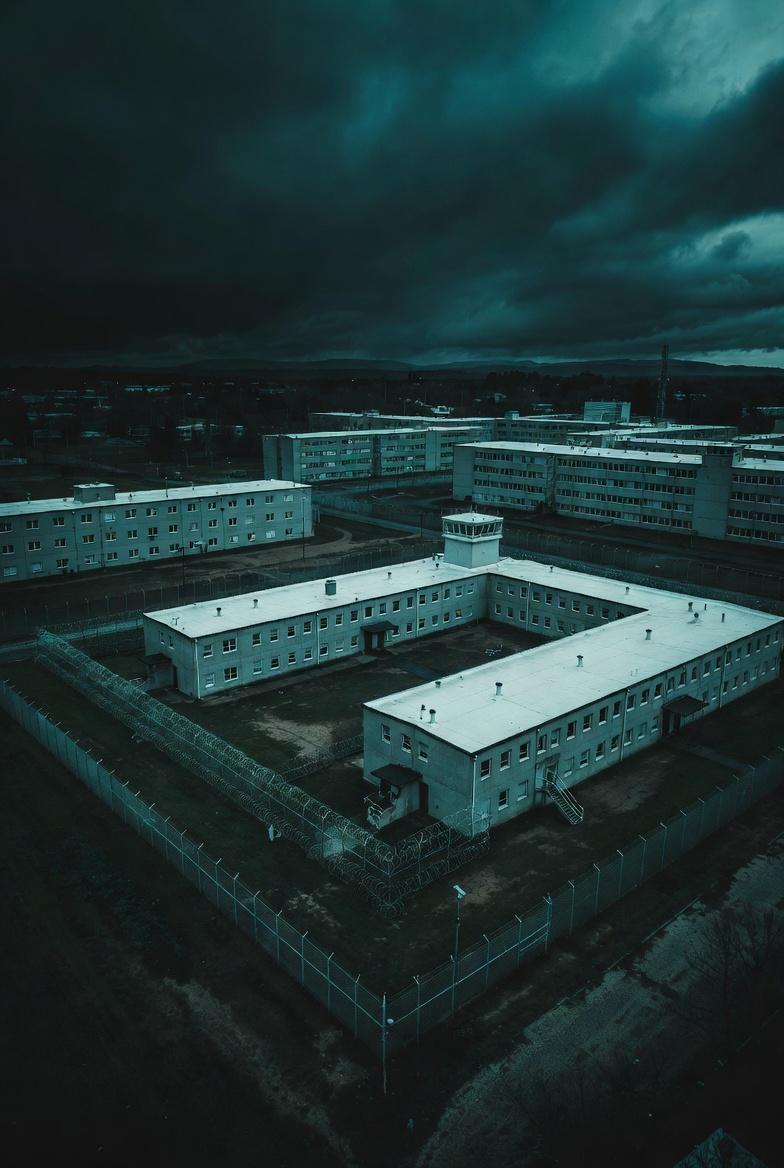
United States Penitentiary Victorville
Federal Prison | San Bernardino County — California
United States Penitentiary Victorville is a maximum-security federal prison located at 13777 Air Expressway Boulevard in Victorville, San Bernardino County, California. Despite being listed under the California Department of Corrections in local records, this is actually a federal facility operated by the Bureau of Prisons. Opened in 2004, the institution houses adult male offenders who require high-security custody. Warden Francisco J. Quintana oversees operations at this modern federal penitentiary serving the high desert region of Southern California.
Families seeking information about inmates at United States Penitentiary Victorville can use federal inmate locators to find current housing information, register numbers, and projected release dates. The facility provides systems for approved visitors to maintain contact, send funds through approved channels, and communicate via monitored correspondence. Understanding federal arrest records and custody classification helps families navigate the incarceration process.
United States Penitentiary Victorville occupies a unique position in California's high desert region as one of the federal maximum-security institutions serving the western United States. Its location in Victorville places it within the broader federal correctional complex in the area, providing specialized housing for inmates requiring heightened security measures. The facility's construction in 2004 reflects modern correctional design principles with enhanced security infrastructure specifically built for managing serious federal offenders. Its proximity to major Southern California metropolitan areas while maintaining the isolation necessary for secure operations distinguishes it from state-operated California prisons in the same geographic region.
United States Penitentiary Victorville houses adult male inmates classified for maximum-security custody within the federal prison system. The population typically includes individuals convicted of serious federal offenses including organized crime, violent crimes, drug trafficking conspiracies, weapons violations, and white-collar crimes of significant magnitude. As a maximum-security penitentiary, the facility generally holds sentenced inmates rather than pre-trial detainees, with many serving lengthy federal sentences. The classification system places inmates here based on criminal history, sentence length, institutional behavior, and assessed security risk. Some inmates may have been transferred from other federal institutions due to disciplinary issues or security concerns requiring stricter custody conditions than medium or low-security facilities provide.
United States Penitentiary Victorville maintains maximum-security housing units with strict supervision and controlled movement throughout the facility. Inmates are typically housed in cells with limited personal property allowances consistent with federal high-security standards. Daily schedules include structured mealtimes in controlled dining areas, with meals prepared according to federal Bureau of Prisons nutritional guidelines and accommodations for religious dietary requirements. Recreation opportunities occur in secured outdoor yards with scheduled access times, though maximum-security custody limits significantly restrict movement compared to lower-security facilities. Medical services include routine healthcare, sick call procedures, chronic care management, and emergency treatment through the institution's health services unit. Mental health professionals provide psychological services, crisis intervention, and ongoing treatment for inmates with diagnosed conditions. The formal grievance process allows inmates to address concerns through administrative remedy procedures, beginning with informal resolution attempts and progressing through formal written requests reviewed at institutional, regional, and national levels within established timeframes.
United States Penitentiary Victorville offers educational programming including literacy classes, GED preparation and testing, and English as a Second Language instruction for eligible inmates. Vocational training opportunities provide skills development in trades applicable to post-release employment, though maximum-security restrictions limit the scope compared to lower-security institutions. Substance abuse treatment programs address addiction issues through both educational components and therapeutic interventions designed to support recovery and reduce recidivism. Religious services accommodate multiple faith traditions with chaplaincy support, worship opportunities, and religious study groups. Re-entry programming helps inmates prepare for eventual release through case management, release planning assistance, and connections to community resources, though given the security level, many participants face extended incarceration periods before these services become immediately applicable.
Inmates at United States Penitentiary Victorville participate in institutional work assignments essential to facility operations within maximum-security constraints. Inside job assignments include food service positions preparing and serving meals, orderly duties maintaining housing unit cleanliness, laundry operations, and commissary work. Some inmates work in maintenance roles supporting facility infrastructure under close supervision. The security level significantly limits the availability of Federal Prison Industries assignments compared to medium or low-security institutions. Work assignments provide modest compensation through the facility's inmate financial responsibility program while teaching work habits and time management beneficial for post-release employment.
United States Penitentiary Victorville was established in 2004 as part of the federal Bureau of Prisons expansion to address growing inmate populations and the need for additional maximum-security bed space in the western United States. Construction in Victorville capitalized on the high desert location's existing correctional infrastructure and isolation suitable for secure operations. The facility joined the federal correctional complex in the region, which includes other Bureau of Prisons institutions serving different security levels and populations. Over its operational years, the penitentiary has maintained its role as a maximum-security institution housing serious federal offenders requiring heightened custody. Under the current leadership of Warden Francisco J. Quintana, the facility continues fulfilling its mission within the federal prison system, providing secure incarceration for male inmates classified for high-security custody.
Visitation at United States Penitentiary Victorville requires advance approval through the federal Bureau of Prisons visitor application process. Prospective visitors must complete background checks and receive approval before scheduling visits. All visitors must present valid government-issued photo identification upon arrival. The facility enforces strict dress code requirements prohibiting clothing that resembles inmate attire, revealing garments, and certain colors or styles that compromise institutional security. Visitors should contact the institution directly before planning travel to confirm current visiting hours, procedures, and any temporary restrictions. Maximum-security protocols require processing through security screening including metal detectors and possible searches. Families should verify specific requirements and scheduling procedures by calling ahead to ensure compliance with all regulations.
Correspondence to inmates at United States Penitentiary Victorville must include the inmate's full name and register number, addressed to USP Victorville, U.S. Penitentiary, P.O. Box 3900, Adelanto, CA 92301. All incoming mail undergoes inspection for prohibited materials and contraband. Families may send books, magazines, and publications only through approved vendors that ship directly to the institution. Inmates have access to telephone systems through pre-approved contact lists and pre-paid calling accounts established by recipients. Some federal institutions offer electronic messaging systems, though families should verify current availability and procedures with the facility directly for the most accurate information regarding approved communication methods.
Sponsored and Powered by our Partner TruthFinder
Quick Facts
Should I Be Concerned? — Family Guide
As a maximum security federal penitentiary, USP Victorville houses inmates convicted of serious crimes under strict security protocols. With zero reported staff assaults, the facility maintains strong safety standards. Visitors should expect thorough security screening, metal detectors, and clear visitation rules. Plan ahead by confirming visiting hours and bringing proper identification—preparation ensures a smoother experience.
Neighborhood & Getting There
United States Penitentiary Victorville is located in the High Desert region of San Bernardino County, approximately 85 miles northeast of Los Angeles and 30 miles south of Barstow. The facility sits near Interstate 15, providing highway access from the greater Los Angeles metro area (approximately 90-minute drive). Victorville offers budget hotels, gas stations, and dining along major corridors. The surrounding area is desert landscape with limited urban amenities, typical of inland Southern California.