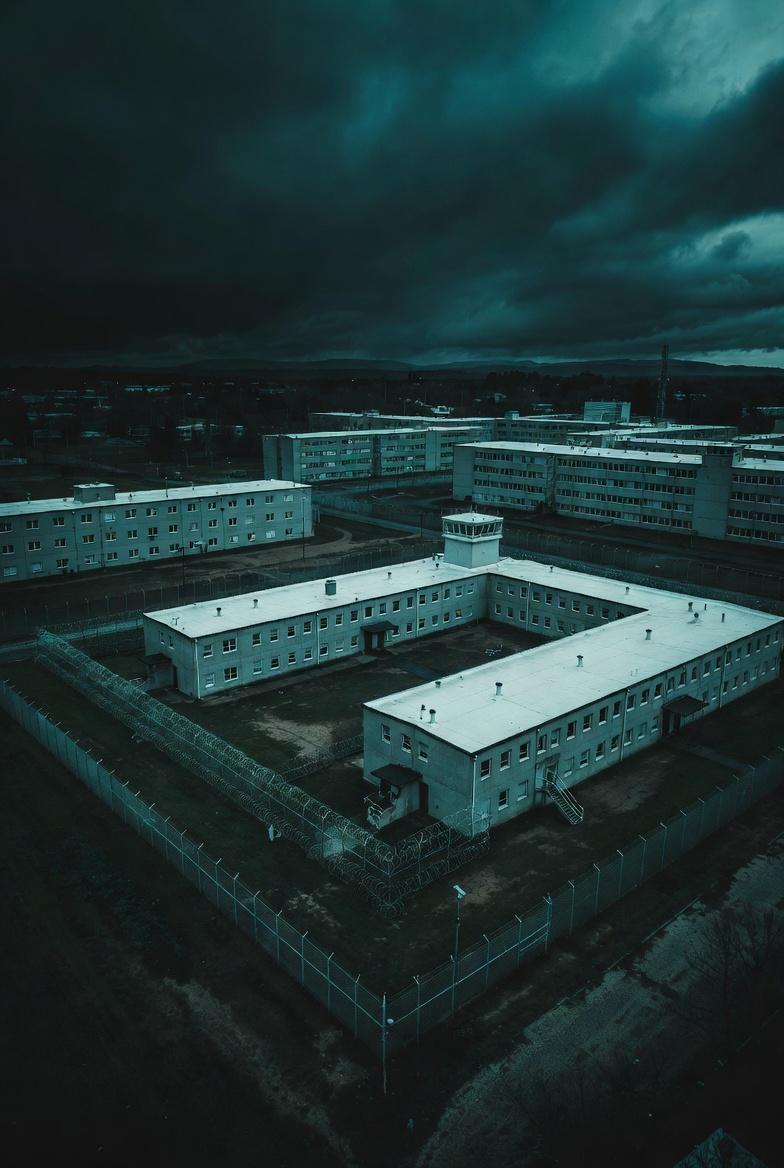
United States Penitentiary Pollock operates as a maximum security federal facility located at 1000 Airbase Road in Pollock, Grant Parish County, Louisiana. Despite being listed under the Louisiana Department of Corrections system, USP Pollock functions as a federal penitentiary housing male inmates who require high-security custody. The facility sits in the small rural community of Pollock in central Louisiana, serving as a critical component of the federal prison system's infrastructure in the southern United States.
Families seeking information about inmates housed at USP Pollock can utilize the federal inmate locator system to find their loved ones. The facility provides standard federal prison services including controlled visitation, commissary access, and correspondence privileges. Understanding the mailing address format and visitation procedures helps families maintain crucial connections with incarcerated individuals during their federal sentences.
United States Penitentiary Pollock stands apart as a maximum security federal institution operating in rural Louisiana. The facility's location on Airbase Road suggests it may have been constructed on or near a former military installation, reflecting the federal government's practice of repurposing existing infrastructure for correctional use. As a high-security penitentiary, USP Pollock houses federal inmates requiring heightened custody levels, distinguishing it from lower-security federal facilities in the region. The remote Grant Parish location provides geographic isolation typical of maximum security federal penitentiaries, while the facility maintains the strict operational standards and oversight characteristic of the Federal Bureau of Prisons system throughout Louisiana and the broader southern region.
United States Penitentiary Pollock houses male federal inmates classified at the maximum security level. The population consists primarily of sentenced federal offenders convicted of serious federal crimes requiring heightened security measures. Inmates may include individuals convicted of weapons offenses, drug trafficking conspiracies, violent crimes crossing state lines, organized crime activities, and other serious federal violations. As a maximum security facility, USP Pollock typically does not house pre-trial detainees, focusing instead on long-term sentenced inmates. The classification process determines placement based on factors including criminal history, sentence length, institutional behavior, and security threat level. The federal population may include inmates from across multiple states who require maximum custody, creating a diverse population from various geographic regions managed under strict federal custody protocols.
United States Penitentiary Pollock maintains maximum security housing conditions designed for controlled custody of high-security federal inmates. Inmates reside in secure cell-based housing units with restricted movement and heightened supervision throughout the facility. Daily routines follow strict schedules including controlled meal times served in dining halls or housing units depending on security protocols. Recreation opportunities occur in secure outdoor yards and indoor spaces under direct staff supervision, with access limited based on security considerations and institutional behavior. Medical services provide federally mandated healthcare including chronic care management, emergency treatment, and mental health services delivered by contracted providers or Bureau of Prisons staff. Mental health programming addresses serious psychiatric needs within the secure environment. Inmates can submit grievances through the federal Administrative Remedy Program, following a multi-tier process to address concerns about conditions, treatment, or policy application. All aspects of daily life operate under the heightened security measures required for maximum custody federal inmates.
USP Pollock offers federal programming designed for maximum security inmates, though opportunities may be more limited than lower-security facilities. Educational programs include literacy classes and GED preparation for inmates lacking high school credentials, with some access to correspondence courses. Vocational training programs provide skill development in areas compatible with the security environment. The facility offers substance abuse programming including residential treatment and non-residential counseling to address addiction issues underlying federal convictions. Religious services accommodate multiple faith traditions with chaplaincy services and volunteer religious groups conducting worship and study programs. Re-entry planning helps inmates prepare for eventual release through case management and transition services. Program participation often depends on security classification, institutional conduct, and sentence length, with maximum security environments presenting unique challenges to comprehensive programming access.
Inmates at United States Penitentiary Pollock participate in work assignments maintaining daily facility operations. Inside job assignments include food service positions preparing and serving meals, janitorial duties maintaining housing units and common areas, laundry operations, and facility maintenance tasks. Some inmates may work in administrative support roles or library operations depending on security clearance and institutional behavior. Federal penitentiaries typically operate Federal Prison Industries programs where eligible inmates gain vocational skills while producing goods for government use, though specific programs at USP Pollock are not publicly detailed. Work assignments provide structured activity, modest compensation, and skill development while supporting essential facility functions under maximum security supervision.
United States Penitentiary Pollock's historical timeline remains limited in publicly available documentation, with founding dates and construction details not widely published. The facility's location on Airbase Road suggests possible connections to military infrastructure common in federal prison development patterns. Federal penitentiaries expanded significantly during periods of increased federal prosecution, particularly related to drug enforcement and organized crime initiatives beginning in the 1980s and continuing through subsequent decades. The Grant Parish location reflects the Bureau of Prisons' strategy of situating maximum security facilities in rural areas providing geographic isolation and local economic benefits. USP Pollock continues serving as a critical maximum security facility within the federal prison system, housing serious federal offenders requiring heightened custody throughout their sentences. The facility operates under Federal Bureau of Prisons standards governing maximum security institutions across the country.
Visitation at United States Penitentiary Pollock requires advance approval through the Bureau of Prisons visitor application process. Prospective visitors must submit applications well before their intended visit, undergoing background checks before receiving approval or denial. Approved visitors must present valid government-issued photo identification at check-in. The facility enforces strict dress code requirements prohibiting revealing clothing, certain colors, and items resembling inmate attire. Visitation schedules vary based on housing unit assignments and institutional needs at maximum security facilities. Visitors should expect thorough security screening including metal detectors and possible search procedures. Contact lenses, limited clear storage bags, and small amounts of cash for vending machines may be permitted. Families should contact the facility directly before traveling to confirm current visitation schedules, procedures, and any temporary restrictions affecting visiting privileges.
To mail correspondence to inmates at United States Penitentiary Pollock, address letters with the inmate's full name and register number, followed by USP Pollock, U.S. Penitentiary, P.O. Box 2099, Pollock, LA 71467. All incoming mail undergoes inspection for security purposes. Inmates can receive books and publications only from approved vendors who ship directly to the facility, never from personal addresses. The federal system provides phone privileges through prepaid telephone accounts that families establish with the contracted provider. Inmates can place collect or debit calls to approved phone numbers during designated hours. Some federal facilities offer email services through TRULINCS, allowing electronic messaging for a per-minute fee, though families should confirm current availability at USP Pollock specifically.
Sponsored and Powered by our Partner TruthFinder
Quick Facts
Should I Be Concerned? — Family Guide
USP Pollock maintains a maximum security environment with zero reported staff assaults, indicating a secure facility. Visitors should expect thorough security screening, strict dress codes, and limited contact visits. The remote location requires advance planning for transportation and accommodations. Verify all visiting rules and inmate status before traveling to ensure a smooth visit.
Neighborhood & Getting There
United States Penitentiary Pollock is located in rural Grant Parish, approximately 40 miles south of Alexandria, Louisiana, the nearest significant city. The facility sits in a remote area along Airbase Road with limited nearby commercial services. Visitors typically drive from Alexandria (45 minutes), which offers hotels and restaurants. The region is rural with limited public transportation, so personal vehicles are essential for visiting the facility.