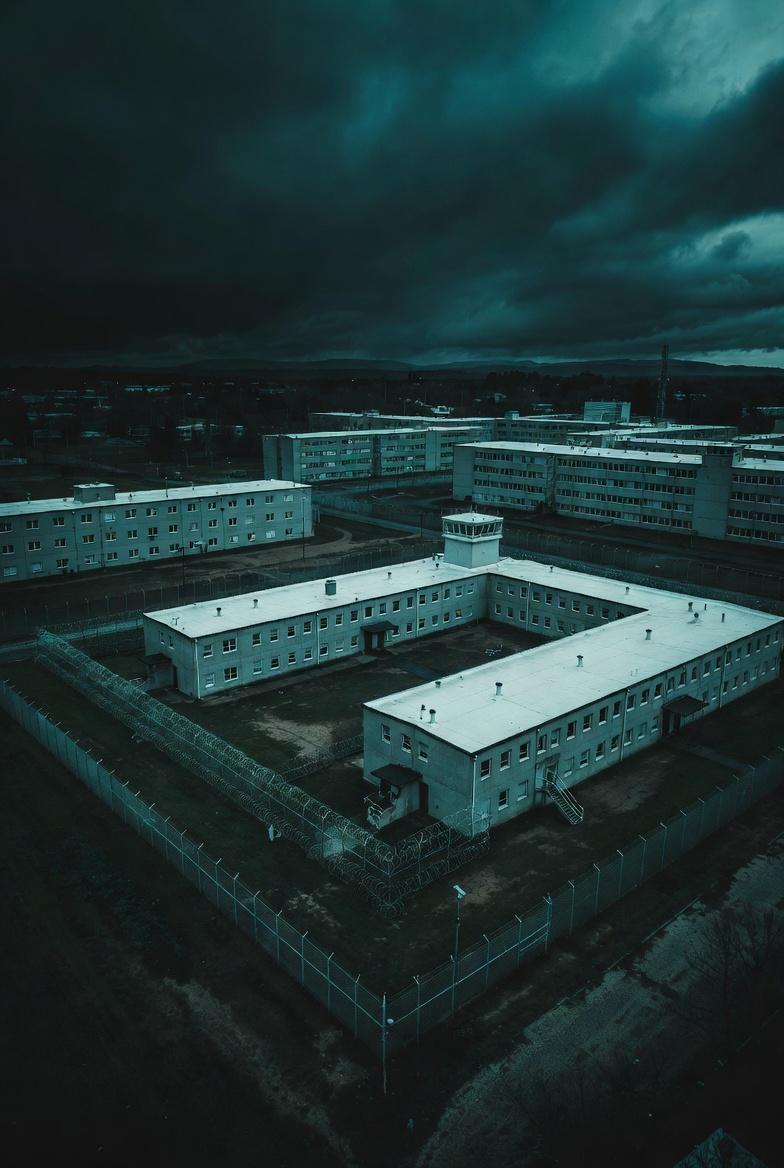
United States Penitentiary Beaumont is a maximum-security federal correctional facility located at 6200 Knauth Road in Beaumont, Jefferson County, Texas. Despite its name indicating the Texas Department of Corrections, USP Beaumont operates as a federal Bureau of Prisons facility, housing adult male offenders convicted of federal crimes. Opened in 1998, this institution serves as one of the highest-security federal penitentiaries in the Texas region, maintaining strict protocols for inmates requiring intensive supervision.
Families seeking information about incarcerated loved ones at USP Beaumont can conduct inmate searches through the Bureau of Prisons locator system. Visitors can send money through approved federal channels, schedule visits according to facility guidelines, and access arrest records through federal databases to better understand their family member's situation and stay connected throughout incarceration.
United States Penitentiary Beaumont distinguishes itself as one of the few maximum-security federal penitentiaries in Southeast Texas, serving a critical role in housing high-security federal inmates in a region otherwise dominated by state facilities. Located in Jefferson County's industrial corridor near the Louisiana border, USP Beaumont's 1998 construction represented a significant federal investment in the region's correctional infrastructure. The facility's maximum-security designation means it houses federal inmates who require the highest level of supervision, separating it from the lower-security federal correctional institutions elsewhere in Texas. This specialized mission makes USP Beaumont an essential component of the federal prison system's ability to safely manage serious offenders in the southern United States.
United States Penitentiary Beaumont houses adult male inmates convicted of federal offenses requiring maximum-security confinement. The population consists primarily of sentenced federal prisoners rather than pre-trial detainees, with most having been convicted in federal courts across Texas, Louisiana, and surrounding states. Offense types typically include serious federal crimes such as drug trafficking conspiracies, firearms violations, organized crime activities, violent offenses on federal property, and white-collar crimes involving substantial fraud amounts. Some inmates transfer to USP Beaumont due to disciplinary issues at lower-security facilities or because their criminal history and institutional behavior require heightened supervision. The facility does not house special protective custody populations that would be incompatible with the general maximum-security environment, maintaining strict classification standards for institutional safety.
United States Penitentiary Beaumont utilizes traditional cell-block housing typical of maximum-security federal penitentiaries, with inmates residing in single or double cells featuring limited personal space and restricted movement protocols. Meals are served in controlled dining hall settings on scheduled rotations, with menus meeting federal nutritional standards. Recreation opportunities are more limited than lower-security facilities, with controlled outdoor yard time and indoor recreation areas available under supervision. The medical department provides essential healthcare services including chronic care management, dental services, and emergency treatment, though specialized care may require transfer or outside hospitalization. Mental health services include counseling, psychiatric evaluation, and crisis intervention for inmates experiencing psychological difficulties. The facility maintains a formal grievance process allowing inmates to address concerns through administrative remedy procedures, escalating unresolved issues through the Bureau of Prisons chain of command according to federal regulations governing inmate rights and institutional accountability.
USP Beaumont offers educational programs including GED preparation and adult continuing education classes for inmates seeking to improve literacy and academic credentials during incarceration. Limited vocational training opportunities exist within the constraints of maximum-security operations, focusing on skills applicable to institutional maintenance and potential post-release employment. The facility provides substance abuse programming through the Bureau of Prisons' drug education and residential treatment initiatives, addressing addiction issues that contributed to federal criminal activity. Religious services accommodate multiple faith traditions, with chaplaincy staff coordinating worship services, spiritual counseling, and faith-based programming. Re-entry preparation becomes increasingly important as release dates approach, with staff assisting eligible inmates in developing transition plans, though the long sentences typical at maximum-security facilities mean many inmates focus primarily on institutional adjustment rather than imminent release preparation.
Work assignments at United States Penitentiary Beaumont include essential institutional maintenance positions such as food service, facilities maintenance, laundry operations, and janitorial duties that keep the facility functioning. Unlike lower-security federal institutions, maximum-security penitentiaries offer limited outside work opportunities due to security restrictions and the custody level of inmates housed there. Some inmates work in UNICOR Federal Prison Industries if the facility operates such programs, gaining vocational skills and modest compensation. Unit orderly positions, library clerks, and recreation assistants provide additional work assignments. These jobs serve dual purposes of maintaining facility operations while providing inmates structure, modest earnings for commissary purchases, and work experience, though opportunities are more restricted than at lower-security institutions given the behavioral and security considerations inherent in maximum-security confinement.
United States Penitentiary Beaumont was established in 1998 as part of a federal Bureau of Prisons expansion to address growing needs for maximum-security bed space in the southern United States. Constructed during the 1990s federal prison building boom responding to increased federal criminal prosecutions, particularly drug-related cases, the facility opened to receive inmates requiring high-security confinement. Located in Beaumont's industrial area with its proximity to major Gulf Coast transportation routes, the site selection reflected both practical considerations and the region's willingness to host federal correctional facilities. Over its operational history, USP Beaumont has maintained its maximum-security designation without major expansions, continuing to serve its original mission. Under the leadership of Warden Charles Daniels, the facility currently functions as a stable component of the federal prison system, housing serious federal offenders while maintaining security protocols essential for protecting staff, inmates, and the surrounding community.
Visitation at United States Penitentiary Beaumont requires advance approval through the Bureau of Prisons visitor application process, with prospective visitors undergoing background checks before approval. Visitors must present valid government-issued photo identification upon arrival and comply with strict dress code requirements prohibiting revealing clothing, certain colors, and items that could pose security concerns. Scheduling procedures follow federal guidelines with specific visiting days and times assigned based on inmate housing units. Visitors should expect thorough security screening including metal detectors and possible searches before entering visiting areas. Contact visits are typically restricted at maximum-security facilities, with non-contact visiting arrangements common. Families should call the facility well in advance to confirm current visitation procedures, understand specific restrictions, obtain application materials, and verify their approved status before traveling to Beaumont to avoid disappointment or wasted trips.
To send mail to an inmate at United States Penitentiary Beaumont, address correspondence to the inmate's full name and register number, followed by USP Beaumont, U.S. Penitentiary, P.O. Box 26030, Beaumont, TX 77720. All incoming mail undergoes inspection for contraband and prohibited materials. Books and publications must be shipped directly from approved vendors and publishers rather than individuals to comply with federal regulations. Inmates can receive phone privileges through the Bureau of Prisons telephone system, requiring families to establish prepaid accounts or accept collect calls where available. Some federal facilities offer email services through the TRULINCS system, allowing approved contacts to exchange electronic messages for a fee, though families should verify current availability of this service at USP Beaumont specifically.
Sponsored and Powered by our Partner TruthFinder
Quick Facts
Should I Be Concerned? — Family Guide
United States Penitentiary Beaumont maintains maximum security standards with a zero staff assault record, indicating effective security management and stable operations. The facility houses the highest-custody federal inmates, requiring visitors to comply with strict security procedures and protocols. Families should expect thorough screening, clear bag policies, and limited contact visits. Arrive early for processing and bring valid government-issued identification to ensure smooth entry procedures.
Neighborhood & Getting There
Located in Beaumont, Texas—a major industrial city in Southeast Texas near the Louisiana border. The facility sits in Jefferson County, approximately 85 miles east of Houston (90-minute drive) and 15 miles west of the Texas-Louisiana state line. The area is served by Interstate 10, with nearby hotels, restaurants, and amenities along major corridors. Beaumont's economy centers on petrochemical refining and shipping, with reasonable lodging options for visiting families.