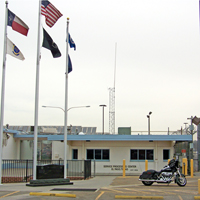
El Paso Processing Center
Federal Prison | El Paso County — Texas | U.S. Immigration and Customs Enforcement
El Paso Processing Center is a medium-security immigration detention facility located at 8915 Montana Avenue in El Paso, El Paso County, Texas. Established in 1967, this facility operates under the Texas Department of Corrections system and is currently managed by Director Corey Price. The center holds both male and female detainees with a maximum capacity of 800 individuals, serving as a processing facility for immigration enforcement operations in the border region.
Families seeking information about detainees at El Paso Processing Center can search inmate records, verify current custody status, and learn about visitation procedures through official channels. Understanding how to send money to detainees, schedule visits, and access arrest records helps families maintain critical connections during detention periods.
El Paso Processing Center stands apart as one of the oldest continuously operating immigration detention facilities along the Texas-Mexico border. Its strategic location in El Paso, directly adjacent to Ciudad Juárez, positions it as a critical processing point for immigration enforcement activities in the Southwest. Unlike traditional correctional facilities in the Texas system, this center focuses specifically on administrative detention related to immigration proceedings rather than criminal sentencing. The facility's dual-gender capacity and medium-security classification reflect its role in housing detainees awaiting hearings, deportation proceedings, or transfer to other facilities throughout the immigration detention network.
El Paso Processing Center houses immigration detainees rather than convicted criminals, creating a distinctly different population from traditional Texas correctional facilities. The detainee population consists primarily of individuals awaiting immigration court hearings, deportation orders, or administrative review of their immigration status. Most detainees are in pre-hearing or pre-removal status rather than serving criminal sentences. The facility accepts both male and female detainees, segregated by gender in separate housing units. Population composition fluctuates based on border enforcement activities, seasonal migration patterns, and federal immigration policy changes. Special populations may include asylum seekers, individuals with pending immigration appeals, and detainees requiring medical attention during processing. The center serves as a temporary holding facility with average stays varying from days to several months depending on individual case circumstances.
El Paso Processing Center provides dormitory-style and cell-block housing depending on classification and space availability. Detainees receive three meals daily prepared in the facility kitchen, with accommodations made for religious dietary requirements and documented medical restrictions. Recreation opportunities include access to outdoor yards during designated periods and indoor day rooms equipped with tables and seating areas. Medical services are available through on-site healthcare staff who conduct intake health screenings and provide ongoing care for chronic conditions and acute medical needs. Mental health services address the psychological stress associated with detention and uncertain immigration status, though resources may be limited compared to community standards. The facility maintains a formal grievance process allowing detainees to report concerns about conditions, treatment, or violations of detention standards. Housing units include access to basic hygiene facilities, and detainees are issued bedding and personal care items upon intake. Living conditions reflect the administrative detention purpose rather than punitive incarceration.
El Paso Processing Center offers limited programming compared to criminal correctional facilities due to its role as an immigration processing center with typically shorter detention periods. Educational opportunities may include basic English language instruction and legal orientation presentations explaining immigration court procedures and detainee rights. The facility provides access to law library resources, though these focus on immigration law rather than criminal matters. Religious services accommodate multiple faith traditions with volunteer chaplains and religious volunteers conducting services and pastoral counseling. Substance abuse programming is generally limited given the facility's administrative detention mission. Recreation and leisure activities include television access, board games, and reading materials in multiple languages. The transient nature of the detainee population and uncertainty about length of stay limit the development of comprehensive vocational or re-entry programs typical of criminal correctional facilities.
Work assignments at El Paso Processing Center differ significantly from traditional prison industries found in criminal correctional facilities. Detainees may volunteer for inside facility jobs including kitchen assistance, cleaning and sanitation duties, laundry services, and general facility maintenance tasks. These assignments help maintain facility operations while providing detainees with structured activity during their stay. Participation is typically voluntary rather than mandatory, and compensation follows federal detention standards rather than state prison wage scales. The facility does not operate traditional prison industries or outside work crews given its immigration detention mission and the administrative status of its population.
El Paso Processing Center was established in 1967 during a period of expanding federal immigration enforcement infrastructure along the southern border. The facility's creation responded to growing needs for detention space in the El Paso sector, one of the busiest border crossing regions in the United States. Over five decades of operation, the center has undergone various expansions and operational modifications reflecting changing immigration policies and enforcement priorities. Its longevity makes it one of the longest-operating immigration detention facilities in Texas. The facility has witnessed numerous shifts in federal immigration policy, from different presidential administrations to major legislative changes affecting border enforcement. Today, El Paso Processing Center continues its historical role as a key detention and processing point for the El Paso sector, adapting to contemporary detention standards while maintaining its essential function in the federal immigration enforcement system.
Visitation at El Paso Processing Center requires advance approval and adherence to specific protocols. Visitors must present valid government-issued photo identification and complete any required background screening processes before approval. Dress code requirements prohibit revealing clothing, clothing resembling detention uniforms, and items that could pose security concerns. Families should contact the facility directly well in advance to understand current visitation scheduling procedures, as policies may change based on operational needs and security levels. Visits typically occur in designated visitation areas with supervision by facility staff. Visitors should expect security screening including metal detectors and possible pat-down searches. Rules regarding physical contact, items brought into visitation areas, and visit duration are strictly enforced. Immigration detainees may also receive legal visits from attorneys, which are handled separately from social visits.
Mail sent to detainees at El Paso Processing Center should be addressed with the detainee's full name and alien registration number, followed by SIEA, 8915 Montana Avenue, El Paso, TX 79925. All incoming mail is subject to inspection for security purposes, and certain items are prohibited. Books and magazines must typically come directly from approved publishers or vendors rather than individuals. Detainees can receive phone privileges to contact family members through facility phone systems, which require pre-approved phone numbers and prepaid accounts established by recipients. Some immigration detention facilities offer email or messaging services through contracted vendors, though families should verify current availability with facility administration before attempting to use such services.
Sponsored and Powered by our Partner TruthFinder
Quick Facts
Should I Be Concerned? — Family Guide
El Paso Processing Center maintains a medium security environment with zero reported staff assaults, indicating a relatively safe operational record. With an unknown current occupancy against an 800-bed capacity, the facility likely operates with manageable inmate-to-staff ratios. Families visiting should expect standard security screening procedures typical of medium security facilities. Plan ahead for visiting hours, bring valid ID, and contact the facility directly to confirm any special requirements before your visit.
Neighborhood & Getting There
El Paso Processing Center is located in East El Paso on Montana Avenue, approximately 6 miles from downtown El Paso near the Fort Bliss military installation. The facility sits in a mixed industrial and residential area of El Paso County. Visitors can access the location via I-10 East, with hotels and services available along the I-10 corridor. El Paso International Airport is about 15 miles away. The region is characterized by the Franklin Mountains to the north and proximity to the Mexico-Texas border, making it a significant detention hub for the region.