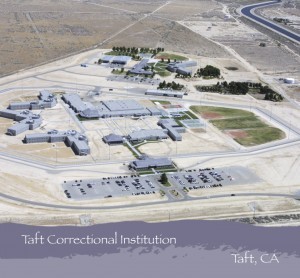
Taft Correctional Institution
Federal Prison | Kern County — California | Federal Bureau of Prisons
Taft Correctional Institution is a minimum-security correctional facility located at 1500 Cadet Road in Taft, Kern County, California. Operating under the California Department of Corrections and Rehabilitation (CDCR), the facility houses adult male inmates and maintains a current population of approximately 2,161 offenders within its 2,500-inmate capacity. Warden Craig Apker oversees daily operations at this sprawling desert facility in California's central valley region.
Families seeking information about incarcerated loved ones can use JailData.com to search inmate records, locate individuals within the facility, and access arrest records. Our platform provides essential details about sending money to inmates, scheduling visitation appointments, and understanding facility policies to maintain contact during incarceration.
Taft Correctional Institution stands apart within the California correctional system as a minimum-security facility focused on preparing inmates for successful community reintegration. Located in the oil-producing region of Kern County, the institution takes advantage of its rural desert setting to provide extensive outdoor work programs and agricultural opportunities unavailable at urban facilities. The facility's design emphasizes lower security measures appropriate for inmates nearing release or those with minimal custody requirements. Its substantial capacity of 2,500 beds makes it one of California's larger minimum-security institutions, allowing for comprehensive programming and efficient resource allocation while maintaining the therapeutic community approach essential for successful rehabilitation.
Taft Correctional Institution houses adult male offenders classified as minimum-security custody, representing the lowest risk level within the CDCR system. Inmates at this facility have typically demonstrated positive institutional behavior and pose minimal threat to public safety. The population includes individuals convicted of various offenses, though violent offenders and those with serious disciplinary histories are excluded from minimum-security placement. All inmates at Taft are sentenced individuals serving the final portions of their terms or those with shorter sentences for less serious crimes. The facility does not house pre-trial detainees or maximum-security inmates. The population often includes individuals participating in community work programs, pre-release preparation, and those transitioning toward parole eligibility.
Taft Correctional Institution provides dormitory-style housing arrangements typical of minimum-security facilities, with inmates residing in open barracks or modified housing units rather than individual cells. This housing model encourages responsibility and prepares residents for community living. The facility serves three meals daily in a central dining hall, with menus meeting nutritional standards established by CDCR. Recreational opportunities include outdoor exercise yards, sports facilities, basketball courts, and access to dayrooms with televisions and games. The desert location provides ample space for outdoor activities in appropriate weather conditions.
Medical services are available through an on-site health clinic staffed by licensed medical professionals who address routine healthcare needs, medication management, and chronic condition monitoring. Mental health services include counseling, crisis intervention, and treatment programs for inmates requiring psychological support. Inmates with concerns about conditions or treatment may utilize the formal grievance process, which allows them to document complaints and receive administrative review according to CDCR procedures.
Taft Correctional Institution offers comprehensive educational programming including adult basic education and GED preparation classes for inmates lacking high school credentials. Vocational training programs provide practical skills in trades relevant to post-release employment opportunities. Substance abuse treatment programs address addiction issues through evidence-based curricula, including group counseling and individual therapy sessions designed to reduce recidivism. Religious services accommodate various faith traditions with regular worship services, faith-based counseling, and volunteer chaplain visits.
Pre-release and re-entry programs form a central component of Taft's mission, preparing inmates for successful community reintegration through life skills classes, employment readiness training, parole preparation, and transitional services coordination. These programs help inmates develop essential competencies for securing housing, employment, and family reunification upon release. The minimum-security environment allows greater programming flexibility and community connection compared to higher-security institutions.
Inmates at Taft Correctional Institution participate in various work assignments that maintain facility operations while developing employable skills. Inside work assignments include kitchen duties, janitorial services, laundry operations, maintenance crews, and administrative support positions. The minimum-security classification allows qualified inmates to participate in community work programs and conservation camps, where they perform labor for public agencies and respond to emergency situations. These outside work assignments provide valuable work experience and demonstrate responsibility. Participants in work programs receive modest wages and gain references beneficial for post-release employment. The facility's emphasis on productive work helps inmates develop work ethic and routine essential for successful reintegration.
Taft Correctional Institution was established to address California's need for additional minimum-security bed space within the CDCR system, though specific founding dates remain undocumented in available public records. The facility was constructed in the Taft area of Kern County, strategically positioned in California's central valley where land availability and community support facilitated development. The institution has expanded over the years to reach its current capacity of 2,500 inmates, making it a significant component of California's correctional infrastructure.
Located in an oil-producing region with established correctional presence, Taft Correctional Institution has served as a stable employer and economic contributor to the local community. The facility continues fulfilling its mission as a minimum-security institution focused on rehabilitation, pre-release preparation, and reducing recidivism through structured programming. Under Warden Craig Apker's leadership, the facility maintains its role within the larger CDCR system.
Visitation at Taft Correctional Institution provides families opportunities to maintain important connections with incarcerated loved ones. All visitors must complete an approval process prior to their first visit and present valid government-issued photo identification upon arrival. Visitors should adhere to the facility's dress code, which prohibits revealing clothing, gang-related attire, and colors that resemble inmate uniforms. Children must be accompanied by an approved adult guardian or parent.
Visitation scheduling procedures and specific visiting days vary, so families should contact the facility directly before traveling to confirm current schedules, restrictions, and any temporary policy changes. Visitors should arrive early to allow time for processing and security screening. The facility provides designated visiting areas where families can spend quality time together within established guidelines and supervision.
To send mail to an inmate at Taft Correctional Institution, address correspondence with the inmate's full legal name, CDCR identification number, facility name, P.O. Box 7001, Taft, CA 93268. All incoming mail undergoes inspection for prohibited items and contraband. Families may send books, magazines, and educational materials directly from approved vendors to comply with facility regulations.
Inmates can make outgoing telephone calls to approved numbers using the facility's telephone system, which requires families to establish prepaid accounts with the designated telephone service provider. Some facilities offer email or electronic messaging services through approved vendors, though families should verify current communication options directly with the institution to confirm available services and procedures.
Sponsored and Powered by our Partner TruthFinder
Quick Facts
Should I Be Concerned? — Family Guide
Taft Correctional Institution maintains a strong safety record with zero reported staff assaults, reflecting the minimum-security environment and cooperative inmate population. The facility operates at 86% capacity with no overcrowding concerns. Visitors should expect standard security screening procedures and should follow all facility rules during visits to ensure a safe experience for everyone on campus.
Neighborhood & Getting There
Taft Correctional Institution is located in Taft, a small city in central Kern County, approximately 35 miles northwest of Bakersfield and 120 miles north of Los Angeles. The facility sits in California's oil-producing region with limited urban amenities nearby. Highway 119 provides direct access; visitors typically drive 1.5-2 hours from Bakersfield or 2-2.5 hours from LA. Basic accommodations and services are available in Taft, with more options in nearby Bakersfield.