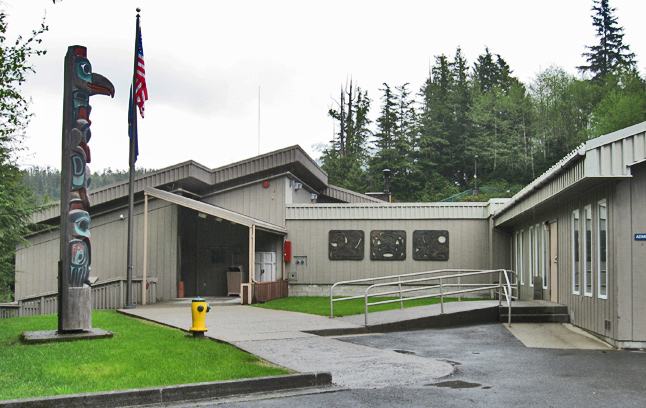
Ketchikan Correctional Center
State Prison | Ketchikan Gateway County — Alaska | KCC | Alaska Department of Corrections
Ketchikan Correctional Center is a 71-bed correctional facility located at 1201 Schoenbar Road in Ketchikan, Alaska. Operated by the Alaska Department of Corrections, this facility houses adult male inmates across all security levels from minimum to maximum. Situated in Ketchikan Gateway County in Southeast Alaska, the center serves as a critical component of the state's correctional system in the remote panhandle region. Under the supervision of Warden Jessica Matthews, the facility has maintained operations since 1984.
Families seeking information about inmates at Ketchikan Correctional Center can search arrest records and inmate rosters through the Alaska Department of Corrections database. Loved ones can send money to inmates, schedule visits, and maintain contact through approved communication channels. Understanding facility procedures helps families stay connected during incarceration.
Ketchikan Correctional Center serves as the only Alaska Department of Corrections facility in Southeast Alaska's southern panhandle region, making it uniquely vital for the isolated island community. The center's location in Ketchikan, accessible only by air or sea, presents distinct operational challenges not faced by road-connected facilities. This geographic isolation requires the facility to manage inmates from various security classifications within its 71-bed capacity, functioning as a multi-security institution serving pre-trial detainees, sentenced offenders, and inmates awaiting transfer. The facility must maintain comprehensive services locally due to limited transportation options to other Alaska correctional facilities.
Ketchikan Correctional Center houses a diverse population of adult male offenders across all custody classifications from minimum to maximum security. The facility manages both pre-trial detainees awaiting court proceedings in the First Judicial District and sentenced inmates serving time for various offenses. Given Ketchikan's role as a regional hub for Southeast Alaska communities, the inmate population includes individuals from surrounding villages and islands charged with offenses ranging from property crimes and substance-related violations to violent felonies. The facility also houses inmates requiring medium and maximum security placement who would otherwise need costly transport to larger facilities in Juneau or mainland Alaska. The population fluctuates based on seasonal factors and regional law enforcement activity throughout the Southeast Alaska archipelago.
Ketchikan Correctional Center provides housing across multiple security levels within its 71-bed capacity, with inmates assigned to units based on classification and custody level. Housing configurations accommodate the facility's multi-security function, separating maximum security inmates from lower custody populations. Inmates receive three daily meals prepared according to Alaska Department of Corrections nutritional standards. The facility provides indoor recreation areas particularly important given Ketchikan's significant annual rainfall, along with outdoor recreation when weather permits. Medical services include sick call and routine healthcare, with serious medical needs addressed through local Ketchikan medical providers or transfer to facilities with specialized medical units. Mental health services are available through Alaska DOC mental health professionals who assess and treat inmates with psychological needs. Inmates can file grievances through the established Alaska Department of Corrections grievance procedure, allowing formal complaint resolution regarding conditions, staff conduct, or policy violations.
Ketchikan Correctional Center offers educational programming including GED preparation for inmates seeking high school equivalency credentials. Given the facility's smaller size and remote location, program offerings are adapted to available resources and staff. Substance abuse treatment programs address addiction issues prevalent among Alaska's inmate population, providing group counseling and education about recovery. Religious services and spiritual guidance are available to inmates seeking faith-based support during incarceration. The facility provides re-entry planning assistance to help inmates prepare for release, particularly important given the challenges of returning to Southeast Alaska communities with limited resources. Program participation often depends on security classification, sentence length, and individual needs assessments conducted by correctional staff and case managers.
Inmates at Ketchikan Correctional Center participate in work assignments that maintain daily facility operations and develop employable skills. Inside job assignments include kitchen duties, janitorial work, laundry services, and facility maintenance tasks essential to institutional functioning. These positions teach responsibility and work habits while reducing operational costs. Given the facility's smaller size compared to major Alaska correctional institutions, work opportunities are limited but meaningful. Inmates may also assist with grounds maintenance during suitable weather conditions. Work assignments are distributed based on security classification, behavior, and institutional needs, with participation often considered during classification reviews and release planning.
Ketchikan Correctional Center was established in 1984 to address correctional needs in Southeast Alaska's southern region. The facility was constructed to eliminate the need for costly and logistically complex transportation of inmates from Ketchikan and surrounding communities to distant correctional facilities accessible only by air or water. The center's creation recognized Ketchikan's strategic importance as the first Alaska port of entry for northbound marine traffic and its role as a regional population center. Over four decades, the facility has adapted to changing correctional practices while maintaining its 71-bed capacity. The center continues serving as an essential component of Alaska's geographically dispersed correctional system, managing inmates who would otherwise require expensive transport across hundreds of miles. Under current leadership of Warden Jessica Matthews, Ketchikan Correctional Center maintains its mission of secure custody and offender management in one of America's most remote correctional environments.
Visitation at Ketchikan Correctional Center allows families to maintain important connections with incarcerated loved ones. Visitors must present valid government-issued photo identification such as a driver's license or passport. The Alaska Department of Corrections maintains dress code requirements prohibiting clothing that resembles inmate attire, revealing garments, or items that could compromise security. Potential visitors should complete the visitor approval process before arriving, as background checks are conducted. Visitation schedules vary based on inmate housing assignment and security classification. Families should call the facility in advance to confirm current visitation hours, procedures, and any restrictions that may apply. Understanding that Ketchikan's remote location makes visiting challenging for families from distant communities, advance planning ensures successful visits.
Mail sent to inmates at Ketchikan Correctional Center must include the inmate's full name and identification number, followed by the facility address at 1201 Schoenbar Road, Ketchikan, Alaska 99901-6270. All incoming mail is inspected according to Alaska Department of Corrections security protocols. Books and publications must be shipped directly from approved vendors or publishers to comply with facility regulations. Inmates can make telephone calls through the facility's telephone system using pre-approved contact lists and funded phone accounts that families can set up. Families should verify current communication policies regarding any electronic messaging systems that may be available through Alaska DOC approved vendors.
Sponsored and Powered by our Partner TruthFinder
Quick Facts
Should I Be Concerned? — Family Guide
Ketchikan Correctional Center maintains a solid safety record with zero staff assaults reported. As a mixed-security facility with modest capacity, it generally operates with manageable inmate-to-staff ratios. The unknown occupancy rate suggests dynamic population management typical of regional Alaska facilities. Visitors should expect standard security protocols; plan visits in advance and contact the facility directly to confirm current visiting policies and any restrictions.
Neighborhood & Getting There
Ketchikan Correctional Center sits on Schoenbar Road in Ketchikan, a scenic coastal city in Southeast Alaska approximately 235 miles north of Seattle by air. The facility is the primary correctional institution serving Ketchikan Gateway County. The town offers limited hotel accommodations; visitors typically stay downtown near the waterfront, about 10-15 minutes from the facility. Access is primarily by plane or ferry, as Ketchikan is not accessible by road from the continental U.S.