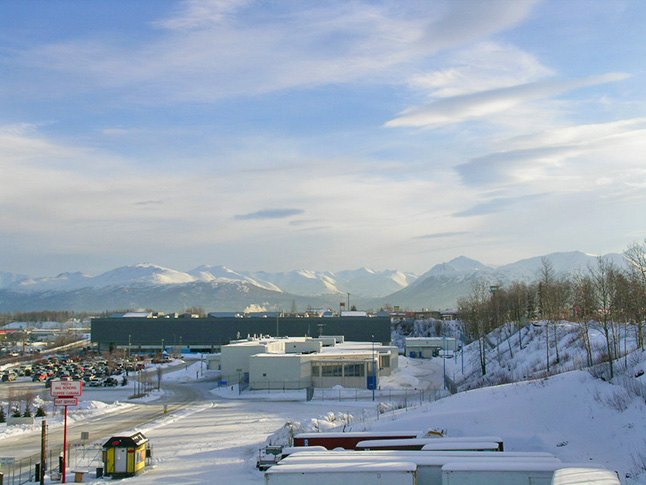
Anchorage Correctional Complex
State Prison | Anchorage County — Alaska | ACC | Alaska Department of Corrections
Anchorage Correctional Complex is a male correctional facility located at 1400 East 4th Avenue in Anchorage, Alaska. Established in 1981, the facility operates under the Alaska Department of Corrections and accommodates inmates across all security classifications from minimum to maximum security. Under the leadership of Warden Jesse Self, the complex currently houses approximately 850 inmates, serving as a critical component of Alaska's largest urban correctional system in Anchorage County.
Families seeking information about incarcerated individuals can access inmate search tools through the Alaska Department of Corrections. The facility provides multiple options for maintaining contact including approved visitation schedules, inmate telephone services, and secure mail correspondence. Financial support can be arranged through approved deposit services, and arrest records are maintained through official channels for public inquiry.
Anchorage Correctional Complex stands as Alaska's largest urban correctional facility, uniquely positioned to serve the state's most populous region. Its location in downtown Anchorage places it within the state's judicial and administrative center, facilitating efficient court transport and legal proceedings. The facility's comprehensive security spectrum from minimum to maximum custody makes it distinct among Alaska institutions, allowing it to house diverse inmate populations without requiring frequent interstate transfers. This multi-level classification system enables the complex to respond flexibly to Alaska's correctional needs while maintaining inmates closer to family support networks concentrated in the Anchorage metropolitan area, which contains over 40 percent of Alaska's total population.
The Anchorage Correctional Complex houses approximately 850 male inmates across its security classifications. The population includes pre-trial detainees awaiting court proceedings in Alaska's Superior and District Courts, sentenced offenders serving terms for various felony convictions, and inmates in administrative segregation. The facility manages individuals charged with or convicted of offenses ranging from property crimes and drug violations to violent felonies requiring maximum security housing. Given Anchorage's role as Alaska's urban hub, the inmate population reflects diverse backgrounds including Alaska Native inmates, urban offenders, and individuals from rural communities throughout the state. The complex also accommodates special management inmates requiring protective custody, those with behavioral issues, and individuals awaiting transfer to other Alaska Department of Corrections facilities or out-of-state placements.
Inmates at Anchorage Correctional Complex are housed according to their security classification in units ranging from minimum security dormitories to maximum security cellblocks with single or double occupancy. Housing assignments consider factors including custody level, behavioral history, and separation needs. The facility provides three daily meals prepared according to nutritional standards, with accommodations for medical diets and religious dietary requirements. Inmates have access to indoor recreation areas and outdoor yards when weather permits, though Alaska's climate presents challenges for year-round outdoor activities. Medical services include routine healthcare, chronic disease management, and emergency treatment through the facility's health services unit. Mental health professionals provide assessments, counseling, and crisis intervention for inmates experiencing psychological difficulties. The complex maintains a formal grievance system allowing inmates to address concerns about conditions, staff conduct, or administrative decisions through documented procedures. Educational materials and limited entertainment options are available within housing units, while library services provide access to legal resources and reading materials.
Anchorage Correctional Complex offers educational programs including GED preparation and adult basic education for inmates seeking to improve their academic credentials. Vocational training opportunities provide practical skills applicable to post-release employment, though program availability varies based on security level and behavior classification. Substance abuse treatment programs address Alaska's significant challenges with alcohol and drug addiction, offering both educational components and therapeutic interventions. Religious services and spiritual counseling are available through volunteer chaplains representing various faith traditions. Re-entry programs assist inmates preparing for release by focusing on transition planning, community resources, and life skills development. Cognitive behavioral interventions target criminogenic thinking patterns and help participants develop pro-social decision-making abilities. Program participation often influences institutional behavior classifications and may be considered during parole evaluations, making these opportunities particularly valuable for sentenced inmates.
Inmates at Anchorage Correctional Complex participate in various work assignments essential to facility operations. Inside job assignments include kitchen duties preparing and serving meals, janitorial work maintaining housing units and common areas, laundry services processing institutional clothing and linens, and maintenance tasks supporting facility infrastructure. Trustee inmates in minimum security classifications may qualify for additional responsibilities including groundskeeping and facility support roles. Work assignments provide structure to daily routines, teach employment skills, and may result in modest compensation or sentence credits depending on the assignment. The facility's urban location within downtown Anchorage limits extensive outside work programs, though select inmates may participate in supervised community service projects under strict security protocols.
Anchorage Correctional Complex was established in 1981 to address Alaska's growing correctional needs in its largest urban center. The facility was constructed during a period of population growth and increased crime rates associated with Alaska's oil boom economy. Its downtown Anchorage location was strategically chosen for proximity to courts, legal services, and the concentration of Alaska's judicial infrastructure. Over the decades, the complex has undergone modifications to accommodate changing security requirements and inmate management philosophies. The facility has experienced typical challenges facing urban correctional institutions including overcrowding pressures, staffing difficulties, and the complexities of managing diverse inmate populations. Under Warden Jesse Self's current leadership, the complex continues serving as Alaska's primary urban detention and corrections facility, housing pre-trial detainees and sentenced offenders while adapting to evolving correctional standards and the unique challenges of operating in Alaska's largest municipality.
Visitation at Anchorage Correctional Complex requires advance approval through the Alaska Department of Corrections visitor registration process. Visitors must present valid government-issued photo identification and are subject to background checks before approval. The facility enforces strict dress code requirements prohibiting revealing clothing, gang-related attire, and items resembling institutional uniforms. Visitation schedules vary by housing unit and security classification, with specific days and times assigned to different inmate populations. Visitors should expect security screening including metal detectors and possible searches. The facility may restrict or modify visitation due to security concerns, staffing limitations, or facility operations. Contact visits may be limited based on inmate classification, with some higher security inmates restricted to non-contact visits. Families should call ahead to confirm current visitation schedules, rules, and any temporary modifications before traveling to the facility.
Mail sent to inmates at Anchorage Correctional Complex must include the inmate's full name, identification number, and the complete facility address: 1400 East 4th Avenue Anchorage, Alaska 99501. All incoming correspondence is inspected for contraband and prohibited items. Books and publications must come directly from approved vendors or publishers rather than personal sources. Inmates can place outgoing calls using facility telephone systems with pre-approved contact lists and prepaid telephone accounts established by friends and family. Rates and calling procedures follow Alaska Department of Corrections policies. Families should verify current mail policies and telephone provider information as these services may change. Written correspondence remains the most reliable communication method, though processing times may vary depending on facility mail volume and security screening requirements.
Sponsored and Powered by our Partner TruthFinder
Quick Facts
Should I Be Concerned? — Family Guide
Anchorage Correctional Complex maintains a mixed-security environment with both minimum and maximum security units, requiring appropriate precautions during visits. The facility's zero staff assault record in recent reporting suggests stable operational conditions. With 850 inmates and unknown capacity, the facility appears to be managing population levels responsibly. Visitors should expect standard security protocols including screening procedures and should arrive during designated visiting hours with valid identification.
Neighborhood & Getting There
Located at 1400 East 4th Avenue in central Anchorage, Alaska, the facility is situated in the state's largest city and economic hub. The area offers easy highway access via major routes connecting downtown Anchorage. Visitors will find numerous hotels, restaurants, and services within 1-3 miles of the facility. Anchorage International Airport is approximately 4 miles away, making it accessible for family visits from outside Alaska. The surrounding neighborhood includes commercial and government buildings typical of downtown Anchorage.