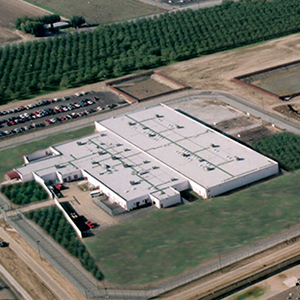
Central Valley Modified Community Correctional Facility
State Prison | Kern County — California | CVMCCF
Central Valley Modified Community Correctional Facility is located at 245 Taylor Avenue in McFarland, Kern County, California. Operated by the California Department of Corrections and Rehabilitation, this medium-security facility houses male offenders. The facility serves as a modified community correctional center within California's extensive prison system, providing custody and programming for inmates who require medium-level security supervision in the Central Valley region.
Families seeking to locate an incarcerated loved one can search inmate records through the CDCR database. Services available to support families include visitation programs, inmate telephone systems, and mail correspondence. Understanding the facility's rules regarding money transfers and care packages helps maintain meaningful connections during incarceration.
Central Valley Modified Community Correctional Facility operates as a modified community correctional facility, a designation that distinguishes it from traditional state prisons within the California system. This classification indicates the facility serves as a transitional or specialized custody environment, often focused on community reintegration preparation rather than maximum security confinement. Located in the agricultural community of McFarland in Kern County, the facility benefits from its Central Valley location, which provides proximity to family connections throughout California's interior regions while maintaining appropriate security protocols for medium-custody male offenders.
Central Valley Modified Community Correctional Facility houses male inmates classified at medium security levels within the California Department of Corrections and Rehabilitation system. The inmate population typically includes individuals who have demonstrated appropriate institutional behavior and may be preparing for eventual community reintegration. As a modified community correctional facility, it generally houses sentenced inmates rather than pre-trial detainees. The classification process considers factors including offense type, criminal history, institutional conduct, and time remaining on sentence. Medium-security inmates have greater privileges than maximum-security counterparts but still require structured supervision and security protocols to ensure facility safety and public protection.
Inmates at Central Valley Modified Community Correctional Facility reside in housing units appropriate for medium-security custody levels. Daily schedules include structured mealtimes with food service meeting California correctional standards for nutrition and dietary requirements. Recreation opportunities allow inmates time outside their housing areas for physical activity and exercise. Medical services provide routine healthcare, sick call appointments, and medication management through CDCR healthcare staff. Mental health services address psychological needs through counseling and treatment programs when clinically indicated.
The facility maintains a formal grievance process allowing inmates to address concerns regarding conditions, staff interactions, or policy disputes through administrative channels. This appeals system provides documented review of complaints at multiple levels. Inmates have access to canteen services for approved personal items and communication resources including mail and telephone systems to maintain family connections throughout their incarceration period.
Central Valley Modified Community Correctional Facility offers educational programming designed to improve inmate outcomes upon release. Academic classes help inmates work toward GED completion if they lack high school diplomas. Vocational training programs develop marketable job skills relevant to employment opportunities in California communities. Substance abuse treatment addresses addiction issues that may have contributed to criminal behavior, utilizing evidence-based curriculum to support recovery.
Religious services accommodate various faith traditions through volunteer chaplains and community partnerships. Re-entry programming becomes particularly important given the facility's modified community correctional designation, with case managers helping inmates develop transition plans addressing housing, employment, and family reunification. These programs aim to reduce recidivism by preparing inmates for successful return to their communities.
Inmates at Central Valley Modified Community Correctional Facility participate in work assignments that maintain facility operations and develop employment skills. Inside jobs include kitchen duties, janitorial services, laundry operations, and facility maintenance tasks. These assignments keep the institution functioning while teaching workplace responsibility and routine. Some inmates may qualify for outside work assignments depending on custody classification and institutional behavior. Work programs provide structure to daily schedules and may offer modest wages deposited into inmate accounts. Job assignments also serve as important factors in behavioral evaluations and classification reviews throughout an inmate's sentence.
The Central Valley Modified Community Correctional Facility in McFarland represents California's approach to providing specialized custody environments beyond traditional maximum-security prisons. While specific founding dates and construction details are not widely documented in public records, the facility emerged as part of California's effort to diversify its correctional infrastructure throughout Kern County and the Central Valley region. The modified community correctional designation reflects evolving correctional philosophy emphasizing reintegration preparation alongside security.
McFarland's location in California's agricultural heartland provides a setting distinct from urban detention centers. The facility continues serving its role housing medium-security male inmates within the CDCR system, adapting to changing correctional policies and population management needs while maintaining custody standards appropriate for its security classification and programmatic mission.
Families planning to visit inmates at Central Valley Modified Community Correctional Facility must follow CDCR visitation policies. All visitors require prior approval through the visiting application process, which includes background screening. Valid government-issued photo identification is mandatory for entry. Dress code requirements prohibit clothing resembling inmate attire, excessively revealing garments, or items that could compromise facility security.
Visitation schedules vary based on housing assignments and facility operations. Families should contact the facility directly before traveling to confirm current visiting hours, any temporary restrictions, and specific requirements. Understanding approved items, processing procedures, and behavior expectations helps ensure successful visits that maintain family connections during incarceration.
Mail sent to inmates at Central Valley Modified Community Correctional Facility must include the inmate's full name, CDCR identification number, and be addressed to PO Box 638, McFarland, CA 93250. All incoming mail undergoes security screening before delivery. Inmates can receive books and publications only when shipped directly from approved vendors or publishers to prevent contraband introduction.
Telephone communication occurs through the facility's inmate phone system, which requires families to establish prepaid accounts or accept collect calls. Rates and calling procedures follow CDCR guidelines. Families should verify current policies regarding email or electronic messaging services, as these communication options continue expanding throughout California's correctional system.
Sponsored and Powered by our Partner TruthFinder
Quick Facts
Should I Be Concerned? — Family Guide
Central Valley Modified Community Correctional Facility maintains a medium-security classification with zero reported staff assaults, indicating a generally stable facility environment. With unknown current occupancy, the facility manages inmate populations through structured programming and community-focused correctional approaches. Visitors should expect standard security procedures including identification verification and property screening; plan for potential wait times and follow all facility rules to ensure safe, successful visits.
Neighborhood & Getting There
Central Valley Modified Community Correctional Facility is located in McFarland, a small agricultural community in Kern County, approximately 110 miles north of Los Angeles and 30 miles south of Bakersfield. The facility sits in California's agricultural heartland with limited immediate commercial development. Bakersfield offers nearest hotel options and highway access via Interstate 99. The region is characterized by farmland and small towns typical of the southern San Joaquin Valley.