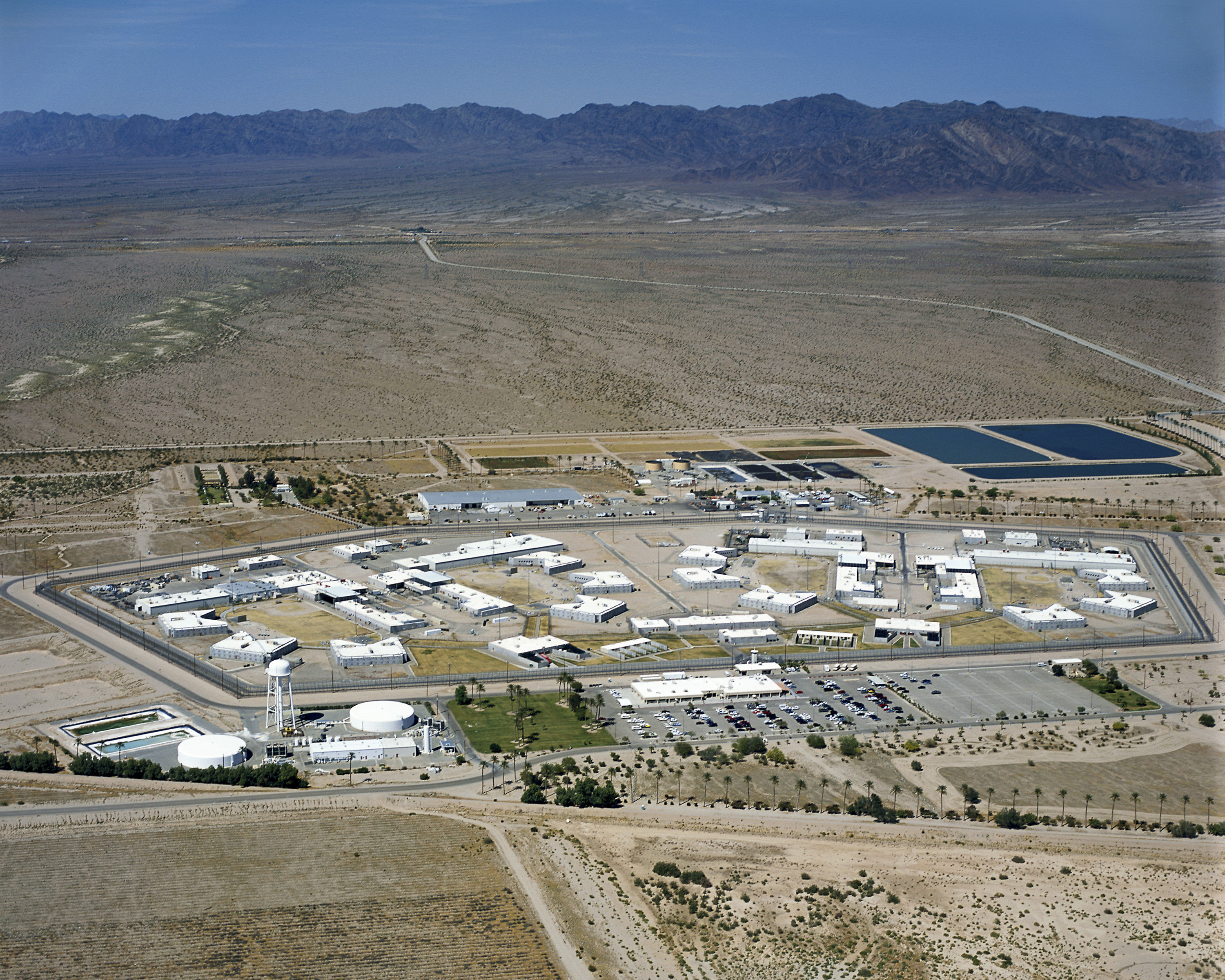
Chuckawalla Valley State Prison (CVSP)
State Prison | Riverside County — California | California Department of Corrections and Rehabilitation
Chuckawalla Valley State Prison is a medium-security correctional facility located at 19025 Wiley's Well Road in Blythe, Riverside County, California. Operated by the California Department of Corrections and Rehabilitation, CVSP was established in 1988 to house both male and female inmates. The facility has a design capacity of 1,738 but currently operates at approximately 155 percent capacity with around 2,700 inmates. Warden K. A. Seibel oversees daily operations at this desert institution.
Families seeking information about inmates at Chuckawalla Valley State Prison can use the CDCR inmate locator to search arrest records and verify housing assignments. To send money to an inmate, families should use approved methods through the California Department of Corrections. Understanding visitation schedules and mail policies helps maintain crucial connections with loved ones during their incarceration at this Riverside County facility.
Chuckawalla Valley State Prison stands out as one of California's desert facilities, located in the remote Colorado Desert region near the Arizona border. The prison's name derives from the native chuckawalla lizard common to the area. CVSP's geographic isolation in Blythe presents unique challenges for both inmates and visiting families, who often travel significant distances across harsh desert terrain. The facility's location approximately 230 miles east of Los Angeles means families from urban population centers face extended travel times. Despite overcrowding beyond its designed capacity, CVSP maintains its role as a critical component of California's corrections system, managing medium-security populations in an environment characterized by extreme summer temperatures that regularly exceed 110 degrees Fahrenheit.
Chuckawalla Valley State Prison houses medium-security male and female inmates who have been convicted and sentenced under California law. The population consists primarily of individuals serving sentences for various felony offenses including property crimes, drug-related offenses, and some violent crimes that do not require maximum-security placement. With approximately 2,700 inmates in a facility designed for 1,738, CVSP operates at significantly above capacity, reflecting broader overcrowding challenges within the California correctional system. The facility does not house pre-trial detainees, as those individuals remain in county jail custody. CVSP's classification system separates inmates based on security needs, behavior, and programming requirements, with dedicated housing areas to maintain institutional safety and order in this co-correctional environment.
Inmates at Chuckawalla Valley State Prison reside in dormitory-style housing units and traditional cell configurations depending on their classification level and housing assignment. The facility provides three meals daily through institutional dining halls, with meal times structured around work and program schedules. Inmates have access to outdoor recreation yards where they can exercise, play sports, and socialize during designated periods, though the extreme desert heat limits outdoor activities during summer months. Medical services are available through on-site healthcare staff who address routine and urgent health needs, while more serious conditions may require transfer to outside medical facilities. Mental health services include counseling and psychiatric care for inmates requiring psychological support. The institution maintains a formal grievance process allowing inmates to address concerns about conditions, treatment, or policy violations through written appeals reviewed by administrative staff. Due to overcrowding, some inmates may experience limited personal space and extended wait times for certain services.
Chuckawalla Valley State Prison offers educational programs including adult basic education and GED preparation for inmates seeking to complete their high school equivalency. Vocational training opportunities provide practical skills in areas such as construction, maintenance, and other trades that support employability upon release. Substance abuse treatment programs address addiction issues through counseling and group therapy sessions designed to reduce recidivism. Religious services accommodate multiple faith traditions with regular worship opportunities and pastoral care. Re-entry programs focus on preparing inmates for successful community reintegration by teaching life skills, employment readiness, and providing resources for housing and support services. Program availability may be limited due to the facility's overcrowded conditions, and inmates typically must meet specific custody and behavior criteria to participate in certain programs.
Inmates at Chuckawalla Valley State Prison participate in various work assignments that support facility operations and provide job skills. Inside work assignments include kitchen duties, janitorial services, laundry operations, and facility maintenance tasks that keep the institution functioning. Some inmates work in administrative capacities providing clerical support. The facility may also utilize inmate labor for groundskeeping and landscaping despite the challenging desert environment. Work assignments provide inmates with structured daily routines, job skills, and sometimes modest wages credited to their inmate accounts. These positions are assigned based on custody level, institutional behavior, and individual capabilities.
Chuckawalla Valley State Prison opened in 1988 during a period of significant expansion in California's correctional system driven by increasing incarceration rates and prison overcrowding. The facility was constructed in the remote desert location of Blythe to serve the state's growing need for medium-security housing. Named after the chuckawalla lizard indigenous to the Colorado Desert region, CVSP became part of California's strategy to distribute correctional facilities across the state. The prison has operated continuously since its opening, adapting to evolving corrections policies and population pressures. Over the decades, CVSP has experienced the same overcrowding challenges facing most California prisons, housing substantially more inmates than its original design capacity. Today, under Warden K. A. Seibel's leadership, Chuckawalla Valley State Prison continues serving as an important medium-security facility within the California Department of Corrections and Rehabilitation system.
Visiting an inmate at Chuckawalla Valley State Prison requires advance planning and approval. All visitors must complete a visitor application and receive approval before their first visit, a process that includes background checks. Valid government-issued photo identification is mandatory for all adult visitors. The facility enforces strict dress code policies prohibiting clothing that resembles inmate attire, revealing clothing, or items that could pose security concerns. Visitors should expect security screening including metal detectors and possible searches upon entry. Visitation schedules vary by housing unit and inmate classification, so families should contact the facility directly to confirm visiting days and times before making the long trip to Blythe. Given the remote desert location, families are strongly encouraged to call ahead to verify current visitation policies and scheduling requirements.
To send mail to an inmate at Chuckawalla Valley State Prison, address correspondence to the inmate's full name and CDCR number, followed by PO Box 2289, Blythe, CA 92226. All incoming mail is inspected for security purposes, and prohibited items will be rejected. Families may send books, magazines, and educational materials directly from approved vendors only, not from personal addresses. Inmates can make outgoing phone calls using approved telephone accounts that families can fund through the CDCR-contracted phone service provider. Some communication options may include electronic messaging systems if available through CDCR programs. Families should verify current policies regarding acceptable correspondence methods before sending mail or packages.
Sponsored and Powered by our Partner TruthFinder
Quick Facts
Should I Be Concerned? — Family Guide
Chuckawalla Valley State Prison maintains a medium-security classification with zero reported staff assaults, indicating a relatively stable facility environment. However, current occupancy significantly exceeds design capacity at 155%, which can create operational challenges. Visitors should expect standard security screening procedures and follow all facility rules strictly during visits to ensure a safe experience.
Neighborhood & Getting There
Chuckawalla Valley State Prison is located in remote Riverside County near Blythe, California, approximately 225 miles east of Los Angeles and 150 miles north of San Diego. The facility sits in the Colorado Desert region with limited immediate amenities. Visitors should plan for a lengthy drive; Blythe offers basic hotel options along Highway 95. The nearest major airport is Palm Springs International, roughly 100 miles away. Travelers should bring supplies and fuel up before arriving in this isolated desert area.