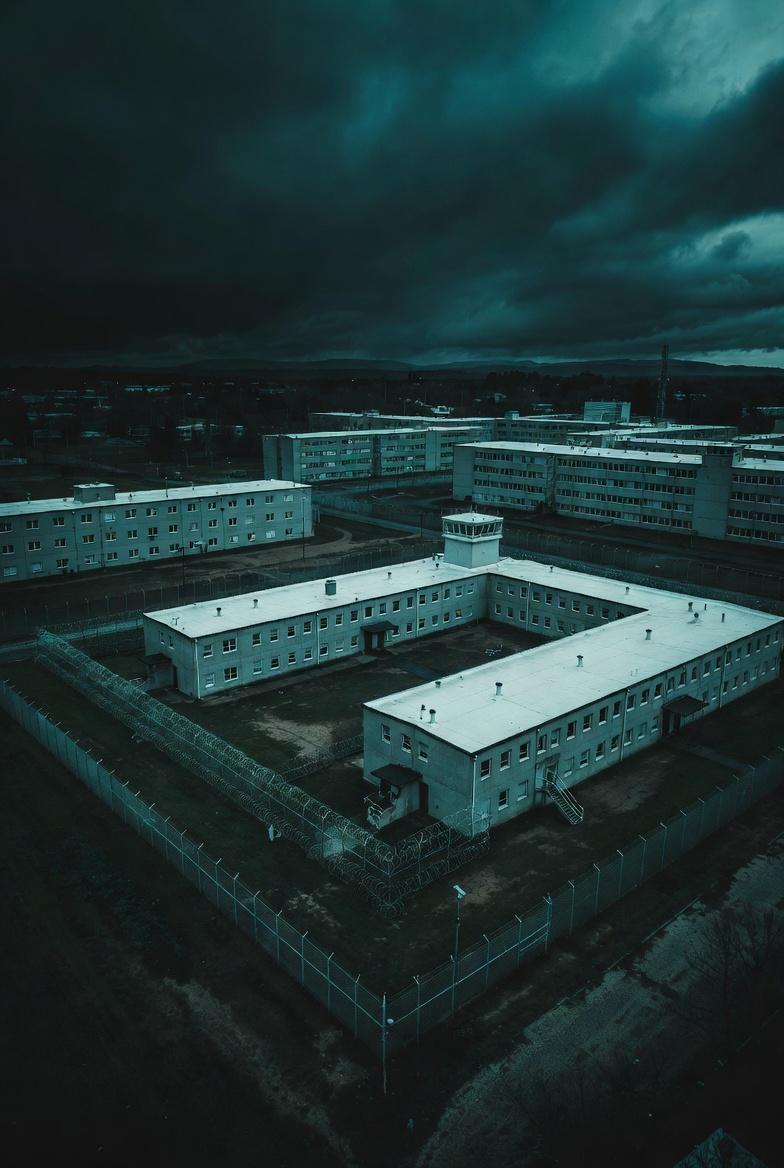
Western Maryland Children's Center is a state-operated juvenile residential facility located at 18420 Roxbury Road, Hagerstown, MD 21740, in Washington County in the western portion of the state. As one of several secure and non-secure juvenile facilities maintained by Maryland's Department of Juvenile Services (DJS), this center serves youth from across the state who require structured residential placement, therapeutic intervention, or court-ordered evaluation. Families searching for a young person who may be housed here should be aware that Western Maryland Children's Center operates under an entirely different framework than adult correctional institutions — one built around the developmental needs, educational rights, and rehabilitative potential of young people.
Maryland's juvenile justice system is administered by the Department of Juvenile Services, which prioritizes rehabilitation and successful reintegration into the community above punitive confinement. Youth placed at this facility are typically there as a result of a commitment order issued by a juvenile court judge following an adjudication of delinquency, though some residents may also be placed on a short-term basis for evaluation, crisis stabilization, or specialized treatment. Because the nature and duration of placement can vary significantly from case to case, families are strongly encouraged to contact the facility directly or work with the resident's assigned DJS case manager to understand the specific terms of their child's stay.
Western Maryland Children's Center is one of many facilities in Maryland's correctional and juvenile justice system, and navigating that system can be challenging for families. If you are unsure whether a young family member is currently housed here, you can search public criminal records to help confirm placement status and review court history. Maintaining open communication with DJS staff and the facility's administrative team is the most reliable way to stay informed and involved throughout your child's placement.
One of the most significant distinguishing features of Western Maryland Children's Center is its exclusive focus on juvenile residents — a distinction that sets it apart fundamentally from the adult prisons and county jails that make up the majority of Maryland's correctional landscape. This facility is governed not by the Department of Public Safety and Correctional Services, which oversees adult incarceration, but by the Maryland Department of Juvenile Services, an agency with a mission rooted in youth development, family engagement, and community reintegration.
This jurisdictional difference has profound implications for how the facility operates. Residents at Western Maryland Children's Center have legally protected rights to education, and the facility is required to provide on-site schooling that meets state academic standards. Mental health services, behavioral programming, and individualized case planning are not optional add-ons — they are core components of the DJS operational model. Staff are trained to work with adolescents specifically, using trauma-informed approaches that recognize the role adverse childhood experiences often play in juvenile justice involvement.
Another distinguishing characteristic is the facility's geographic positioning. Located in Hagerstown, it provides critical residential capacity for youth from western Maryland and the broader state who might otherwise be placed in facilities hours from their families. Research consistently shows that proximity to family during incarceration supports better outcomes, and this regional placement model is an intentional feature of how DJS structures its facility network. For families, this means that visits and ongoing communication are not just permitted — they are actively encouraged as part of each resident's individualized rehabilitation plan.
The population at Western Maryland Children's Center consists entirely of juvenile residents — young people who have been adjudicated delinquent in Maryland's juvenile court system or referred by the Department of Juvenile Services for residential placement, evaluation, or specialized treatment. Unlike adult correctional facilities, there are no adult inmates housed at this center. Residents are typically between the ages of 12 and 18, though in limited circumstances individuals slightly older may remain in DJS custody if their commitment order extends beyond their eighteenth birthday and a court has determined that continued juvenile jurisdiction is appropriate.
The population reflects the full range of backgrounds and circumstances that bring young people into contact with the juvenile justice system. Some residents have been placed following adjudications for serious offenses, while others may be there for repeated violations or for offenses that, combined with other risk factors, led a court to determine that a structured residential setting was necessary. Many residents have histories that include trauma, unstable housing, mental health challenges, substance use, or disrupted educational experiences — factors that DJS programs are specifically designed to address.
Because residents are minors, their identities and case details are protected by Maryland's juvenile confidentiality laws, which limit the public disclosure of information about youth in the system. This is an important distinction from adult facilities, where inmate rosters may be publicly accessible. Families seeking to confirm whether a young person is held at this facility should contact the Department of Juvenile Services directly or reach out to the facility's administrative staff, as standard public inmate lookup tools designed for adult facilities will not reflect DJS placements.
Living conditions at Western Maryland Children's Center are designed with the unique developmental and emotional needs of juvenile residents in mind. Maryland law and DJS policy require that juvenile facilities maintain environments that actively support youth development, mental health stability, and educational progress — standards that differ significantly from those governing adult correctional institutions. The facility is structured to provide a degree of routine and security while avoiding the purely institutional atmosphere that characterizes many adult prisons.
Residents are typically housed in cottage-style or unit-based living arrangements, which are designed to create smaller, more manageable community settings within the larger facility. These arrangements allow staff to build meaningful relationships with residents and provide more individualized attention than would be possible in a large open dormitory or cell-block environment. Each resident's living space is intended to offer a degree of personal stability, with consistent daily routines that help build structure and self-regulation skills.
Daily schedules are highly organized and include academic instruction during school hours, physical activity and recreation, meals, personal hygiene time, and structured programming such as group therapy, life skills development, and behavioral interventions. Residents are generally expected to participate in all scheduled activities, and progress within the facility's program can influence transitions to less restrictive settings or movement toward release.
The facility also maintains standards for nutrition, medical care, and mental health services. Residents have access to healthcare staff and, when needed, mental health professionals. Clothing, bedding, and other basic necessities are provided, and residents may be permitted to receive approved personal items from family members in accordance with facility guidelines. Families are encouraged to ask the facility or the assigned case manager about specific policies regarding what may be brought or sent to their child.
Programming at Western Maryland Children's Center is central to its operational mission and is what most clearly distinguishes it from adult correctional facilities. Because the facility serves juveniles in state custody, education is not merely available — it is legally mandated. Maryland law guarantees that all youth in DJS custody have access to appropriate academic instruction, and the facility maintains an on-site school program where residents work toward grade-level academic requirements, high school diploma equivalency, or other educational benchmarks suited to their age, ability, and goals. Educational staff work to identify learning disabilities, gaps in prior schooling, and individualized needs so that each resident receives instruction that is both appropriate and meaningful.
Beyond academics, the facility offers a comprehensive array of rehabilitative and behavioral health programs. Cognitive-behavioral therapy (CBT) and related evidence-based models are commonly used in juvenile facilities across Maryland to help residents understand the thinking patterns that contribute to delinquent behavior and to develop healthier decision-making skills. Group therapy sessions, individual counseling, and family therapy are all components of the treatment landscape, with the goal of addressing underlying issues rather than simply managing surface-level behavior.
Vocational and life skills programming is another important dimension of what the facility offers. Residents may participate in workshops or instruction covering topics such as financial literacy, conflict resolution, job readiness, and healthy relationships. These programs are designed to equip young people with the practical tools they will need to succeed after release, reducing the likelihood of reoffending and supporting successful reintegration into school, work, and community life.
Substance abuse education and treatment services are also available for residents who present with related needs, as substance use is a common contributing factor in juvenile delinquency. Recreational programming — including organized sports, arts, and other activities — plays a role as well, supporting physical health, teamwork, and emotional regulation. In many cases, residents' case plans are individualized to reflect their specific risk factors, strengths, and goals, making programming at this facility a tailored experience rather than a one-size-fits-all approach.
Western Maryland Children's Center was established as part of Maryland's sustained effort to build a geographically accessible, regionally distributed juvenile justice infrastructure — one that would allow youth from different parts of the state to remain closer to their home communities while receiving structured residential care. The facility was developed with the recognition that western Maryland, including Washington County and the surrounding region, needed local capacity to serve youth who would otherwise be placed far from their families, support systems, and community ties.
In its earlier years, the facility reflected the dominant juvenile justice model of the era, which emphasized secure confinement and behavioral compliance. However, beginning in the late twentieth century, Maryland — like many states — began a meaningful shift in how it approached juvenile delinquency. Influenced by research in adolescent brain development, trauma-informed care, and recidivism data, the state moved progressively toward models that treat youth as individuals with the capacity for change, rather than simply as offenders to be controlled.
Over the decades, Western Maryland Children's Center has evolved in step with these broader reforms. The facility has incorporated evidence-based programming, strengthened its on-site educational services, and placed increasing emphasis on mental health treatment and family engagement. Staffing models have shifted to reflect more therapeutic and trauma-informed approaches, and the facility's physical environment has been adapted over time to better support a rehabilitative rather than purely punitive atmosphere.
Today, the Western Maryland Children's Center stands as a reflection of Maryland's ongoing commitment to investing in the futures of court-involved youth — recognizing that the decisions made during adolescence need not define a person's entire life trajectory. The facility's history mirrors the broader arc of juvenile justice reform in the United States, balancing accountability with compassion and structure with opportunity.
No widely documented famous former inmates are associated with Western Maryland Children's Center. As a juvenile facility, the identities of residents are protected by Maryland's juvenile confidentiality statutes, which restrict the public disclosure of information about minors involved in the justice system. This legal framework means that even individuals who later became publicly known figures would not typically have their juvenile records or placements made part of the public record. For general background research on individuals, families and researchers can search criminal records through public records tools, though juvenile records may be sealed or expunged depending on the circumstances.
Visitation is strongly encouraged at Western Maryland Children's Center, and maintaining meaningful family connections is considered an essential component of each resident's rehabilitation and long-term reintegration plan. Research consistently demonstrates that youth who remain connected to supportive family members during residential placement have better outcomes after release, and the Maryland Department of Juvenile Services actively incorporates family engagement into its programming model. Families should feel empowered to stay involved throughout their child's placement — visiting when possible, participating in case planning meetings, and communicating regularly with facility staff.
Visitation schedules and procedures are established by the Department of Juvenile Services and administered at the facility level. Visit times, frequency, and approved visitors may vary depending on a resident's current program status, behavioral standing, and the terms of their individual case plan. It is important that family members contact the facility directly at (301) 791-4890 to confirm current visiting hours, understand the scheduling process, and ask about any documentation or identification requirements prior to visiting.
All visitors are typically required to present valid government-issued photo identification and may be subject to security screening upon arrival. Minors accompanying adult visitors may have additional requirements, and it is advisable to confirm policies for children visiting in advance. In some cases, visits may need to be pre-approved or scheduled with the resident's case manager rather than on a walk-in basis.
For official and up-to-date visitation guidelines, families can refer to the Western Maryland Children's Center facility profile maintained by the Maryland Office of the Attorney General. You may also want to explore options to send money to a resident's account to help cover commissary expenses during the placement period.
Contacting a juvenile resident at Western Maryland Children's Center requires working within the communication policies established by the Maryland Department of Juvenile Services, which are designed to protect residents' privacy and safety while still supporting family connection. The first step for any family member is to contact the facility's administrative office to confirm that their child or family member is currently placed there and to receive guidance on approved methods of communication. The facility can be reached by phone at (301) 791-4890.
Phone calls are typically the most accessible form of ongoing contact between residents and their families. Calls are generally managed through a monitored telecommunications system, and families may need to register their phone number or create an account with the facility's approved telephone service provider before calls can be made or received. Rates and procedures vary by provider, so it is worth asking the facility for specific instructions when you first make contact.
Written mail is also generally permitted, though all incoming correspondence is subject to review by facility staff in accordance with DJS policy. Families should ask about mailing address specifics, any restrictions on envelope contents, and formatting requirements for letters. Packages and certain types of materials may be restricted, so it is important to verify what is and is not permitted before sending anything to avoid delays or returns.
Electronic messaging services may be available depending on the facility's current technology infrastructure and DJS policy at the time of placement. Families should ask directly about any digital communication options when they first contact the facility. For broader guidance on locating a youth in the Maryland juvenile justice system, see our resource on how to find an inmate, which covers search strategies applicable across Maryland's correctional and juvenile facilities. If you need help verifying someone's current custody status through public records, you can also look up an individual's arrest history through a public records search tool.
Sponsored and Powered by our Partner TruthFinder
Quick Facts
Should I Be Concerned? — Family Guide
Western Maryland Children's Center prioritizes the safety and well-being of every child and family. Our facility exceeds Maryland Department of Education licensing standards and maintains current health, safety, and operational certifications. We implement comprehensive security protocols including controlled access, staff supervision ratios exceeding state requirements, and regular safety audits.
Every staff member undergoes rigorous background screening before employment, including FBI fingerprinting, Maryland State Police clearance, and criminal record verification. We maintain detailed records of all credentials and certifications, which parents are welcome to review upon request. Our commitment to transparency and child safety is unwavering, and we encourage families to feel confident and informed about our safeguarding practices.
Neighborhood & Getting There
Western Maryland Children's Center is conveniently located in central Hagerstown, Maryland's vibrant county seat, providing easy access for families across Washington County. Situated near historic downtown Hagerstown, we're within walking or short driving distance to shopping districts, dining options, and business centers. The surrounding area features tree-lined streets with good lighting and visibility, established neighborhoods, and convenient access to major transportation routes.
For families visiting from out of town, Hagerstown offers several nearby hotel options including the Renaissance Harrington Hotel and Country Inn & Suites, both within 10 minutes of our facility. The city is approximately 45 minutes north of Baltimore and 60 minutes west of Washington, D.C., making it easily accessible for relocating families. Ample parking and accessible entrances ensure convenient drop-off and pick-up for all families.