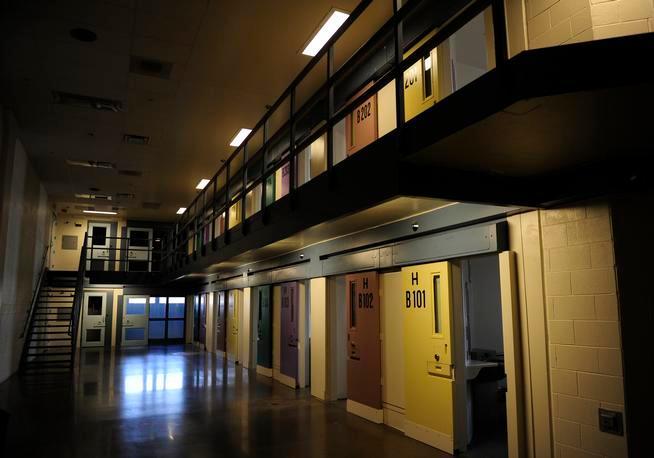
Sterling Correctional Facility
State Prison | Logan County — Colorado | Colorado Department of Corrections
Sterling Correctional Facility is a large multi-level security state prison located at 12101 Highway 61 in Sterling, Logan County, Colorado — situated on the high plains of northeastern Colorado approximately 125 miles northeast of Denver. Operated by the Colorado Department of Corrections (CDOC) since it first opened in 1999, the facility houses adult male inmates across minimum, medium, and maximum security classifications under a single administrative structure. With a current population of approximately 2,478 inmates and a total capacity of 2,585, Sterling stands as the largest correctional facility in the Colorado prison system, playing a central role in the state's management of its incarcerated population.
The facility is supervised by Warden John Chapdelaine and staffed by a large workforce of correctional officers, program specialists, medical personnel, and administrative staff. Sterling's size and multi-classification design make it one of the most operationally complex prisons in the state. Inmates here are serving sentences of varying lengths — from shorter terms for nonviolent offenses to decades-long sentences for serious violent crimes.
Families of incarcerated individuals can search criminal records to help locate a loved one and confirm their current incarceration status. Sterling is one of many facilities listed in our directory of Colorado correctional facilities, and families can also use our guide on how to find an inmate to navigate the CDOC search tools available online.
What sets Sterling Correctional Facility apart from most other prisons in Colorado is its distinction as the state's largest correctional institution and its unique capacity to house inmates across the complete spectrum of security classifications — minimum, medium, and maximum — within a single expansive complex. Most state prisons are designed primarily around one or two security levels, but Sterling's infrastructure was purpose-built to manage all custody classifications under one administrative roof, which requires an exceptionally high degree of operational sophistication.
This multi-classification design means that Sterling must simultaneously manage populations with vastly different needs, risks, and daily routines. Minimum-security inmates may be participating in work assignments and pre-release programming while maximum-security prisoners in the same institution are housed in more restrictive cellblocks with highly controlled movement. Maintaining this balance requires robust classification systems, trained staff, and clearly separated housing units with appropriate physical barriers and supervision protocols.
Sterling is also notably associated with a significant gang management mission within the CDOC system. The facility has long been known as a hub of activity for validated prison gang members, particularly those affiliated with white supremacist organizations. This has required the development of specialized intelligence operations, gang disruption protocols, and long-term isolation strategies that go beyond what most single-level facilities must maintain. In this respect, Sterling functions not just as a housing facility but as a critical security management center within Colorado's broader correctional network.
Sterling Correctional Facility currently houses approximately 2,478 adult male inmates, making it the most populous prison in the Colorado Department of Corrections system. The facility's population reflects the full range of offenders within the Colorado state prison system, including individuals convicted of property crimes, drug offenses, assault, robbery, sexual offenses, and first- and second-degree murder. Sentence lengths range from a few years to life without the possibility of parole.
Because Sterling operates across all custody classifications, its population is notably diverse in terms of risk levels and programming needs. Minimum-security inmates are generally those nearing the end of their sentences or those assessed as lower risk, and they often participate in work programs, educational courses, and pre-release planning. Medium-security inmates make up the largest share of the population and have access to a broader range of programming while living under more structured supervision. Maximum-security inmates are those who have been assessed as presenting the highest risk to staff and other inmates, and they are housed in more restrictive cellblock environments with limited congregate activity.
The facility also houses a population of inmates requiring specialized management, including validated gang members, individuals with serious mental health diagnoses, and those who have been placed in administrative segregation following serious disciplinary infractions. Sterling's population is continuously managed through ongoing classification reviews, which can result in inmates being transferred to other CDOC facilities as their risk levels or programming needs change.
Living conditions at Sterling Correctional Facility vary considerably depending on an inmate's security classification, as the facility maintains physically distinct housing units tailored to different custody levels. Maximum-security inmates are housed in individual or double-occupancy cells within more restrictive cellblocks, where movement is tightly controlled, out-of-cell time is limited, and activities are largely conducted within the unit. Medium-security inmates have more freedom of movement within their housing areas and can access common spaces, programming buildings, and outdoor recreation yards on a structured schedule. Minimum-security residents typically live in dormitory-style housing that more closely resembles a barracks environment, with greater autonomy and fewer movement restrictions throughout the day.
All inmates receive three meals daily prepared in Sterling's institutional kitchen facilities. Meal menus are designed to meet caloric and nutritional standards established by the Colorado Department of Corrections, and accommodations are made for documented medical dietary needs and approved religious dietary requirements. Inmates can supplement their diets with commissary purchases, which are funded through personal accounts.
Recreation opportunities are structured around security classification. Maximum-security inmates typically access smaller, enclosed recreation spaces, while medium- and minimum-security populations have access to larger outdoor yards and indoor gymnasium facilities. Structured programming for physical fitness is available, and some inmates may participate in organized sports leagues or fitness activities depending on their housing unit.
Medical and mental health care is provided on-site, with a health services unit staffed by medical professionals including nurses, physicians, and mental health clinicians. Inmates with chronic health conditions, mental illness, or substance use disorders are assessed and connected to appropriate treatment pathways. Dental services are also available. While conditions in large state prisons are rarely comfortable, Sterling is expected to comply with CDOC standards for humane treatment and constitutionally adequate care.
Sterling Correctional Facility offers a broad range of rehabilitative and educational programs designed to address the underlying factors that contribute to criminal behavior and to prepare inmates for a successful return to society. Given Sterling's size and multi-classification population, the facility maintains one of the more comprehensive program offerings within the Colorado Department of Corrections system.
Educational programs include GED preparation and adult basic education for inmates who have not completed high school, with classes held in dedicated on-site classroom spaces. Instructors work with inmates at varying academic levels, from foundational literacy skills to full high school equivalency test preparation. Earning a GED during incarceration has been shown to significantly improve post-release outcomes and reduce recidivism rates.
Vocational training programs offer inmates the opportunity to develop marketable trade skills applicable to employment after release. Program offerings can include areas such as construction trades, facilities maintenance, and other technical skills depending on available resources and staffing. Completion of vocational programs may result in industry-recognized certifications that give inmates a competitive edge in the job market upon release.
Substance abuse treatment is a significant component of Sterling's programming, recognizing that a large proportion of incarcerated individuals have histories of problematic drug or alcohol use. Treatment options include therapeutic community programs, cognitive behavioral interventions, and peer-support models including 12-step groups. These programs aim to help inmates develop the coping skills and relapse prevention strategies needed to maintain sobriety after release.
Cognitive and behavioral programming addresses criminal thinking patterns through structured curricula designed to help inmates recognize and change the thought processes that lead to harmful behavior. Programs such as Thinking for a Change and similar evidence-based curricula are commonly offered within CDOC facilities. Religious and faith-based programming is also available, with chaplaincy services supporting a range of faith traditions and volunteer-led programs providing additional community engagement. Collectively, these programs reflect a commitment to reducing recidivism and supporting meaningful reintegration into Colorado communities.
Inmates at Sterling Correctional Facility participate in work assignments that maintain facility operations and provide vocational experience. Inside jobs include kitchen duty preparing and serving meals, janitorial work maintaining cleanliness throughout housing units and common areas, laundry services processing institutional linens and inmate clothing, and grounds maintenance. Some inmates work in administrative support roles or facility maintenance positions requiring specialized skills. The facility operates Colorado Correctional Industries programs where qualified inmates manufacture products or provide services, earning modest wages while developing work habits and job skills transferable to civilian employment after release.
Sterling Correctional Facility opened in 1999 as a direct response to Colorado's rapidly expanding prison population during the 1990s. Decades of tough-on-crime legislation, mandatory minimum sentencing laws, and a surge in drug-related incarcerations had placed enormous strain on the state's existing correctional infrastructure, and state officials recognized an urgent need for a large, versatile facility capable of housing thousands of inmates across multiple security levels.
The site in Logan County on Colorado's northeastern plains was chosen for several practical reasons: land was available at relatively low cost, the location offered reasonable proximity to transportation infrastructure, and the construction and ongoing operation of a large prison would bring hundreds of stable jobs to the rural Sterling community — an economic consideration that continues to make the facility an important employer in the region today.
Designed as a multi-level security complex, Sterling was built with distinct housing units, administrative segregation capabilities, and programming space intended to serve inmates across the full custody spectrum. From its earliest years of operation, the facility's sheer size made it a hub for some of the most challenging aspects of Colorado corrections, including the management of validated prison gang members, the provision of mental health and substance abuse treatment, and the administration of long-term maximum-security populations.
Over its more than two decades of operation, Sterling has grown into Colorado's largest prison and a cornerstone institution of the CDOC system. Like many large correctional facilities, it has navigated periods of overcrowding, staffing challenges, and security incidents — including ongoing issues related to gang activity, contraband interdiction, and inmate-on-inmate violence — all of which have shaped its evolving security protocols and programming priorities. The facility continues to adapt its operations in response to changes in state correctional policy, inmate population demographics, and evolving best practices in prison management.
Sterling Correctional Facility does not have a widely documented roster of nationally famous former inmates. However, the prison holds significant notoriety within Colorado corrections circles due to its longstanding association with the 211 Crew, a violent white supremacist prison gang that has been active within the CDOC system for decades. The 211 Crew has been linked to murders, assaults, drug trafficking, and extortion both inside and outside Colorado's prison walls, and Sterling has historically been one of the key facilities where validated 211 Crew members are housed and monitored.
The presence of the 211 Crew and other validated gang members at Sterling has required the facility to maintain sophisticated gang intelligence operations and long-term security management protocols. Law enforcement and corrections officials have used public records and investigative tools to track criminal networks tied to this organization — and families or researchers looking into individuals with gang affiliations can search criminal records through public records databases to find documented histories. While no single inmate has brought Sterling to national media prominence in the way some high-profile facilities have experienced, the 211 Crew's presence makes Sterling a notable institution within the broader landscape of prison gang management in the American West.
Visiting a loved one at Sterling Correctional Facility requires completing an advance approval process administered by the Colorado Department of Corrections. All prospective visitors — including family members — must submit a visitor application and consent to a background check before being added to an inmate's approved visitor list. Approval is not guaranteed and may be denied based on criminal history, prior security incidents at CDOC facilities, or the inmate's individual visitation status. Families are encouraged to begin this process as early as possible, as approval can take several weeks.
Once approved, visitors must present a valid government-issued photo ID upon arrival at the facility. Acceptable forms of identification typically include a driver's license, state ID card, or passport. Visitors who cannot produce valid identification will not be permitted entry. All visitors are subject to search procedures upon entering the facility, which may include metal detector screening, pat searches, and inspection of approved items brought into the visitation area.
Dress code policies are strictly enforced at Sterling. Visitors are prohibited from wearing clothing that resembles inmate uniforms, displays gang-affiliated colors or symbols, is overly revealing, or could otherwise pose a security concern. It is strongly recommended that visitors review the CDOC's current dress code guidelines before traveling to the facility to avoid being turned away. Children are welcome to visit but must be accompanied by an approved adult visitor at all times.
Visitation schedules vary depending on the inmate's housing unit and security classification, so it is important to confirm scheduled visiting days and hours with the facility or through the official CDOC visitation information page before making travel arrangements. Visitors may also want to explore options to send money to an inmate's commissary account as another way to support their loved one between visits.
Families and friends can stay in contact with inmates at Sterling Correctional Facility through several channels, including mail correspondence, telephone calls, and approved visitation. Each method is subject to monitoring and specific rules established by the Colorado Department of Corrections.
To send mail to an inmate at Sterling, address your envelope with the inmate's full legal name and CDOC offender identification number, followed by the facility mailing address: PO Box 6000, Sterling, CO 80751. All incoming mail is inspected by facility staff for contraband, prohibited content, and security threats. Standard letters, cards, and photos are generally permitted, but items such as stickers, glitter, excessive perfume, or anything that could be used to introduce contraband may be rejected. Books and magazines can typically only be received when shipped directly from an approved publisher or retailer such as Amazon — personal copies sent from home are generally not accepted.
Phone calls from Sterling inmates are made through the CDOC's contracted telephone service provider. Calls are made collect or through prepaid accounts, and family members must set up an account with the phone service provider to receive calls. All inmate phone calls are recorded and subject to monitoring by facility staff, with the exception of properly designated legal calls. Rates and account management information are available through the phone provider's website.
Electronic messaging may also be available through CDOC's approved digital communication platforms, which allow families to send and receive messages and in some cases photos. Check with the facility or the CDOC website for currently supported platforms and any associated fees.
To confirm an inmate's current location within the CDOC system, families can use the official CDOC offender search tool. You can also search public criminal records to find additional background and incarceration history for an individual. For more guidance on locating someone in the system, see our complete guide on how to find an inmate.
Sponsored and Powered by our Partner TruthFinder
Quick Facts
Should I Be Concerned? — Family Guide
Sterling Correctional Facility maintains an excellent safety record with zero reported staff assaults and well-established security protocols to ensure the safety of staff, inmates, and visitors. The facility operates at 96% capacity with consistent oversight and appropriate supervision across all security classifications. Visiting families can expect professional, standard security procedures designed to maintain facility security while accommodating legitimate visitation.
All visitors must complete ID verification, security screening, and comply with facility dress codes and conduct policies. These procedures are standard correctional facility practices implemented for everyone's safety and security. Visitors are encouraged to contact the facility at (970) 522-1511 in advance to understand current security requirements and any temporary restrictions that may apply.
Neighborhood & Getting There
Sterling Correctional Facility is located in Sterling, Colorado, a rural agricultural community in Logan County in the northeastern plains region, approximately 130 miles northeast of Denver. The facility is conveniently accessible via Highway 61 with easy highway access through I-76. While Sterling itself offers limited lodging options, visitors will find more comprehensive hotel selections in nearby Fort Morgan (approximately 45 minutes south) and other regional towns within an hour's drive.
The surrounding area reflects the character of Colorado's northeastern plains with agricultural operations, open landscape, and a small-town atmosphere. Visitors should plan accordingly for the rural setting and consider lodging in larger communities if needed. For detailed directions and travel planning, contact the facility directly at (970) 522-1511 to confirm the current address and optimal travel routes.