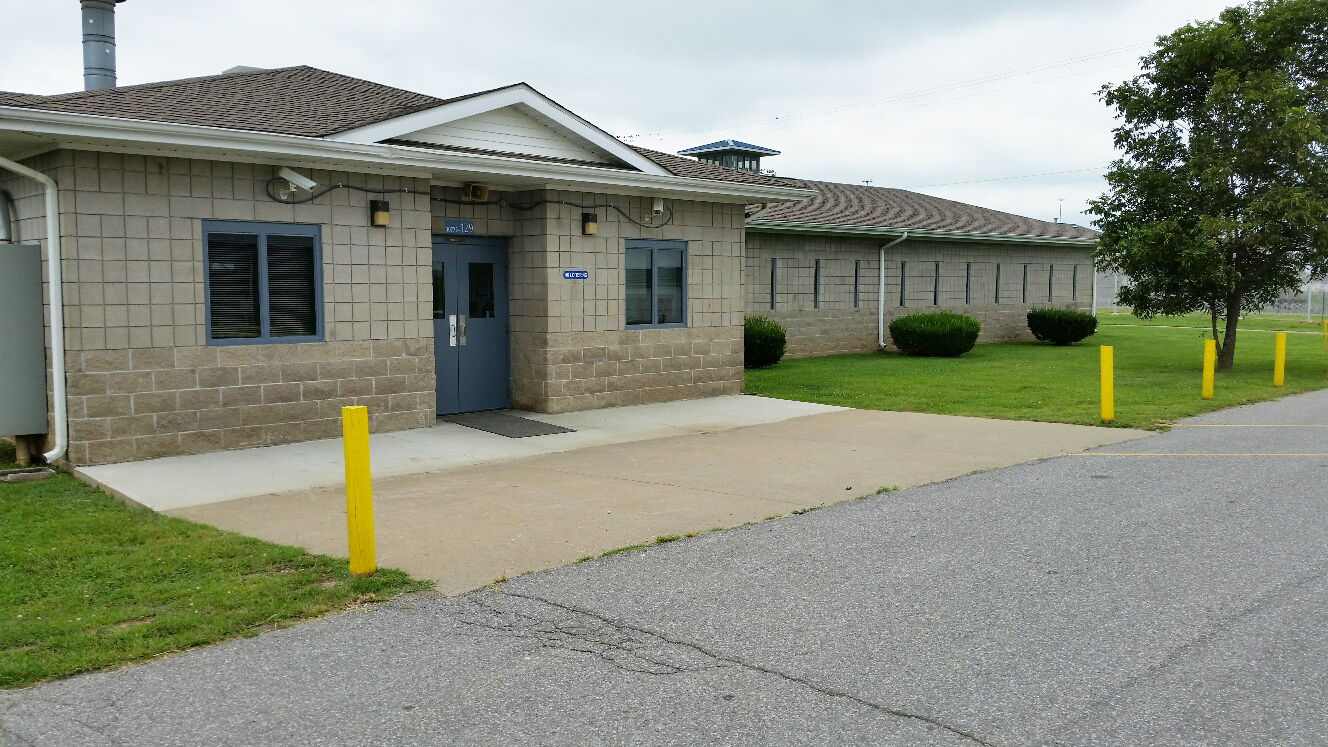
Ross-Cash Center
State Prison | Lyon County — Kentucky | Kentucky Department of Corrections
Ross-Cash Center is a minimum-security state correctional facility located at 374 New Bethel Road, Fredonia, KY 42411, in Lyon County, Kentucky. Although the facility is administratively associated with Eddyville, KY 42038, it sits within a rural stretch of western Kentucky that has long served as the backbone of the state's correctional infrastructure. Operated by the Kentucky Department of Corrections (KDOC), Ross-Cash Center opened in 2015 as a purpose-built institution designed exclusively to house adult male inmates classified at the minimum-security level. The facility maintains a housing capacity of approximately 200 individuals and operates under the leadership of Warden Scott Jordan.
As one of the newer additions to Kentucky's correctional landscape, Ross-Cash Center plays a meaningful and deliberate role in the state's broader strategy of preparing low-risk inmates for successful, lasting reintegration into society. Rather than functioning as a purely punitive institution, the center emphasizes rehabilitation, workforce readiness, life-skills development, and structured programming — an approach that reflects modern correctional philosophy for minimum-security populations. The facility's relatively small size allows staff to engage more directly with residents, supporting individualized case management and consistent program participation leading up to release.
Ross-Cash Center is one of many facilities maintained by the Kentucky Department of Corrections across the Commonwealth. Families trying to locate a loved one can explore Kentucky correctional facilities or use the KDOC Online Offender Lookup (KOOL) to confirm an individual's current placement. You can also search criminal records to help verify incarceration status and background information before reaching out to the facility directly.
What sets Ross-Cash Center apart from the majority of Kentucky's correctional facilities is its singular, unwavering focus on minimum-security, community-oriented corrections. Unlike older, multi-classification institutions that house a wide range of security levels under one roof — often requiring strict movement controls, heightened supervision ratios, and significant physical barriers — Ross-Cash was purpose-built from the ground up to serve one specific population: low-risk adult males who are either approaching the end of their sentences or who have demonstrated consistent good behavior and program participation over time.
This purpose-built design has real, tangible consequences for daily life at the facility. The physical environment is less institutional than that of medium or maximum-security prisons, the staff-to-resident relationships tend to be more collaborative, and the programming calendar is structured around practical reentry goals rather than basic containment. Residents at Ross-Cash Center are expected to take active ownership of their rehabilitation journey, participating in educational courses, vocational training, and behavioral programming as a core part of their daily routine.
Another distinguishing aspect of Ross-Cash Center is its geographic setting within Lyon County's established correctional corridor. This proximity to other KDOC facilities allows for resource sharing, interagency coordination, and streamlined transfers when inmates are reclassified. For families, this clustering of facilities can also simplify the process of understanding the broader Kentucky corrections system — though it can occasionally cause confusion about which specific facility a loved one is assigned to. Visiting the official Ross-Cash Center page on the KDOC website is the best way to confirm current operational details.
Ross-Cash Center houses adult male inmates classified at the minimum-security level by the Kentucky Department of Corrections. With a total capacity of approximately 200 residents, the facility maintains a relatively small and manageable population compared to larger state prisons in Kentucky. This smaller scale is intentional — it allows staff to implement more individualized supervision, engage residents more meaningfully in programming, and monitor progress toward reentry goals on a case-by-case basis.
The population at Ross-Cash Center is generally composed of individuals who fall into one of several categories: those convicted of non-violent or lower-level offenses who were initially classified at minimum security; inmates who have served the majority of a longer sentence at a higher-security institution and have since earned reclassification to minimum security through good behavior and program completion; and individuals in the final phase of their incarceration who are being prepared for release, parole, or community supervision. In all cases, residents must meet KDOC's minimum-security classification criteria, which assess factors such as offense history, institutional conduct, escape risk, and program participation.
Because the facility exclusively serves this lower-risk population, the dynamic at Ross-Cash Center differs notably from that of larger, multi-classification prisons. Residents are expected to engage actively in their own rehabilitation and to demonstrate the kind of responsibility and accountability that will serve them well upon release. Families researching the background of someone who may be housed at Ross-Cash Center can use our guide on how to find an inmate in Kentucky for step-by-step assistance.
Living conditions at Ross-Cash Center reflect both the facility's minimum-security designation and its rehabilitation-centered philosophy. Rather than individual locked cells, inmates reside in dormitory-style housing units — an arrangement common to minimum-security facilities nationwide that fosters communal living, personal accountability, and the kind of social interaction that more closely mirrors life outside of prison. This setup differs markedly from the restrictive, isolated cell environments found at medium and maximum-security institutions across Kentucky, and is intended to ease the eventual transition back into community life.
Residents receive three meals per day prepared in accordance with Kentucky Department of Corrections nutritional standards. Special dietary accommodations, including medically prescribed diets and religiously observant meal options, are available through the appropriate request and approval process. The facility maintains basic health and hygiene standards consistent with KDOC policy, and residents have access to routine medical, dental, and mental health services through the department's contracted healthcare providers.
Daily life at Ross-Cash Center is structured around a consistent schedule that balances work assignments, program participation, meals, recreation, and personal time. Residents are typically assigned to facility work details — such as grounds maintenance, kitchen duty, or janitorial tasks — which provide meaningful daily activity, reinforce work habits, and in some cases earn inmates small compensation through the prison's wage system. Recreation time allows access to outdoor spaces and indoor common areas, supporting both physical fitness and social well-being. While conditions are appropriately secure, the overall environment at Ross-Cash Center is notably less restrictive than at higher-security facilities, reflecting the population's lower risk profile and the facility's forward-looking mission.
Programming at Ross-Cash Center is central to the facility's mission and reflects the Kentucky Department of Corrections' broader commitment to reducing recidivism through education, skill-building, and behavioral intervention. Because the population is composed of minimum-security inmates who are often in the final stretch of their sentences, programs here carry a distinctly practical, forward-looking focus — equipping residents with the tools, credentials, and mindset they will need to reintegrate successfully and stay out of the system for good.
Educational Programs:
- GED Preparation and Testing — Inmates without a high school diploma can enroll in GED prep courses and sit for the official exam on-site. Earning a GED is a foundational step toward employment and higher education and significantly improves outcomes after release.
- Adult Basic Education (ABE) — For residents who need foundational support in literacy or numeracy before pursuing a GED, ABE courses provide structured academic instruction at the appropriate level.
- Post-Secondary Education Opportunities — Eligible inmates may be able to pursue college coursework through correspondence or approved programs, depending on availability and individual eligibility.
Vocational and Workforce Development:
- Vocational Training — Trade-based courses in areas such as carpentry, welding, horticulture, or facility maintenance help inmates build marketable skills that translate directly into employment opportunities upon release.
- Job Readiness and Employment Preparation — Workshops covering resume writing, interview skills, job applications, and workplace expectations prepare residents for the realities of today's job market.
- Work Assignments — On-site work details reinforce professional habits such as punctuality, task completion, and accountability, while contributing to the facility's daily operations.
Behavioral and Cognitive Programs:
- Thinking for a Change (T4C) — A widely used cognitive-behavioral intervention that helps participants identify thinking errors, develop social skills, and adopt problem-solving strategies that reduce the likelihood of reoffending.
- Substance Abuse Education and Treatment — Given the strong correlation between substance use and incarceration, Ross-Cash Center offers education and counseling programs designed to address addiction and build recovery skills before release.
- Anger Management and Conflict Resolution — Structured group sessions help participants understand the triggers and consequences of aggressive behavior and develop healthier, more productive responses.
Reentry and Transition Support:
- Reentry Planning — Case managers work with inmates approaching release to develop individualized reentry plans that address housing, employment, family reunification, and community supervision requirements.
- Community Resource Navigation — Residents receive guidance on connecting with social services, workforce agencies, and support organizations in their home communities upon release.
Inmates at Ross-Cash Center participate in various work assignments both inside the facility and potentially in community settings, consistent with their minimum-security classification. Interior work assignments include food service operations, facility maintenance, janitorial duties, groundskeeping, and administrative support roles. The minimum-security status of Ross-Cash Center inmates may allow for outside work details on Kentucky Department of Corrections properties or supervised community service projects. These work assignments provide inmates with job skills, work ethic development, and structured daily routines that support successful reintegration upon release.
Ross-Cash Center was established in 2015, making it one of the more recently constructed correctional facilities in the Commonwealth of Kentucky. The center was developed in direct response to a growing need for dedicated minimum-security housing capacity within the state's prison system — a need driven by rising inmate populations at higher-security facilities, escalating costs associated with over-classification, and an evolving corrections philosophy that increasingly emphasizes tiered risk assessment and structured reentry preparation.
Located in Lyon County near Eddyville, the facility joined a well-established cluster of correctional institutions in western Kentucky — a region that has historically served as a hub for the state's prison infrastructure. Nearby facilities include the Kentucky State Penitentiary, one of the oldest and most storied maximum-security prisons in the South, as well as the Kentucky State Reformatory and other KDOC-operated institutions. By situating Ross-Cash Center within this established correctional corridor, the state was able to leverage existing regional resources, staff pipelines, and administrative infrastructure while building a facility with a very different, community-focused mission.
The naming of the facility honors individuals or contributions significant to Kentucky's correctional history, continuing a tradition of recognizing service within the state's justice system. Since opening, Ross-Cash Center has steadily developed its programming catalog and operational framework, earning a place as one of KDOC's primary vehicles for managing the critical final phase of an inmate's sentence — the transition from incarceration back to independent living. Its relatively short history has been shaped by a consistent focus on reducing recidivism and preparing residents to return to their communities as productive members of society.
No widely documented famous former inmates are currently associated with Ross-Cash Center. As a minimum-security facility that opened in 2015 and houses a relatively small population of low-risk offenders, the center has not been publicly linked to high-profile criminal cases or nationally recognized individuals. This is consistent with the nature of minimum-security institutions, which typically house non-violent or lower-risk offenders rather than those involved in the kinds of serious, high-profile crimes that attract significant media attention.
If you are researching a specific person's incarceration history, criminal background, or current facility placement, you can search public criminal records to access available court records, arrest history, and other relevant public information. This can be a useful first step before contacting the facility or the Kentucky Department of Corrections directly.
Maintaining meaningful family connections during incarceration is widely recognized as one of the most significant factors in successful reentry and long-term rehabilitation. Ross-Cash Center actively supports family engagement through a structured visitation program designed to be accessible while ensuring the safety and security of all participants. Families and friends who wish to visit an incarcerated loved one must first complete the Kentucky Department of Corrections visitor approval process before their first visit is permitted.
Prospective visitors should submit their application well in advance — processing times can vary, and arriving at the facility without prior approval will result in a denied visit. The application typically requires submission of a valid government-issued photo ID and may involve a background check. Minors visiting the facility must be accompanied by an approved adult guardian, and specific rules regarding the relationship between the minor and the inmate may apply. All visitors are subject to search upon entry, and adherence to the facility's dress code is required — clothing that resembles inmate uniforms or exposes excessive skin is typically prohibited.
Visitation Schedule: Visitation days and hours at Ross-Cash Center are set by KDOC policy and are subject to change. Families are strongly encouraged to confirm current visitation schedules directly with the facility before making travel arrangements, as schedules can be adjusted due to holidays, facility events, or operational needs. Visits may be scheduled on weekends and certain weekdays, with specific time windows assigned based on the inmate's housing unit or last name.
What to Bring and What to Leave Behind: Visitors are generally permitted to bring a small amount of cash or change for vending machines during visits, along with approved identification. Personal items such as cell phones, large bags, and outside food are typically not permitted in the visitation area. Reviewing the KDOC visitation guidelines before your visit will help ensure a smooth experience for both you and your incarcerated loved one.
In addition to in-person visitation, families can stay connected through approved phone calls, written mail, and electronic messaging where available. You may also want to explore options to send money to an inmate's commissary account, which allows your loved one to purchase personal items, hygiene products, and snacks that supplement what is provided by the facility.
Families and friends have several options for staying in regular contact with inmates housed at Ross-Cash Center. Each communication method is subject to Kentucky Department of Corrections policies, and understanding those rules in advance will help avoid unnecessary delays or disruptions to your correspondence.
Mail Correspondence: Written letters and cards can be sent to inmates at the facility's official mailing address: 374 New Bethel Road, Fredonia, KY 42411. Be sure to include the inmate's full legal name and KDOC identification number on the envelope to ensure proper delivery. All incoming mail is inspected for contraband before being distributed to residents. Packages are generally not accepted directly from family members — items such as clothing, books, and personal care products typically must be ordered through approved vendors. Avoid including cash, gift cards, stickers, glitter, or any items embedded in or attached to paper, as these are commonly rejected.
Phone Calls: Inmates at Ross-Cash Center can place outgoing calls through the facility's contracted telephone service provider. Family members must set up an account with the approved provider and add funds in order to receive calls. Calls are subject to monitoring and recording in accordance with KDOC policy, with the exception of properly designated legal calls. Rates and connection options vary by provider, so contact the facility directly for the most current information on the approved phone system.
Electronic Messaging: Depending on availability and KDOC policy, inmates at Ross-Cash Center may have access to a secure electronic messaging platform. These systems function similarly to email but are administered through the facility and are subject to review. Family members create an account on the approved platform, add funds, and can then exchange messages with their incarcerated loved one at a per-message cost.
Facility Contact Information:
- Mailing Address: 374 New Bethel Road, Fredonia, KY 42411
- Administrative Phone: Contact the Kentucky Department of Corrections at (502) 564-3266 for general inquiries, or visit the official KDOC website for facility-specific contact numbers.
If you are unsure whether your loved one is currently housed at Ross-Cash Center or need help locating them within the Kentucky system, the KDOC Online Offender Lookup is the official tool for confirming an inmate's current facility assignment. For additional guidance, see our resource on how to find an inmate in Kentucky's correctional system. You can also look up an inmate's arrest history and public records to gather background information as part of your search.
Sponsored and Powered by our Partner TruthFinder
Quick Facts
Should I Be Concerned? — Family Guide
Ross-Cash Center maintains an exemplary safety record with zero reported staff assaults, making it one of Kentucky's safest correctional facilities. The minimum security classification and lower-risk inmate population create a secure, stable environment well-suited for family visits. Visitors experience standard security screening procedures typical of minimum security facilities, which are considerably less intensive than higher-security institutions.
Families can visit with confidence knowing the facility prioritizes both inmate and visitor safety through professional management practices and consistent security protocols. The peaceful rural setting and low-incident operational history provide reassurance for those planning visits to support their loved ones during incarceration.
Neighborhood & Getting There
Ross-Cash Center is located in rural Lyon County near Eddyville in Western Kentucky's scenic region, approximately 90 minutes from Louisville and 2 hours from Nashville, Tennessee. The facility's rural location offers a quiet, secure setting with ample parking for visitors. Nearby Eddyville provides essential services including gas stations, restaurants, fast food, and convenience stores for travelers.
Visitors traveling long distances will find lodging options in nearby Princeton (20 minutes away) and Madisonville (30 minutes away), which offer chain hotels, local restaurants, and amenities. The region's natural beauty along Kentucky Lake makes the drive pleasant, and the accessible location serves families from across Western Kentucky, Tennessee, and the broader region.