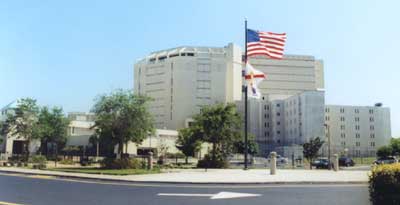
Palm Beach County Jail Main Detention Center
County Jail | Palm Beach County — Florida | Palm Beach County Jail | Palm Beach County Sheriff's Office
Palm Beach County Jail Main Detention Center is located at 3228 Gun Club Road in West Palm Beach, Florida, and operates under the direct administration of the Palm Beach County Sheriff's Office (PBSO). As one of the largest county detention facilities in Southeast Florida, it serves as the primary intake, processing, and housing hub for individuals arrested throughout Palm Beach County. The facility opened in 1983 and maintains a total rated capacity of 2,156 beds across multiple security classifications ranging from minimum to maximum custody, with a typical daily population hovering near 1,769 male inmates. Sheriff Ric Bradshaw has provided long-term oversight of the facility, ensuring operational continuity and consistent policy enforcement across the county's broader correctional network.
The Main Detention Center is the flagship facility among several detention centers managed by the Palm Beach County Sheriff's Office, making it a cornerstone of the county's criminal justice infrastructure. It handles everything from initial booking and processing to long-term pretrial housing for individuals awaiting arraignment, hearings, or trial. The facility is staffed around the clock by sworn correctional deputies and civilian support personnel who manage daily operations, inmate classification, medical services, and programming. Families of incarcerated individuals can use the facility's official online inmate search tool to locate a loved one, confirm booking details, and review charges. If you're unsure where to start, our guide on how to find an inmate walks you through the process step by step. You can also search criminal records to quickly find current incarceration status, booking information, and arrest history for someone held at this facility. Palm Beach County Jail Main Detention Center is one of many facilities listed in our directory of Florida correctional facilities.
Palm Beach County Jail Main Detention Center stands apart from many county detention facilities in Florida due to its sheer scale, operational complexity, and role as a full-service pretrial detention hub serving one of the most densely populated and high-profile counties in the southeastern United States. With a rated capacity exceeding 2,100 beds and a typical daily population approaching 1,800 inmates, the facility functions less like a traditional county jail and more like a mid-sized correctional complex, managing a wide spectrum of security classifications, medical needs, mental health cases, and administrative custody designations simultaneously.
One of the facility's most notable distinguishing characteristics is its integration within the broader Palm Beach County Sheriff's Office correctional network. Unlike standalone jails, the Main Detention Center operates in coordination with satellite detention facilities and work-release programs, allowing PBSO to manage the county's total inmate population with greater flexibility. This means inmates may be transferred between facilities based on classification changes, program availability, or population management needs — something families should be aware of when attempting to locate a loved one.
The facility also serves a uniquely diverse population given Palm Beach County's economic and demographic profile. It routinely processes cases ranging from low-level misdemeanor arrests to high-profile felony charges, and its medical and mental health services are designed to handle a wide range of acuity levels. The combination of scale, operational sophistication, and integration with the county's overall criminal justice system makes Palm Beach County Jail Main Detention Center one of the more consequential and complex county detention facilities in the state of Florida.
The Main Detention Center houses approximately 1,769 male inmates at any given time, drawn from across all security classification levels — minimum, medium, close, and maximum custody. Because the facility primarily serves as a pretrial detention center, the majority of individuals housed here are not serving completed sentences but are instead awaiting arraignment, bail hearings, trial dates, or sentencing proceedings. This distinction is important for families to understand: most people held at this facility have not yet been convicted of a crime and retain the legal presumption of innocence.
The inmate population is diverse in terms of charge severity, background, and length of stay. Some individuals may be held for only a matter of hours before posting bail and being released, while others — particularly those facing serious felony charges or who have been denied bond — may remain at the facility for months or even years as their cases move through the court system. This high turnover dynamic, combined with a large overall population, can make it challenging for families to track a loved one's exact housing location or status at any given time.
Special management populations are also housed within the facility, including individuals with significant medical needs, those requiring mental health observation or treatment, protective custody cases, and inmates with administrative holds such as immigration detainers or out-of-county warrants. The classification and housing assignment process is ongoing — inmates may be reclassified and moved to different units as their circumstances change. Families who need help confirming where a loved one is housed can look up an inmate's arrest history and booking status through public records search tools in addition to using the official PBSO inmate locator.
Housing at Palm Beach County Jail Main Detention Center is organized according to a structured classification system that takes into account each inmate's security level, nature of charges, disciplinary history, and any special management needs such as medical conditions, mental health status, or protective custody requirements. The facility uses a combination of direct supervision housing — where correctional deputies are stationed within the housing unit itself and interact regularly with the inmate population — and more traditional cell block arrangements, depending on the classification tier. This hybrid approach is designed to reduce tension between inmates, improve officer visibility and intervention capability, and create a more orderly daily environment.
Daily life at the facility follows a structured routine that includes scheduled meal times, recreational periods, access to the law library, and opportunities for program participation. Meals are prepared on-site and provided three times daily, with special dietary accommodations made for documented medical conditions or religious dietary requirements when requested through the appropriate channels. Inmates in good standing within their housing unit may have access to a dayroom area with seating, telephones, and in some units, access to tablet-based communication and entertainment services.
Medical care is available within the facility through an on-site health services unit staffed by licensed medical personnel. Inmates who require care are expected to submit a formal medical request, and emergency services are available around the clock. Mental health services are also provided on-site, with referrals to higher levels of care made when clinically necessary. The facility's physical environment, while institutional in nature, is maintained to meet Florida Department of Health standards and is subject to regular inspections. Inmates with concerns about their living conditions may submit grievances through the facility's internal review process.
Despite its primary function as a pretrial detention facility — where many inmates have shorter or uncertain stays — Palm Beach County Jail Main Detention Center maintains a meaningful array of programs aimed at rehabilitation, education, behavioral improvement, and successful reentry. Participation in these programs can be valuable for inmates regardless of the outcome of their cases, and in some instances, documented program participation may be viewed favorably by judges at sentencing or considered in bail and bond review hearings.
Educational programming includes GED preparation courses and adult basic education classes designed to help inmates who lack a high school diploma work toward recognized credentials. Vocational training opportunities, where available, provide inmates with marketable skills that can improve their employment prospects upon release. Literacy programs and English-language instruction may also be offered to address the needs of the facility's diverse population.
Behavioral and substance abuse programming is another key component of the facility's rehabilitative efforts. Cognitive-behavioral programs focus on helping inmates identify and change the thought patterns associated with criminal behavior, while substance abuse education and counseling services address the underlying addiction issues that often contribute to repeated arrests and incarceration. Twelve-step programs and peer support groups may operate within the facility with the support of outside volunteers and community organizations.
Faith-based programming is available through partnerships with local clergy and religious organizations, providing spiritual support, mentorship, and community connection for participating inmates. Reentry planning services, including assistance with identifying housing resources, employment opportunities, and benefits enrollment, are offered to help individuals prepare for life after release. Families seeking to understand what resources are available to their loved one can explore our family services page for additional guidance and support resources.
Inmates at Palm Beach County Jail Main Detention Center can participate in various work assignments that support facility operations while providing structure and modest compensation. Inside job assignments include kitchen workers who assist with meal preparation and service, janitorial crews responsible for cleaning housing units and common areas, laundry workers processing facility linens and uniforms, and maintenance helpers. Trustee inmates with minimum security classifications and demonstrated good behavior may qualify for outside work details including grounds maintenance, building upkeep, and other supervised assignments. Unlike state correctional facilities, the jail does not operate significant prison industries or manufacturing programs due to its primary function as a pretrial detention facility with a transient population.
Palm Beach County Jail Main Detention Center first opened its doors in 1983, constructed on Gun Club Road in West Palm Beach to meet the rapidly escalating detention demands of one of Florida's fastest-growing counties. Prior to its opening, Palm Beach County relied on older, smaller, and increasingly inadequate jail facilities that simply could not keep pace with the region's explosive population growth and rising arrest volumes throughout the 1970s and early 1980s. The new facility was designed from the ground up to provide modern, purpose-built detention infrastructure capable of handling large-scale intake operations, multi-tiered classification housing, and the growing administrative complexity of pretrial detention management.
Over its four-plus decades of continuous operation, the Main Detention Center has undergone several significant expansions, renovations, and technological upgrades. These improvements have been driven by sustained growth in Palm Beach County's population — which today exceeds 1.5 million residents — as well as evolving standards in correctional best practices, court-mandated reforms, and the need to accommodate an increasingly diverse inmate population with varying security, medical, and programmatic needs. Physical expansions have added housing units and support infrastructure, while administrative reforms have modernized intake processing, classification procedures, and records management.
The facility's history also reflects broader trends in American corrections, including the shift toward direct supervision housing models, the introduction of electronic monitoring alternatives, and the expansion of in-custody rehabilitation and educational programming. Throughout changes in county leadership and shifts in criminal justice policy, the Main Detention Center has remained a stable and central institution within Palm Beach County's public safety framework. Its longevity and scale speak to the ongoing demand for pretrial detention services in one of Florida's most densely populated and economically active regions.
No widely documented famous former inmates are specifically associated with Palm Beach County Jail Main Detention Center at this time. However, given that the facility serves as the primary intake and pretrial detention hub for all of Palm Beach County — one of Florida's wealthiest, most politically active, and highest-profile counties — it has almost certainly processed individuals whose cases attracted significant regional or national media attention over its more than four decades of operation. Palm Beach County has been home to prominent figures in business, politics, entertainment, and sports, and the Main Detention Center would be the first point of contact for any arrest made within the county, regardless of the individual's public profile.
If you are researching a specific individual's detention history, arrest record, or case status in connection with this facility, you can search public criminal records to access booking information, charge details, and incarceration history associated with Palm Beach County arrests. This can be a useful starting point for journalists, legal researchers, or family members trying to piece together a complete picture of someone's involvement with this facility.
Visiting a loved one at Palm Beach County Jail Main Detention Center requires advance preparation and strict adherence to the facility's visitation policies. All visitors must present a valid, government-issued photo identification at the time of their visit — acceptable forms include a driver's license, state-issued ID card, or U.S. passport. Non-U.S. citizens may be required to present additional documentation such as a visa or permanent resident card. Visitors who cannot produce acceptable identification will not be permitted to visit.
Visitation at this facility is conducted on a scheduled basis, and visit times are typically assigned based on the inmate's housing unit rather than visitor preference. Families should confirm their loved one's assigned visiting schedule before making arrangements to travel to the facility. The Palm Beach County Sheriff's Office offers an online visitation registration system where approved visitors can register, schedule visits, and manage their visitation account. Pre-registration is strongly encouraged and may be required in some cases.
Children under 18 must be accompanied by a parent or legal guardian and must be listed on the inmate's approved visitor list. All visitors, including minors, are subject to the facility's rules regarding conduct and dress code. Visitors are expected to dress modestly and avoid clothing that resembles inmate uniforms or that exposes excessive skin. Prohibited items include weapons, drugs, alcohol, unauthorized food or beverages, and electronic devices beyond what is specifically permitted at the entrance.
Visits may be conducted in person or, in some cases, through video visitation systems. In-person visits are typically non-contact, conducted through a glass partition with telephone communication. Visitors who violate facility rules or whose behavior is deemed disruptive may have their visitation privileges suspended or permanently revoked. If you are planning a visit and want to also arrange financial support for your loved one, our guide on how to send money to an inmate explains the approved methods for depositing funds into a commissary account at this facility.
Staying in contact with an incarcerated loved one at Palm Beach County Jail Main Detention Center is possible through several channels, including written mail, telephone calls, and electronic messaging where available. Each method has its own procedures and associated costs, and understanding them in advance will help ensure your communications reach your loved one without unnecessary delays or rejections.
Mail sent to inmates at the Main Detention Center should be addressed to the inmate's full legal name and booking number, sent to 3228 Gun Club Road, West Palm Beach, FL 33406. All incoming mail is screened by facility staff before being delivered to the inmate. Standard letters and cards are generally accepted, but packages, hardcover books not sent directly from a publisher or retailer, and items containing contraband or prohibited materials will be rejected. Photos sent through the mail must comply with content restrictions and size limitations set by the facility — contact the facility directly or check the PBSO website for current mail policy details.
Telephone calls from the Main Detention Center are made by inmates using a contracted phone service provider. Calls are typically collect or prepaid, meaning the receiving party or the inmate's account must have funds available to cover the per-minute charges. Call rates at county jails can be relatively high compared to those at state prisons, so families may want to set up a prepaid account through the phone service provider's website to reduce costs. All calls are recorded and monitored except those made to attorneys of record.
Electronic messaging may be available through a tablet or kiosk-based platform used at the facility, allowing families to send and receive short messages electronically. This service is also typically fee-based and subject to monitoring. Video visitation from a remote location may also be available through the same platform, providing an alternative to in-person visits for family members who live far from West Palm Beach.
If you are having difficulty locating an inmate or confirming which facility they are housed in, the Palm Beach County Sheriff's Office corrections division maintains an online inmate locator tool that can help you confirm current housing status. You can also review our guide on how to find an inmate for a step-by-step walkthrough of the search process across Florida's county jail system.
Sponsored and Powered by our Partner TruthFinder
Quick Facts
Should I Be Concerned? — Family Guide
Palm Beach County Jail Main Detention Center maintains an excellent safety record with zero recorded staff assaults in recent years. Operating at 82% capacity significantly reduces overcrowding-related tensions and security concerns, allowing correctional staff to provide attentive supervision across all housing units and respond promptly to any incidents.
Families can visit with confidence knowing the facility employs evidence-based security practices, trained personnel, and modern supervision technology. The tiered security classification system ensures low-risk and high-custody inmates are appropriately separated, minimizing conflicts and maintaining a secure environment for both staff and detainees.
Neighborhood & Getting There
Palm Beach County Jail Main Detention Center is strategically located on Gun Club Road in West Palm Beach's industrial corridor, approximately 4 miles west of downtown and easily accessible via I-95 and local highways. The central South Florida location places the facility roughly 40 miles north of Miami and serves as the regional detention hub for the broader Palm Beach County area.
Visitors traveling from across the region will find convenient access via major interstate routes. The industrial location offers nearby hotels and amenities along West Palm Beach's main corridors, with most accommodations within 5-15 minutes of the facility. The Gun Club Road address provides straightforward directions for out-of-state family members and allows for efficient visit planning.