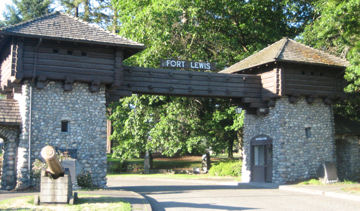
Northwest Joint Regional Correctional Facility
Military Prison | Pierce County — Washington | NWJRCF | Formerly " Fort Lewis Regional Correction Facility"
Northwest Joint Regional Correctional Facility (NJRCF) is a distinctive military corrections institution located on Joint Base Lewis-McChord in Pierce County, Washington. Established in 1984, the facility operates under the U.S. Army Corrections Command — a separate correctional authority entirely distinct from the Washington State Department of Corrections — and stands as one of a limited number of dedicated military confinement facilities in the United States. It serves military personnel from across the Pacific Northwest and beyond, housing both male and female offenders under minimum and medium security classifications.
Unlike civilian state prisons or county jails, Northwest Joint Regional Correctional Facility processes only those inmates who have been tried and sentenced through courts-martial under the Uniform Code of Military Justice (UCMJ). This means the rules, procedures, visitation protocols, and rights governing confinement differ significantly from those at a typical Washington state correctional facility. Families navigating this system for the first time often find it unfamiliar and confusing — understanding the military corrections framework is essential for staying meaningfully connected with a loved one housed here.
NJRCF is one of many facilities listed among our Washington correctional facilities, though it stands apart due to its exclusively military jurisdiction and federal oversight structure. The facility's dual mission — to provide secure confinement and to rehabilitate service members for potential reintegration into either military or civilian life — shapes everything from its daily programming to its visitation policies. Families who need to locate a service member or verify their current confinement status can search criminal records through public records databases to supplement official military channels.
Northwest Joint Regional Correctional Facility stands apart from virtually every other correctional institution in Washington State by virtue of its operation under the Uniform Code of Military Justice rather than civilian criminal law. This is not a state prison, a federal Bureau of Prisons facility, or a county jail — it is a purpose-built military confinement facility that processes only those individuals who have been convicted through courts-martial proceedings within the military justice system.
This distinction carries profound implications for families, legal advocates, and anyone seeking information about an incarcerated service member. The rules governing inmate rights, visitation, mail, phone access, legal representation, and sentence review are all derived from military law and Army Corrections Command policy rather than Washington State or federal civilian statutes. Attorneys who practice civilian criminal law may not be fully equipped to navigate the UCMJ framework, and families accustomed to interacting with state corrections systems will likely encounter unfamiliar procedures at every step.
Another key distinction is the facility's rehabilitative philosophy. Because many inmates housed at NJRCF are relatively young, have specialized training and skills, and may have served honorably before the circumstances that led to their confinement, there is a genuine institutional focus on whether they can return to productive military service or make a successful transition to civilian employment. This rehabilitation-forward orientation distinguishes NJRCF from purely punitive corrections environments and influences everything from daily programming to case management practices.
The inmate population at Northwest Joint Regional Correctional Facility is composed entirely of active-duty military personnel, reservists, and National Guard members from various branches of the armed forces who have been sentenced through courts-martial proceedings. Because the facility operates under U.S. Army Corrections Command oversight, Army personnel typically make up the largest share of the population — but inmates from the Navy, Marine Corps, Air Force, Space Force, and Coast Guard may also be confined here depending on regional jurisdictional arrangements and sentencing outcomes.
The facility houses both male and female inmates under separate housing arrangements, reflecting the increasing integration of women across all military branches and the corresponding need for gender-responsive correctional capacity. Security classifications range from minimum to medium, and housing assignments are made based on the nature of the offense, the length of the sentence, disciplinary history, and assessed risk level — consistent with Army Corrections Command classification standards.
Sentence lengths vary considerably. Some inmates are serving relatively short terms — months rather than years — for offenses such as absence without leave (AWOL), drug-related violations, or misconduct charges. Others are serving lengthier sentences for more serious offenses adjudicated at general courts-martial. In many cases, a punitive discharge — such as a Bad Conduct Discharge or Dishonorable Discharge — is part of the sentence and takes effect upon the inmate's release from confinement, a detail with significant long-term consequences for veterans' benefits, civilian employment, and federal rights.
Living conditions at Northwest Joint Regional Correctional Facility reflect military correctional standards, which differ meaningfully from those found in civilian state prisons or county jails. The physical environment is structured, disciplined, and oriented around routine — consistent with the broader military ethos that governs life on Joint Base Lewis-McChord. Inmates are housed in secure barracks-style units separated by gender and security classification. Minimum security offenders typically reside in dormitory-style settings with greater freedom of movement, while medium security inmates are housed in more controlled environments with additional supervision and restricted privileges.
Daily life at NJRCF is organized around a structured schedule that includes assigned work details, educational or vocational programming, physical fitness activities, and meals served at set times. The emphasis on structure and accountability is intentional — military correctional philosophy holds that consistent routine supports discipline, reduces idleness, and contributes to rehabilitation. Inmates are expected to maintain their personal quarters to military standards of cleanliness and order, and inspections are conducted regularly.
Medical and mental health services are available on-site, with access to military healthcare resources on Joint Base Lewis-McChord providing a higher level of care than is typically available at civilian correctional institutions. Dental care, vision services, and mental health counseling are part of the standard healthcare offerings. The commissary system allows inmates to purchase approved supplemental items — snacks, hygiene products, and writing materials — using funds deposited to their accounts, and send money to an inmate resources can help families understand how to contribute to their loved one's account balance.
Northwest Joint Regional Correctional Facility offers a comprehensive range of rehabilitation and reentry programs specifically tailored to the unique needs of military populations. The programming philosophy reflects the Army Corrections Command's emphasis on preparing inmates for either continued military service — where applicable and authorized — or a productive, successful transition to civilian life following their release and any resulting discharge from the armed forces.
Educational programs form a cornerstone of the facility's rehabilitation model. Inmates who have not completed their high school education can pursue GED preparation and testing. For those with a diploma or equivalent, additional academic coursework and college-preparatory programming may be available through coordination with accredited institutions. Literacy support is also offered for inmates with identified educational deficiencies.
Vocational and skills-based training programs give inmates the opportunity to develop marketable job skills that will serve them in the civilian workforce after release. Depending on current program availability, these may include technical trades, computer skills, and other applied learning modules. Work assignments within the facility — in areas such as facility maintenance, food service, and administrative support — provide structured employment experience and are often tied to good-conduct credits that can positively affect an inmate's confinement timeline.
Substance abuse treatment is a significant component of NJRCF's programming, given the role that alcohol and drug-related offenses play in many courts-martial convictions. Structured treatment groups, counseling sessions, and evidence-based recovery programs help inmates address the root causes of substance dependency. Cognitive-behavioral programs focused on anger management, decision-making, and personal accountability are also offered. Additionally, chaplain services and faith-based programming provide spiritual support for inmates of all backgrounds, which can be an important source of resilience during confinement.
Work assignments at Northwest Joint Regional Correctional Facility follow military correctional labor practices. Inmates perform facility maintenance duties including grounds keeping, janitorial services, kitchen operations, and building upkeep. These assignments maintain the institution while teaching work discipline and responsibility. Some qualified inmates may work in administrative support roles or skilled maintenance positions requiring technical expertise. Unlike civilian prison industries, work programs here emphasize military readiness skills and general employability. Labor assignments are mandatory for able-bodied inmates and contribute to the facility's daily operations while providing structure and purposeful activity during confinement periods.
Northwest Joint Regional Correctional Facility was established in 1984 in response to the growing need for dedicated military correctional capacity in the Pacific Northwest region. At the time of its founding, the facility was situated at Fort Lewis — a major U.S. Army installation that would later merge with McChord Air Force Base in 2010 to form Joint Base Lewis-McChord, now one of the largest and most strategically significant military installations on the entire West Coast. The facility's creation represented a deliberate effort by the Army to consolidate regional military detention capabilities under a single, purpose-built roof, reducing reliance on ad hoc arrangements with civilian corrections systems for military offenders.
During its early years, NJRCF was developed against the backdrop of broader military justice reforms that followed the post-Vietnam era — a period marked by significant legislative and institutional restructuring of how the armed forces handled discipline, accountability, and rehabilitation. The Military Justice Act of 1983 and related policy shifts placed renewed emphasis on standardized correctional practices across installations, and NJRCF was part of that modernization wave in the western United States.
Over the following decades, the facility evolved alongside changes in force structure, deployment patterns, and sentencing norms within the military justice system. The 2010 merger of Fort Lewis and McChord Air Force Base into a unified joint installation expanded the facility's catchment area and reinforced its role as the primary regional confinement center for multi-branch military personnel in the Pacific Northwest. Today, NJRCF continues to operate as an integral component of the U.S. Army Corrections Command's national network of military correctional facilities, balancing its long-standing mission of secure confinement with an increasingly robust focus on rehabilitation and reentry preparation.
No widely documented famous former inmates are publicly associated with Northwest Joint Regional Correctional Facility. Because NJRCF is a military confinement facility operating under the Uniform Code of Military Justice, its inmate records are maintained through military administrative channels rather than public state correctional databases, which significantly limits the public profile of its population compared to civilian prisons. Courts-martial proceedings and their outcomes, while technically part of the public record in many cases, are not widely indexed in the same way that civilian criminal cases are.
If you are researching the military criminal history or background of a specific individual who may have been confined at NJRCF or another military facility, you can search public criminal records to find available background information, arrest history, and related court records that may supplement official military sources.
Visitation at Northwest Joint Regional Correctional Facility operates according to military correctional protocols, which are more structured and security-conscious than those at many civilian facilities. All visitors must be pre-approved and appear on the inmate's authorized visitor list before arriving at the facility. The process of adding a visitor to the approved list must be initiated by the inmate and approved by facility staff — a process that can take time — so families should begin communicating with their loved one about this as early as possible to avoid unnecessary delays.
Because NJRCF is located on Joint Base Lewis-McChord, an active military installation, visitors face an additional layer of security requirements that do not apply at civilian prisons. All visitors must obtain installation access, which typically requires presenting a valid government-issued photo ID at the base entry gate and may involve a background screening process. Visitors should confirm current base access procedures well in advance of their planned visit, as military installation security requirements can change based on force protection conditions.
Visitation hours are scheduled and subject to change based on facility operations, staffing, and any ongoing security reviews. Visitors are expected to dress in accordance with the facility's dress code — clothing that resembles military uniforms or is otherwise inappropriate is typically prohibited. Children may visit with a supervising adult who is on the approved list. Contact visits, where physical contact such as a brief embrace is permitted, are generally available for eligible inmates who are in good standing, though the specifics depend on the inmate's security classification and conduct record.
Families planning a visit are strongly encouraged to contact the facility directly to confirm current visiting hours, dress code requirements, and any documentation needed for base access before making travel arrangements. For additional guidance on navigating the visitation process at military and civilian facilities alike, our how to find an inmate guide provides helpful context for families who are new to the corrections system.
Maintaining consistent contact with an incarcerated service member at Northwest Joint Regional Correctional Facility is important for their psychological well-being and for sustaining family bonds through what is often an extended and emotionally difficult period. The facility supports contact through several channels, including mail and approved phone calls, all of which are subject to monitoring and governed by military correctional regulations.
To send mail to an inmate at NJRCF, correspondence should be addressed using the inmate's full legal name, their service branch, rank (if applicable), and the facility's mailing address on Joint Base Lewis-McChord. All incoming mail is subject to inspection by facility staff before delivery. Families should avoid including cash, gift cards, unauthorized photographs, or any materials that are not permitted under facility mail policy, as these items may be rejected or result in disciplinary consequences for the inmate. Standard personal letters, cards, and approved publications are generally acceptable.
Phone calls from inmates at NJRCF are typically made on a scheduled basis and are monitored and recorded consistent with military correctional policy. The inmate must initiate calls, and families should ensure their phone number is on the approved contact list. Call availability may be limited by the inmate's security classification, housing unit schedule, and conduct standing within the facility.
Financial support for a confined service member can be provided through the facility's commissary account system, allowing your loved one to purchase approved supplemental items. For step-by-step guidance on contributing to an inmate's account, visit our guide on how to send money to an inmate. Families seeking to verify an individual's current confinement status or locate a service member within the military corrections system can also look up an inmate's arrest history and related records through public background check resources as a starting point.
Sponsored and Powered by our Partner TruthFinder
Quick Facts
Should I Be Concerned? — Family Guide
Northwest Joint Regional Correctional Facility maintains one of the military correctional system's strongest safety records with zero reported staff assaults. The facility's location within Joint Base Lewis-McChord provides multilayered security oversight, including military police presence and Defense Department security protocols that exceed standard civilian facility standards. Visitors can expect comprehensive security screening procedures designed to protect all individuals on the installation.
Family members visiting the facility should be aware that all visitors undergo thorough identification verification and may be subject to security screening. The base's controlled access points and professional correctional staff ensure a secure environment for visits. Those unfamiliar with military correctional procedures are encouraged to contact the facility in advance to understand what to expect during their visit and to ensure compliance with all security requirements.
Neighborhood & Getting There
Northwest Joint Regional Correctional Facility is conveniently located on Joint Base Lewis-McChord in Pierce County, Washington, positioned between the state's major population centers. The facility sits approximately 45 minutes south of Seattle, 20 minutes north of Olympia, and just minutes from Tacoma. Easy access via Interstate 5 makes the facility accessible for families traveling from across the Pacific Northwest region.
The surrounding area offers numerous accommodations for visiting families. Hotels and motels are available in nearby Tacoma (5-10 minutes away) and Olympia (20 minutes away), with options ranging from budget-friendly to mid-range establishments. The base area also provides dining, gas stations, and other services. Families planning extended visits should consider booking lodging in advance, particularly during military holidays and weekends when visitation demand is highest.