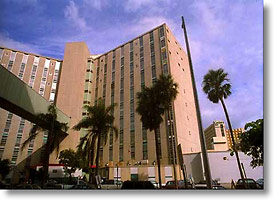
Miami-Dade Pre-Trial Detention Center
County Jail | Miami-Dade County — Florida | PTDC | Miami-Dade County
The Miami-Dade Pre-Trial Detention Center is located at 1321 NW 13th Street, Miami, Florida 33125, in the heart of Miami-Dade County — one of the most populous and culturally diverse counties in the United States. Operated by the Miami-Dade Corrections and Rehabilitation Department, this facility is purpose-built to house adult male detainees across all security classifications — from minimum to maximum — who are awaiting arraignment, bail hearings, plea negotiations, or trial. The facility has an official stated capacity of 1,712 detainees and stands as one of several critical components within Miami-Dade County's broader corrections infrastructure.
As a dedicated pre-trial detention center, the facility's primary mission is to securely and humanely house individuals who have not yet been convicted of any crime. This distinction matters enormously for families navigating the system for the first time. Unlike a state or federal prison — where sentenced individuals serve defined terms — the Miami-Dade Pre-Trial Detention Center is a dynamic, high-turnover environment where detainees may be released, transferred, or moved to trial at any point. The center processes a high volume of daily intakes, reflecting the scale of law enforcement and judicial activity across one of Florida's most active metropolitan counties.
The facility is one of many within Florida correctional facilities, all operating under distinct mandates shaped by their populations and legal functions. For families trying to locate a loved one after a recent arrest, it can be difficult to know exactly where someone has been taken. You can search criminal records to find current incarceration status, booking information, and recent arrest details using publicly available data. For official inmate lookup, the Miami-Dade inmate search tool is available online and is updated regularly.
What sets the Miami-Dade Pre-Trial Detention Center apart from the vast majority of correctional facilities in Florida is its singular, unwavering focus on pre-trial custody. Unlike state prisons or county jails that primarily house sentenced inmates serving defined terms, this center exists specifically to hold individuals who have not yet been adjudicated — people who remain legally innocent in the eyes of the law until proven otherwise in a court of justice. This fundamental legal distinction shapes every aspect of how the facility operates, from the rights afforded to detainees to the types of programs offered and the procedures governing daily life.
Because detainees are not serving punitive sentences, the facility must strike a careful balance between maintaining security and respecting the civil liberties of individuals who may ultimately be acquitted, have charges dropped, or be released on bail at any moment. This creates an operational environment that is markedly different from a traditional prison. Court transport coordination, attorney access, and timely communication with the legal system are central to the facility's daily rhythm in ways that are far less prominent at sentenced facilities.
Another distinguishing characteristic is the facility's exclusively male population and its capacity to manage detainees across all security levels under one roof. From individuals arrested on minor charges awaiting a first court appearance to those facing serious felony charges with high-security classifications, the center's classification system and tiered housing structure must accommodate a wide range of risk profiles. This complexity demands sophisticated intake procedures, ongoing reclassification protocols, and a staff trained to handle the unpredictability inherent in a high-turnover pre-trial environment.
The Miami-Dade Pre-Trial Detention Center houses an exclusively male detainee population comprised of individuals who have been arrested but not yet convicted of any crime. Because this is a pre-trial facility, all detainees are legally presumed innocent under the law — a principle that carries real weight in how the facility is managed and how detainees are treated. The length of a detainee's stay can range from a matter of hours or days for those who post bond quickly, to several months or even longer for individuals with complex cases, high bond amounts, or no-bond holds.
The population at any given time reflects the full spectrum of charges processed by Miami-Dade County's law enforcement agencies, from misdemeanor offenses to serious felonies. Detainees come from all walks of life and represent the extraordinary demographic diversity of Miami-Dade County itself — one of the most multicultural communities in the nation. The facility routinely maintains population numbers near or at its official capacity of 1,712 detainees, making effective population management and classification an ongoing operational priority.
Upon arrival, each detainee is assessed through a formal intake and classification process that evaluates factors such as the nature of the charges, criminal history, behavioral risk indicators, and medical or mental health needs. This assessment determines housing placement and the level of supervision required. Detainees with serious medical conditions, mental health diagnoses, or special vulnerability designations are directed to appropriate housing units or referred to medical staff for evaluation. The goal of this classification process is to promote safety for both staff and the general detainee population while ensuring each individual is housed in a setting appropriate to their needs and risk level.
Living conditions at the Miami-Dade Pre-Trial Detention Center are structured around a direct supervision housing model — an approach that places correctional officers physically inside housing pods rather than observing from external control booths. This design philosophy is rooted in evidence that direct officer presence reduces incidents of violence, misconduct, and self-harm by enabling faster intervention and fostering a more stable, accountable environment. Officers assigned to housing units are expected to engage regularly with detainees, monitor behavior proactively, and address concerns before they escalate.
Detainees are assigned to housing units based on their security classification determined at intake. Higher-risk individuals are housed in single- or double-occupancy cells with greater restrictions on movement and programming access, while lower-risk detainees may be housed in more open dormitory-style arrangements that allow for greater daily interaction and mobility within the unit. All housing areas are subject to routine inspections, and detainees are expected to maintain basic standards of personal and cell hygiene.
The facility provides three daily meals, access to medical and mental health services, and the ability to purchase supplemental items through the commissary. Access to outdoor recreation is available on a scheduled basis, though the frequency may vary based on security classification and facility operations. Detainees have access to telephones for personal communications, and the facility maintains a law library or legal resources to ensure detainees can meaningfully participate in their own legal defense. While conditions in any large urban detention center present inherent challenges — including noise, limited privacy, and the psychological stress of awaiting trial — the facility's direct supervision model is designed to minimize the most adverse effects of pre-trial confinement.
Programming at the Miami-Dade Pre-Trial Detention Center is inherently shaped by the short-term and unpredictable nature of pre-trial detention. Because detainees may be held for a period of days, weeks, or several months without a defined release date, the facility prioritizes maintaining order, ensuring court readiness, and supporting basic well-being rather than delivering the long-term rehabilitation programming more commonly found at sentenced correctional facilities. That said, the center does offer meaningful resources that can make a genuine difference in a detainee's experience and prospects during their stay.
Educational opportunities are available on a limited basis, with a focus on foundational literacy and GED preparation for detainees who wish to participate. Given the unpredictable length of pre-trial stays, programming is designed to be accessible even for those who may only be present for a short period. Substance abuse education and counseling resources are also offered, recognizing that addiction-related issues are prevalent in the pre-trial population and that early intervention — even brief — can have meaningful long-term impact.
Mental health services are a particularly important component of programming at this facility. Given the stress of facing criminal charges, the disruption to employment and family life, and the prevalence of pre-existing mental health conditions in the detained population, the facility maintains mental health staff who conduct screenings, provide crisis intervention, and offer ongoing counseling support. Referrals to more intensive care can be made when warranted.
Faith-based programming is also available through coordinated chaplaincy services, offering detainees access to religious counseling and services across various denominations. These programs can provide meaningful emotional and spiritual support during a difficult period. Families interested in additional support resources can explore family services available through our directory to help navigate the pre-trial process.
Work opportunities at the Miami-Dade Pre-Trial Detention Center are limited compared to sentenced prison facilities. Trustees and qualified detainees may be assigned to inside work details including kitchen duty, janitorial services, laundry operations, and facility maintenance tasks. These assignments help maintain facility operations while providing structured activity for detainees with extended pre-trial stays. Work assignments are voluntary and determined by behavior, security classification, and anticipated length of stay. Compensation for inmate workers is minimal or may take the form of extra privileges. The facility does not operate prison industries or outside work crews given the legal status of pre-trial detainees and security concerns associated with a transient population awaiting court proceedings.
The Miami-Dade Pre-Trial Detention Center was established in direct response to the rapid population growth and rising arrest volumes that strained Miami-Dade County's existing jail infrastructure throughout the latter decades of the twentieth century. As Miami evolved into one of the most dynamic and densely populated metropolitan areas in the southeastern United States, local law enforcement agencies processed an ever-increasing number of arrests each year. This surge created urgent demand for a dedicated pre-trial holding facility capable of keeping pace with the criminal court system's expanding caseload without overwhelming facilities that were already housing sentenced inmates.
The facility at 1321 NW 13th Street was purpose-built to separate pre-trial detainees from sentenced inmates — a distinction strongly encouraged by constitutional standards rooted in the presumption of innocence and widely embraced as a best practice in modern corrections management. By isolating individuals awaiting adjudication from those already serving sentences, the facility could more effectively tailor its programming, classification procedures, and daily operations to meet the unique legal status and needs of its population.
Over the decades since its opening, the center has undergone administrative restructuring, capacity expansions, and operational reforms in response to federal oversight requirements, court mandates, and the evolving standards of the corrections profession. Miami-Dade County has consistently faced scrutiny over jail conditions and population management, and the Pre-Trial Detention Center has been a focal point in broader efforts to improve transparency, reduce overcrowding, and align practices with constitutional requirements. Today, the facility reflects decades of institutional development shaped by legal pressures, community advocacy, and a growing recognition that pre-trial detention requires its own specialized approach — distinct from the punitive framework of sentenced incarceration.
No widely documented famous former inmates are specifically associated with the Miami-Dade Pre-Trial Detention Center at this time. Because the facility functions as a short-term, pre-trial holding center, the vast majority of individuals pass through relatively quickly — either being released on bond, transferred to another facility, or moved through the court process — making lasting public association with this specific facility far less common than with long-term state or federal prisons. High-profile arrestees in Miami-Dade County may be booked here temporarily before being transferred or released, but their names are rarely tied to this facility specifically in the public record.
If you are researching a specific individual's criminal history, past bookings, or court case details in Miami-Dade County, you can search public criminal records to access arrest histories, charge information, and incarceration data sourced from publicly available records. This can be a helpful starting point when trying to piece together someone's legal history in Florida.
Maintaining contact with a loved one during pre-trial detention is important for both the detainee's emotional well-being and the family's peace of mind. The Miami-Dade Pre-Trial Detention Center permits approved visitors to schedule and conduct visits in accordance with the facility's current visitation policies. These policies are subject to change based on security requirements, court schedules, facility lockdowns, or administrative updates, so it is always advisable to confirm current procedures before making the trip.
All visitors must present a valid, government-issued photo ID — such as a state driver's license, passport, or other official identification — at the time of their visit. Visitors are subject to a background screening process, and individuals with certain criminal histories may be denied entry. Children under 18 must be accompanied by a parent or legal guardian, and the facility may impose age-specific requirements for minors visiting as part of a family group.
Visits are typically conducted in a scheduled, non-contact format, though policies can vary based on the detainee's housing classification and any restrictions specific to their case. Visitors are expected to dress in accordance with the facility's dress code — clothing that resembles inmate uniforms, is overly revealing, or displays gang-related insignia will result in denied entry. Arriving early is strongly recommended, as late arrivals may forfeit their visit time. For the most current visitation schedules and any scheduling requirements, review the official Miami-Dade Corrections visitation schedule before your visit.
In addition to in-person visits, families are encouraged to stay connected through phone calls and available electronic communication options. You may also want to explore how to send money to an inmate's commissary account, which allows your loved one to purchase personal items, snacks, and additional phone time to help ease their stay.
Staying in regular contact with someone held at the Miami-Dade Pre-Trial Detention Center is possible through several channels, including mail, telephone calls, and — where available — electronic messaging or video communication platforms. Understanding the correct procedures for each method will help ensure your correspondence reaches your loved one promptly and without unnecessary complications.
To send physical mail, address the envelope using the detainee's full legal name and booking number, followed by the facility address: 1321 NW 13th Street, Miami, Florida 33125. All incoming mail is subject to inspection by facility staff before delivery. Do not include prohibited items such as cash, stamps, stickers, or anything attached to the paper itself — violations can result in the mail being rejected or the detainee facing disciplinary action. Cards and letters should be written on plain paper without glitter, tape, or other embellishments.
Phone calls from the facility are typically placed through a contracted telecommunications provider and are made collect or through a prepaid account system. Family members who wish to receive calls should set up an account with the facility's designated phone service provider. Call rates and connection fees vary, and it is worth reviewing your options carefully to minimize costs. Keeping funds in the account ensures your loved one can reach you consistently.
If you are having difficulty locating someone who may have been recently booked or transferred, our guide on how to find an inmate walks you through the steps to track down a loved one across Florida's correctional system. You can also use the official Miami-Dade inmate search portal to look up current booking status and location information directly from the county's records system.
Sponsored and Powered by our Partner TruthFinder
Quick Facts
Should I Be Concerned? — Family Guide
The Miami-Dade Pre-Trial Detention Center maintains strong safety standards with a low staff assault record and zero reported serious incidents, reflecting professional security management and well-trained personnel. The facility implements comprehensive security protocols including controlled access points, advanced metal detection screening, thorough bag inspection procedures, and continuous monitoring systems to ensure the safety of inmates, staff, and visitors.
Families visiting the facility can expect a secure, professional environment. All visitors undergo standard security screening procedures upon arrival. The facility operates under strict Miami-Dade County Department of Corrections protocols designed to protect everyone on the premises. Staff members are trained in de-escalation techniques and conflict resolution, contributing to the overall safe atmosphere of the pre-trial detention operations.
Neighborhood & Getting There
The Miami-Dade Pre-Trial Detention Center is conveniently located at 1321 NW 13th Street in northwest Miami's urban industrial corridor, approximately 8-10 miles from downtown Miami. The facility is easily accessible via major roadways and features ample surface parking for visitor vehicles. The surrounding area includes commercial and industrial properties with relatively low foot traffic, making it a secure and straightforward location to visit.
For lodging accommodations, visitors will find numerous hotel options within 2-4 miles of the facility in Miami's midtown and northeast areas, including budget-friendly and mid-range properties along I-95 and in nearby commercial districts. The facility's location provides convenient access to dining options and services along NW 13th Street and nearby corridors. Most visitors from the Miami metropolitan area can reach the facility within 20-30 minutes, while those from surrounding counties should allow 45 minutes to an hour for travel time.