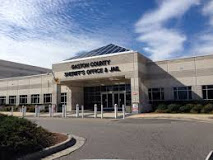
Gaston County Jail
County Jail | Gaston County — North Carolina | Gaston County North Carolina Sheriff's Office
Gaston County Jail is a county-level correctional facility located at 425 Dr. Martin Luther King Jr. Way in Gastonia, North Carolina. Opened in 1999, the jail operates under the authority of the Gaston County Sheriff's Office and is designed to house up to 408 inmates at any given time. The facility maintains separate, secure housing wings for male and female inmates and serves as the primary detention center for Gaston County — processing newly arrested individuals, holding pretrial detainees, and housing those serving shorter sentences for misdemeanor and lower-level felony offenses.
As one of the more modern detention facilities among North Carolina correctional facilities, Gaston County Jail was purpose-built to replace an aging predecessor that had grown inadequate for the region's expanding population and evolving legal standards. Its deliberate placement in downtown Gastonia — just steps from the Gaston County Courthouse — significantly streamlines inmate transport for court appearances and reduces logistical strain on both law enforcement personnel and the broader court system. This central location also makes it more accessible for families and attorneys traveling to the facility.
The jail is staffed and administered by the Gaston County Sheriff's Office, which oversees all aspects of daily operations including inmate classification, security protocols, medical services, and programming. The Sheriff's Office maintains an official inmate search tool on its website, allowing families to locate a detained loved one by name. Families can also search criminal records to find current incarceration status, booking details, and arrest history for individuals who may have passed through this facility. Whether you are trying to confirm that a loved one is housed here or need background information ahead of a court date, these tools can provide a helpful starting point.
One of Gaston County Jail's most significant distinguishing characteristics is its relatively modern infrastructure. Built in 1999 as a purpose-designed replacement for aging facilities that no longer met the operational or safety demands of a growing county, the jail reflects design principles that were considered progressive for county-level corrections at the time of its construction. Unlike older county jails that often struggle with outdated cell layouts, poor ventilation, inadequate sightlines for officer supervision, and decades of deferred maintenance, Gaston County Jail was built from the ground up with efficient pod-style housing units, improved natural lighting, and clearly defined security perimeters that support modern classification-based housing assignments.
Its location in downtown Gastonia, directly adjacent to the county courthouse complex, is another practical advantage that sets it apart from rural or remotely situated county jails. This proximity reduces the logistical and security burden of transporting pretrial detainees for hearings and trial proceedings — a daily reality at most county-level facilities. It also means that defense attorneys, public defenders, and court-appointed advocates can more easily meet with clients in a timely manner, which can have meaningful implications for individuals navigating the pretrial process.
The facility is also notable for offering a broader range of inmate programming than might be expected from a short-term county detention center. While many county jails focus almost exclusively on secure custody, Gaston County Jail maintains educational programming, substance abuse intervention, and faith-based services that reflect a genuine institutional commitment to reducing recidivism — even among individuals who may only be in custody for a matter of weeks or months. This combination of modern infrastructure, strategic location, and programming investment makes Gaston County Jail stand out within the landscape of North Carolina county jails.
The inmate population at Gaston County Jail reflects the demographics and crime patterns typical of a busy county-level detention facility serving a mid-sized North Carolina metropolitan area. At any given time, the majority of individuals housed at the facility are pretrial detainees — people who have been arrested and charged with a criminal offense but have not yet been convicted or sentenced. These individuals may be held because they were denied bail, set a bond they are unable to afford, or are considered a flight risk or danger to the community by the presiding court.
The remaining portion of the population consists of individuals who have been sentenced to shorter terms of incarceration — typically for misdemeanor offenses or lower-level felonies — and are serving those sentences locally rather than being transferred to a state correctional facility. North Carolina law generally dictates that sentences of 90 days or less are served at the county level, though arrangements can vary depending on available space and the nature of the offense.
The facility houses both male and female inmates in fully separate housing wings, with no overlap in common areas or programming spaces. The gender distribution is typical of most county jails, with male inmates comprising the significant majority of the population at any given time. The facility also manages a subset of inmates with specialized needs, including those requiring medical monitoring, mental health treatment, or protective custody arrangements. Classification staff assess each incoming individual to determine appropriate housing placement based on criminal history, current charges, behavior, and vulnerability factors. This classification process is critical for maintaining safety and order within a population that is constantly changing as individuals are booked, released, transferred, or sentenced.
Living conditions at Gaston County Jail are shaped by several key factors: the facility's 1999 construction, its operational standards under the Gaston County Sheriff's Office, and the classification-based housing system used to assign inmates to appropriate units. The facility uses a combination of dormitory-style housing and individual cell-based housing, with placement determined by each inmate's classification level, gender, behavioral history, and any special medical or mental health requirements. Male and female inmates are housed in entirely separate wings with no overlap in common areas, programming spaces, or recreational zones.
Daily life within the jail follows a structured schedule that includes designated times for meals, recreation, programming participation, and lights-out. Three meals are provided daily, and inmates with documented medical dietary needs or religious dietary requirements may request accommodations through the appropriate channels. Access to basic hygiene items is provided, and additional personal care products can be obtained through the jail's commissary system using funds deposited by family members or earned through work assignments.
Medical care is available on-site, with nursing staff and health professionals providing routine treatment and managing chronic conditions. Inmates with serious or emergent medical needs may be transported to an outside medical facility when necessary. Mental health services are also offered at the facility, including assessments, counseling referrals, and medication management for individuals with diagnosed conditions. While conditions at a county jail are inherently more restrictive than those at a state prison or community corrections setting, Gaston County Jail's modern construction means that the physical environment is generally cleaner, better maintained, and more functionally designed than older facilities with comparable populations.
Despite being a county jail focused primarily on short-term detention, Gaston County Jail offers a meaningful range of programs designed to support inmates during their time in custody and reduce the likelihood of reoffending after release. The facility recognizes that even relatively brief periods of incarceration can be an opportunity to connect individuals with services, education, and support that may not have been accessible to them in the community — and that early intervention can have a measurable impact on long-term outcomes.
Educational programming at the jail includes GED preparation courses for inmates who have not completed a high school diploma or equivalent credential. These classes are typically facilitated through partnerships with local educational institutions or volunteer instructors and are available to eligible inmates based on scheduling and classification. Completion of a GED credential while incarcerated can meaningfully improve employment prospects upon release, which research consistently links to lower rates of reoffending.
Substance abuse programming is another core component of the jail's programming offerings. Given the well-documented relationship between substance use disorders and criminal justice involvement, the facility provides access to substance abuse education and intervention programming, including curricula designed to help participants understand the cycle of addiction and develop practical coping strategies. In some cases, this programming is offered in coordination with community treatment providers who can facilitate continuity of care after release.
Faith-based programming is available through volunteer chaplains and community religious organizations, providing both spiritual support and structured group activities for interested inmates. Life skills programming — covering areas such as budgeting, job readiness, conflict resolution, and communication — may also be offered periodically, giving participants practical tools for navigating daily life after custody. The jail coordinates with community organizations and reentry services to help connect individuals with resources before their release date, supporting a smoother transition back into the community.
Work assignments at Gaston County Jail provide minimum security inmates with opportunities to develop work habits while supporting facility operations. Common assignments include kitchen duty, where inmates assist with meal preparation, serving, and cleanup for the facility's population. Laundry workers handle the continuous washing, drying, and distribution of linens, towels, and facility-issued clothing. Maintenance crews perform cleaning and sanitation duties throughout housing units, common areas, and administrative spaces, maintaining the facility's cleanliness standards. Grounds maintenance workers may assist with outdoor areas when weather and security conditions permit. These work assignments typically offer modest compensation or commissary credits that inmates can use to purchase approved items. Participation in work programs is considered a privilege at Gaston County Jail, with assignments based on inmate behavior, trustworthiness, and the facility's operational needs. The minimum security classification allows for somewhat greater flexibility in work assignments compared to higher-security facilities.
Gaston County Jail was established in 1999 in direct response to the county's urgent need for a modern, adequately sized detention facility to serve Gastonia and the surrounding Gaston County region. Before the current facility opened, the county depended on an older jail infrastructure that had become increasingly strained by decades of population growth, rising arrest volumes, and evolving state and federal standards governing inmate housing, medical care, and constitutional rights. The construction of the new jail represented a significant public investment — one intended to bring Gaston County's detention capabilities in line with contemporary correctional practices and to provide a facility capable of serving the community for decades.
The site at 425 Dr. Martin Luther King Jr. Way was chosen deliberately for its proximity to the Gaston County Courthouse and the cluster of legal services infrastructure surrounding it. This placement was not merely a matter of convenience — it was a practical decision that reduced the time, cost, and security risk associated with transporting inmates to and from court appearances. For a county jail that processes hundreds of individuals through the court system each year, that proximity has had lasting operational benefits.
Since opening, the facility has been continuously managed by the Gaston County Sheriff's Office, which has made incremental improvements to programming, classification systems, and medical services over the years. The jail's history reflects broader trends in county-level corrections across North Carolina: a shift away from purely punitive warehousing toward a model that incorporates rehabilitation programming, mental health support, and structured reentry planning, even within the constraints of a short-term detention environment. While the facility has not undergone a major physical expansion since its original construction, it has adapted its internal operations to reflect changing correctional best practices and the shifting demographics of its inmate population.
No widely documented famous former inmates are publicly associated with Gaston County Jail. The facility primarily processes individuals arrested within Gaston County as part of routine local law enforcement activity, and its inmate population has not historically included prominent public figures, national celebrities, or individuals whose cases have attracted significant media coverage at the national level. Like most county jails of its size and type, the vast majority of people who pass through Gaston County Jail are private individuals whose cases are handled entirely within the local court system without broader public attention.
If you are researching the arrest history, booking records, or incarceration status of a specific individual who may have been held at Gaston County Jail, you can look up an inmate's arrest history using publicly available criminal records. This can be a useful tool for families trying to piece together a loved one's legal history or for individuals conducting background research on someone connected to the Gastonia area.
Gaston County Jail provides scheduled visitation opportunities that allow families and approved visitors to maintain meaningful in-person contact with incarcerated loved ones. Visitation schedules are organized by housing unit and may vary depending on an inmate's classification level and the facility's operational needs on any given day. Because hours and procedures are subject to change — particularly around holidays or during facility lockdowns — visitors are strongly encouraged to confirm current schedules directly with the facility before making travel arrangements. You can review current visitation policies on the official Gaston County Sheriff's Office visitation page.
All visitors must be on the inmate's approved visitor list before arriving at the facility. To be added to the list, visitors typically need to provide valid government-issued photo identification and may be subject to a background screening process. Valid photo ID is required at the time of each visit, and visitors who are not on the approved list will not be permitted entry. Minors are generally permitted to visit when accompanied by an approved adult guardian, but it is advisable to confirm this policy in advance as rules may change.
In addition to in-person visitation, Gaston County Jail offers video visitation as an alternative means of staying connected. Video visits can often be scheduled in advance through the jail's contracted communications provider and may be conducted either from a kiosk at the facility or remotely from a personal device — depending on the available service options. This can be especially useful for family members who live at a distance or have difficulty traveling to the jail in person. Visitors should dress appropriately and arrive on time, as late arrivals may not be admitted. Bringing any prohibited items — including certain electronics, food, or beverages — can result in denial of entry.
Maintaining contact with an incarcerated loved one at Gaston County Jail is possible through several channels, including postal mail, telephone calls, video visits, and commissary deposits. Each method has its own procedures, and understanding how each one works can help families stay connected more effectively throughout a person's time in custody.
For postal mail, all correspondence should be addressed clearly with the inmate's full legal name and booking number. Mail is typically inspected before delivery, and packages containing unauthorized items will be rejected or confiscated. It is advisable to send only standard letters and cards through the mail — bulky envelopes, padded mailers, and packages with hard covers or bindings may be refused depending on facility mail policy. Photographs are generally permitted in limited quantities but should be printed on standard photo paper with no Polaroid-style borders. For guidance on navigating the inmate location process, see our guide on how to find an inmate for step-by-step instructions.
For telephone calls, inmates at Gaston County Jail must initiate outgoing calls using the jail's contracted phone system. Calls are typically collect or prepaid, and family members can set up a prepaid account through the service provider to ensure their loved one has consistent phone access. All calls are recorded and subject to monitoring except for privileged communications with legal counsel.
Commissary deposits allow family members to place funds into an inmate's account so they can purchase hygiene products, snacks, writing materials, and other approved items from the jail commissary. Deposits can typically be made online, by phone, or via a kiosk at the facility. To learn more about supporting a loved one financially while they are in custody, visit our guide on how to send money to an inmate. For the most current information on accepted deposit methods and associated fees, contact the Gaston County Jail directly or visit the official Gaston County Sheriff's Office detention page.
Sponsored and Powered by our Partner TruthFinder
Quick Facts
Should I Be Concerned? — Family Guide
Gaston County Jail maintains an excellent safety record as a minimum security facility, with professional staff and security protocols designed to ensure the well-being of visitors, employees, and inmates. The facility's classification means the inmate population consists primarily of non-violent offenders, creating a stable and secure environment. Visiting families can expect professional interactions and a controlled atmosphere throughout the facility.
The jail implements comprehensive visitor screening procedures, including ID verification and security checks, to maintain safety standards. Staff are trained to address any concerns, and clear policies help ensure that visits proceed smoothly. Families should prepare ahead by reviewing current visitation guidelines and dress codes to have a positive visiting experience.
Neighborhood & Getting There
Gaston County Jail is strategically located in downtown Gastonia, North Carolina, at 425 Dr. Martin Luther King Jr. Way, approximately 20 miles west of Charlotte in the Piedmont region. The facility benefits from excellent access via Interstate 85, making it convenient for family members traveling from surrounding counties and nearby areas. The downtown location provides easy access to restaurants, gas stations, and other essential services.
For visitors traveling from out of town, the Gastonia area offers several hotel options within 5-10 miles of the facility, including budget-friendly and mid-range accommodations. The drive from Charlotte-Douglas International Airport is approximately 45 minutes, and numerous dining and shopping options are available throughout downtown Gastonia. The Piedmont location provides a central point for visitors coming from across western North Carolina.