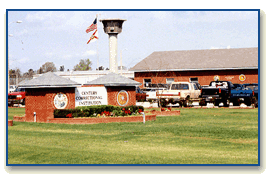
Century Work Camp
State Prison | Escambia County — Florida | CWC | Florida Department of Corrections
Century Work Camp is a medium-security correctional facility located at 400 Tedder Road in Century, Escambia County, Florida. Operated by the Florida Department of Corrections, this work camp exclusively houses male inmates and currently maintains a population of 264 offenders. Established in 1994, the facility serves the northernmost region of Florida's panhandle, focusing on work assignments and community service programs that support the surrounding rural area.
Families seeking information about inmates at Century Work Camp can use our inmate search tools to locate loved ones, verify housing assignments, and access arrest records. We provide resources to help families understand how to send money, schedule visitation, and maintain contact with incarcerated individuals throughout their time at this Escambia County facility.
Century Work Camp distinguishes itself within the Florida Department of Corrections system through its emphasis on community-based work assignments in the rural panhandle region. Unlike traditional incarceration facilities, work camps like Century focus on labor programs that benefit local communities and state infrastructure. Inmates participate in agricultural work, road maintenance, forestry projects, and disaster response efforts that serve Escambia County and surrounding areas. The facility's location in Century, a small town near the Alabama border, allows for unique partnerships with state agencies and local governments that require supervised labor for conservation and public works projects unavailable in more urbanized areas of Florida.
Century Work Camp houses 264 male inmates classified at medium-security custody levels. The population consists primarily of sentenced offenders who have demonstrated sufficient institutional adjustment to qualify for work camp assignments. Inmates typically serve time for non-violent felonies including property crimes, drug offenses, and other mid-level convictions. The facility does not house pre-trial detainees or maximum-security inmates. To qualify for work camp placement, offenders must meet specific criteria established by the Florida Department of Corrections, including remaining sentence length, disciplinary history, and medical clearance for physical labor. The population tends to include inmates nearing their release dates who benefit from the structured work environment and community reintegration opportunities that work camp assignments provide.
Century Work Camp provides dormitory-style housing rather than individual cells, reflecting the facility's medium-security classification and work-oriented mission. Inmates reside in shared living quarters with multiple bunks, lockers for personal property, and communal bathroom facilities. The facility serves three meals daily in a common dining hall, with menus meeting nutritional standards established by the Florida Department of Corrections. Recreation opportunities include outdoor yard time, basketball courts, and dayrooms, though schedules accommodate work assignments that occupy much of inmates' daytime hours. Medical services address routine healthcare needs through on-site nursing staff, with serious conditions requiring transfer to regional medical facilities. Mental health services provide basic counseling and psychiatric medication management. The grievance process allows inmates to formally address concerns through written requests submitted to staff and administrative officials, following established Department of Corrections procedures that ensure documentation and response to complaints regarding living conditions, safety issues, or policy violations.
Century Work Camp offers educational programming including GED preparation and adult basic education for inmates lacking high school credentials. While vocational training options are more limited than at larger facilities, inmates gain practical skills through work assignments in areas like equipment operation, landscaping, and construction maintenance. Substance abuse programming addresses addiction issues through group counseling sessions and educational materials focused on recovery principles. Religious services accommodate various faith traditions through volunteer chaplains and community clergy who visit the facility regularly. Re-entry preparation receives particular emphasis given the work camp population's proximity to release dates, with programs covering employment readiness, housing resources, and community transition planning. The structured work environment itself serves as a primary rehabilitative component, teaching responsibility, work ethic, and cooperation skills valuable for successful reintegration into society.
Work assignments constitute the primary function of Century Work Camp, with inmates participating in both facility operations and external community service projects. Inside jobs include kitchen staff, maintenance crews, laundry workers, and janitorial teams that keep the institution functioning. Outside work squads perform road maintenance along state highways, clear brush and vegetation for fire prevention, assist with agricultural projects, and support forestry operations in surrounding areas. Inmates may work with regional emergency response teams during natural disasters or participate in conservation efforts coordinated with state environmental agencies. These assignments provide valuable labor to Escambia County and state agencies while offering inmates structured routines and work experience applicable to post-release employment.
Century Work Camp was established in 1994 as part of Florida's expansion of work camp facilities designed to address growing inmate populations while providing cost-effective labor for public projects. The facility's location in Century, a small panhandle community in northern Escambia County, positioned it strategically to serve rural areas requiring supervised labor for infrastructure and conservation work. Construction provided a medium-security option for the region that complemented nearby correctional facilities. Over three decades of operation, Century Work Camp has maintained its mission of community-based work programs while adapting to evolving Department of Corrections policies and security protocols. The facility has avoided major incidents or controversies, operating as a stable component of Florida's correctional system. Today, Century Work Camp continues fulfilling its original purpose, housing 264 inmates who contribute labor to state and local projects while serving their sentences in a structured work environment.
Visitation at Century Work Camp requires advance approval through the Florida Department of Corrections visitor registration process. All visitors must be on the inmate's approved visitation list before arrival and must present valid government-issued photo identification. The facility enforces strict dress code policies prohibiting revealing clothing, certain colors, and items that resemble inmate uniforms. Visitors should wear modest, appropriate attire to avoid being denied entry. Visitation schedules vary and may be limited compared to larger facilities, with specific days and hours assigned based on inmate housing assignments. Families should call the facility ahead of planned visits to confirm current schedules, as work assignments may affect visitation availability. Physical contact is typically limited to brief embraces at the beginning and end of visits, with vending machines usually available for purchasing snacks during approved visiting hours.
Mail sent to inmates at Century Work Camp must include the inmate's full legal name, Department of Corrections identification number, and the complete facility address: 400 Tedder Road, Century, Florida 32535. All incoming mail undergoes inspection for contraband and prohibited materials. Families should use this same mailing address for correspondence. Books and publications must be shipped directly from approved vendors or publishers rather than personal sources. Inmates can typically make outgoing telephone calls through the facility's phone system, which requires families to establish prepaid accounts with the contracted phone service provider. Call rates and account setup procedures follow standard Department of Corrections policies. Email services may be available through approved electronic messaging systems, though families should verify current options as technology services vary by facility.
Sponsored and Powered by our Partner TruthFinder
Quick Facts
Should I Be Concerned? — Family Guide
Century Work Camp maintains a medium security classification with zero reported staff assaults, indicating a stable operational environment. The facility's work camp model typically correlates with lower violence rates due to structured programming and inmate employment. Families should expect standard visiting procedures and security protocols; arrive with valid identification, follow all facility rules, and contact ahead to confirm visiting hours and any restrictions.
Neighborhood & Getting There
Century is a rural community in Escambia County in Florida's western Panhandle, approximately 45 minutes north of Pensacola. The area is primarily agricultural and forested, with limited urban amenities nearby. Pensacola offers the closest hotels, restaurants, and services for visiting families. Interstate 10 is roughly 30 minutes south, providing main highway access. The facility's remote location means visitors should plan for rural driving conditions and limited services immediately surrounding the work camp.