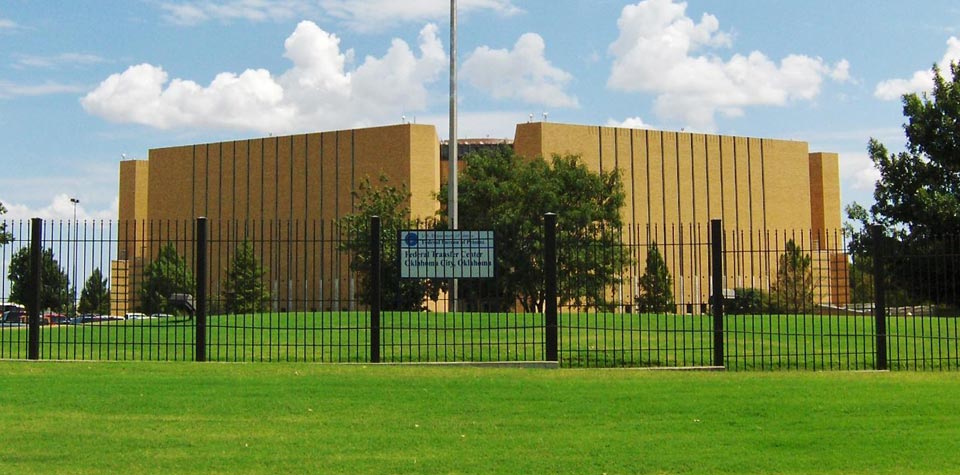
Federal Transfer Center, Oklahoma City
Federal Prison | Oklahoma County — Oklahoma | FTC Oklahoma City
The Federal Transfer Center in Oklahoma City is a minimum-security facility located at 7410 S MacArthur Boulevard in Oklahoma City, Oklahoma County, Oklahoma. Operated by the Oklahoma Department of Corrections, this specialized facility houses approximately 1,185 male inmates. Under the leadership of Warden John Fox, the center functions primarily as a transfer hub within the federal correctional system, temporarily housing inmates during interstate and interagency movement.
Families seeking information about inmates at the Federal Transfer Center can search inmate records through the Oklahoma Department of Corrections database. Due to the transient nature of this facility, families should verify current inmate location before arranging visits, sending money, or mailing correspondence. Understanding arrest records and transfer status is essential for maintaining contact during the relocation process.
The Federal Transfer Center in Oklahoma City occupies a unique position within the Oklahoma correctional system as a designated transfer hub rather than a traditional long-term incarceration facility. Unlike standard prisons where inmates serve their sentences, this center specializes in the temporary housing of federal inmates during transit between facilities across the country. Its strategic location in Oklahoma City makes it a central waypoint for federal prisoner movements throughout the region. This transient function means inmates typically remain at the facility for days or weeks rather than months or years, creating a constantly changing population that requires specialized administrative and security protocols tailored to managing high-volume inmate transfers efficiently and safely.
The Federal Transfer Center maintains a diverse and constantly rotating population of approximately 1,185 male inmates at various stages of their judicial journey. Due to its transfer function, the facility houses both pre-trial detainees being moved for court appearances and sentenced inmates relocating to permanent facilities. Inmates come from all offense classifications, including those convicted of white-collar crimes, drug offenses, weapons violations, and more serious federal charges. The minimum-security designation means the facility typically handles inmates deemed lower risk, though security protocols remain strict given the transfer environment. Special populations passing through may include inmates requiring medical transport, witnesses in federal cases, or those being repositioned for security reasons. The short-term nature of stays creates a unique demographic where classification and security assessments are ongoing processes.
At the Federal Transfer Center, living conditions reflect its function as a temporary housing facility for inmates in transit. Inmates are housed in dormitory-style units or shared cells designed for short-term occupancy rather than long-term residence. The facility provides three meals daily that meet federal nutritional standards, though menu options may be more limited than at permanent facilities. Recreation opportunities include outdoor yard time and indoor common areas, though access may be scheduled around transfer activities and processing requirements. Medical services are available on-site to address urgent health needs and manage ongoing treatments during transfers, while mental health staff evaluate inmates and coordinate care continuity between facilities. The grievance process allows inmates to address concerns formally, though the brief stays often mean issues are documented for resolution at destination facilities. Because of the high turnover, personal property is kept minimal, and inmates maintain readiness for movement on short notice.
Programming at the Federal Transfer Center differs significantly from long-term correctional facilities due to the transient nature of the inmate population. While comprehensive educational programs like GED preparation and vocational training are typically unavailable given the short average stay, the facility does offer limited programming opportunities. Substance abuse counseling may be available in the form of informational sessions and referrals to programs at destination facilities. Religious services accommodate various faiths with chaplaincy services and worship opportunities during inmates' stay. Re-entry planning focuses primarily on orientation and preparation for transfer rather than community reintegration. Library services provide reading materials and legal resources for inmates preparing for court proceedings. The facility emphasizes maintaining program continuity by coordinating with sending and receiving institutions to ensure inmates continue treatment plans and educational progress without interruption during the transfer process.
Work assignments at the Federal Transfer Center are structured around facility operations and maintenance rather than extensive prison industries. Due to the short-term nature of inmate stays, work programs focus on essential daily operations including food service, janitorial duties, laundry services, and grounds maintenance. Inmates selected for work assignments assist in keeping the facility functional and clean while gaining responsibility and structure during their transfer period. Some positions involve supporting the administrative processing of incoming and outgoing inmates, including property management and documentation. Unlike permanent facilities with manufacturing or agricultural programs, the Federal Transfer Center's work opportunities are limited to internal operational needs that can accommodate the constantly changing inmate population.
The Federal Transfer Center in Oklahoma City was established in 1995 to address the growing need for a centralized transfer facility in the region's federal correctional system. Its location in Oklahoma City was strategically selected due to the city's central geographic position and existing transportation infrastructure, making it an ideal hub for moving inmates across multiple states. The facility was constructed specifically to handle the unique security and logistical challenges of managing a high-volume, constantly changing inmate population. Over nearly three decades of operation, the center has evolved its procedures to improve efficiency and safety during the transfer process. The facility has maintained its role as a critical component of the federal prison system's transfer network, processing thousands of inmates annually while adapting to changing security standards and federal correctional policies throughout its operational history.
Because the Oklahoma FTC is a hub, a number of well-known inmates have moved through the facility. Piper Kerman wrote about her time at Oklahoma in her memoir Orange is the New Black.
Visitation at the Federal Transfer Center operates differently than at traditional correctional facilities due to the temporary nature of inmate stays. Visitors must bring valid government-issued photo identification and follow strict dress code requirements that prohibit revealing clothing, gang colors, and items that could pose security concerns. Because inmates are often at the facility for brief periods, families should call ahead to verify their loved one's current location before traveling to Oklahoma City. The visitor approval process may be expedited for transfer inmates, but families should understand that visitation privileges can be limited depending on security classifications and transfer schedules. Visits typically occur in designated areas under staff supervision, and families should expect standard security screening procedures including metal detectors and possible searches.
Families wishing to contact inmates at the Federal Transfer Center should address mail using the inmate's full legal name, registration number, and the facility's post office box: FTC Oklahoma City, P.O. Box 898801, Oklahoma City, OK 73189. Due to frequent transfers, families should verify mailing addresses regularly as inmates may relocate before correspondence arrives. Book shipments must come directly from approved vendors to comply with security policies. Inmates can typically access telephone accounts to make collect calls or use prepaid phone services, though calling privileges may be limited during processing periods. Email and electronic messaging availability varies and families should confirm current communication options with facility staff given the transitional nature of the inmate population at this transfer center.
Sponsored and Powered by our Partner TruthFinder
Quick Facts
Should I Be Concerned? — Family Guide
Federal Transfer Center, Oklahoma City operates at minimum security with zero reported staff assaults, indicating a stable and safe environment. The facility's primary function as a transfer hub means populations fluctuate, but security protocols remain consistent. Families should expect standard visitation procedures and respectful treatment. Plan visits in advance and confirm inmate location before traveling, as transfers occur regularly.
Neighborhood & Getting There
Located on South MacArthur Boulevard in Oklahoma City, the facility sits in the southern part of the metro area, approximately 8-10 miles from downtown Oklahoma City. The region features mixed commercial and industrial development with accessible highway connections via I-44 and local roads. Visitors will find hotels, restaurants, and services along MacArthur Boulevard and nearby Tinker Air Force Base vicinity. Oklahoma City's main amenities are 15-20 minutes away by car.