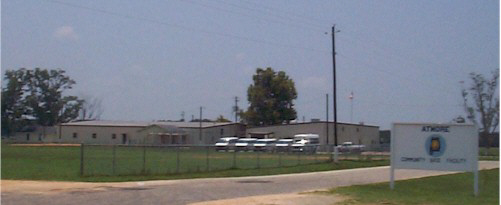
Atmore Community Work Center
State Prison | Escambia County — Alabama | Alabama Department of Corrections
Atmore Community Work Center is a minimum-security correctional facility located at 9947 Highway 21 North in Atmore, Escambia County, Alabama. Established in 1972, this facility operates under the Alabama Department of Corrections and houses male inmates exclusively. With a capacity of 250 inmates, the center is currently managed by Warden Mary Cooks. As a community work center, it serves a specific role within Alabama's correctional system, focusing on inmates nearing release and community-based assignments.
Families seeking to locate an inmate at Atmore Community Work Center can conduct inmate searches through the Alabama Department of Corrections database. Loved ones can send money, schedule visits, and access arrest records through official channels. Understanding the facility's rules and procedures helps families maintain meaningful connections with incarcerated individuals during their time at this work-focused institution.
Atmore Community Work Center distinguishes itself within the Alabama correctional system as a dedicated work-focused minimum-security facility. Unlike traditional prisons, this work center emphasizes community service projects and external work assignments that allow inmates to contribute labor to public projects throughout Escambia County and surrounding areas. The facility's location in Atmore places it near other correctional institutions but maintains its unique mission of transitioning inmates back into society through structured work programs. Inmates assigned here typically demonstrate low security risk and readiness for supervised community interaction, making this center an important step in the reintegration process before release.
Atmore Community Work Center houses a carefully screened population of minimum-security male inmates who have been classified as low-risk offenders. The facility primarily accommodates sentenced individuals who are in the final stages of their incarceration, rather than pre-trial detainees. Inmates typically have non-violent conviction histories and have demonstrated positive institutional behavior at higher-security facilities. The population includes individuals convicted of property crimes, drug offenses, and other non-violent felonies who have earned their way to minimum-security status through program participation and conduct. Selection criteria ensure that residents pose minimal flight risk and are capable of working in community settings with limited supervision, making them suitable candidates for the center's work-focused mission.
Atmore Community Work Center provides dormitory-style housing appropriate for its minimum-security classification, with inmates residing in open bay arrangements rather than individual cells. The communal living environment reflects the trust level afforded to this population and prepares residents for community reintegration. Inmates receive three meals daily in a central dining facility, with menus meeting nutritional standards established by the Alabama Department of Corrections. Recreation opportunities include outdoor yard time and access to basic exercise equipment, though facilities are less extensive than at larger institutions. Medical services are available through scheduled sick call and emergency care, with more serious health needs addressed through transfers to facilities with comprehensive medical units. Mental health services include basic counseling and medication management. The grievance process allows inmates to formally address concerns through written requests submitted to staff, with responses documented according to departmental policy. The structured environment emphasizes accountability and preparation for release.
Atmore Community Work Center offers programming designed to support successful reentry into society. Educational opportunities include GED preparation classes for inmates lacking high school credentials, with testing arranged through approved channels. While vocational training options may be more limited than at larger facilities, inmates gain practical job skills through daily work assignments that teach reliability, teamwork, and trade-specific competencies. Substance abuse programming addresses addiction issues through group counseling sessions and educational materials, helping participants develop coping strategies and relapse prevention skills. Religious services and faith-based programs are available for inmates seeking spiritual support during incarceration. Reentry planning receives particular emphasis given the facility's transitional role, with case managers helping inmates secure identification documents, employment leads, and community resources before release. These programs collectively prepare residents for law-abiding lives after incarceration.
Work assignments constitute the primary focus at Atmore Community Work Center, reflecting its mission as a community work facility. Inmates participate in external work crews that perform labor for government agencies, municipalities, and public projects throughout the region. Common assignments include highway maintenance, litter removal, grounds keeping at public facilities, and other community beautification projects. Inside the facility, inmates maintain operations through kitchen duty, janitorial work, laundry services, and facility maintenance assignments. These work opportunities provide structure, teach employment skills, and allow inmates to contribute productively while completing their sentences. Participation in work programs is generally mandatory rather than optional, reflecting the facility's core purpose within the Alabama correctional system.
Atmore Community Work Center was established in 1972 as part of Alabama's expanding correctional infrastructure to address the growing need for minimum-security housing and community-based inmate labor programs. The facility's location in Atmore placed it in proximity to other existing correctional institutions in Escambia County, creating a concentration of correctional resources in the area. Over the decades since its founding, the center has maintained its focus on work programs while adapting to changing correctional practices and population management needs. The facility has operated with a capacity of 250 inmates, providing a controlled environment where qualifying offenders can complete their sentences while contributing labor to community projects. Today, under the leadership of Warden Mary Cooks and the oversight of the Alabama Department of Corrections, Atmore Community Work Center continues serving its original purpose as a transitional facility bridging incarceration and release through structured work opportunities.
Visitation at Atmore Community Work Center allows families to maintain connections with incarcerated loved ones, though specific schedules and procedures must be followed. Visitors must bring valid government-issued photo identification for processing and entry. The dress code prohibits revealing or provocative clothing, items resembling inmate uniforms, and clothing with offensive imagery or language. Prospective visitors should complete the approval process in advance, as background checks are required before individuals can be added to an inmate's approved visitor list. Families should contact the facility directly before traveling to confirm current visiting hours, as schedules may change due to operational needs or facility lockdowns. Physical contact is typically limited to brief embraces at the beginning and end of visits. Understanding and following all rules ensures smooth visits without denial of entry.
Families can contact inmates at Atmore Community Work Center through properly addressed mail sent to the inmate's full name and identification number at 9947 Highway 21 North Atmore, AL 36503. All incoming mail undergoes inspection for contraband and prohibited items before delivery. Books and magazines must typically come directly from approved vendors or publishers rather than individuals to prevent security concerns. Inmates can make telephone calls using facility phone systems, which require families to establish prepaid accounts with the designated phone service provider. These calls are monitored and subject to recording. Email and electronic messaging services may be available through contracted vendors, though families should verify current options as technology services evolve within the Alabama Department of Corrections system.
Sponsored and Powered by our Partner TruthFinder
Quick Facts
Should I Be Concerned? — Family Guide
Atmore Community Work Center maintains a minimum security classification with zero reported staff assaults, indicating a safe environment for visitors. The facility's work-centered mission typically means lower behavioral incidents and more rehabilitative focus. When visiting, follow standard security procedures, bring valid ID, and check ahead for any facility-specific restrictions or schedule changes.
Neighborhood & Getting There
Atmore is located in Escambia County in southern Alabama, approximately 30 miles north of Pensacola, Florida. The facility sits on Highway 21 North in a rural setting. The nearest significant city is Pensacola (45 minutes south), offering hotels, restaurants, and services. Visitors can access the facility via US Highway 231 or Highway 21. The area has limited immediate accommodations, so many visitors base themselves in Pensacola for overnight stays.