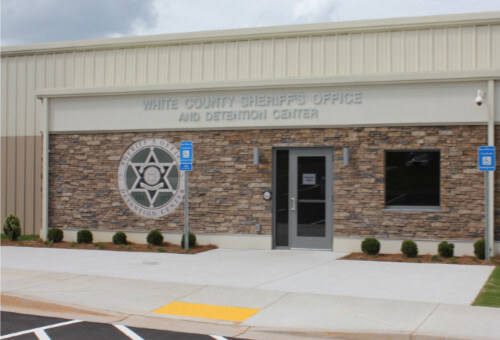
White County GA Detention Center
County Jail | White County — Georgia | White County GA Sheriff's Office
White County GA Detention Center is a county jail located in Cleveland, Georgia, the county seat of White County in the scenic northeastern corner of the state. Cleveland is a small but growing mountain community with a population of approximately 3,500 residents, nestled in the Blue Ridge foothills roughly 75 miles northeast of Atlanta. The facility serves as the primary detention center for White County and operates under the authority of the White County Sheriff's Office. It is one of many facilities listed among Georgia correctional facilities that house both pre-trial detainees and sentenced offenders serving shorter terms.
The detention center has a rated capacity of 176 beds and maintains separate housing areas for male and female inmates. Classification is taken seriously at this facility — inmates are assessed based on the nature of their charges, risk scores, and behavior while in custody, and are housed accordingly. This structured approach helps maintain order, minimize conflicts between incompatible populations, and ensures that vulnerable individuals are not placed in unsafe environments.
If you have a family member or loved one currently held at White County GA Detention Center, the situation can feel urgent and confusing. Your first step should be contacting the facility directly to confirm custody status and obtain booking information. Families can also search criminal records to quickly locate a loved one's current incarceration status and arrest details using publicly available data. From there, consulting a criminal defense attorney or a licensed bail bondsman in White County can help clarify your options for release or legal representation. Many families find that staying organized and informed from the very beginning makes navigating the process significantly more manageable.
One of the most notable aspects of White County GA Detention Center is its location within one of Georgia's most scenic and rapidly growing mountain counties. Cleveland and the broader White County area have experienced steady population growth over recent decades, fueled by tourism centered on the nearby Blue Ridge Mountains and the widespread popularity of Helen, Georgia — a beloved Bavarian-themed mountain town situated just a short distance away. This consistent influx of visitors, seasonal residents, and new permanent residents has influenced both the demographics and the operational demands placed on the detention center.
The facility's setting in a small, tight-knit mountain community also shapes its character in meaningful ways. Unlike large urban jails where inmates may be largely anonymous, the White County facility serves a county where many detainees and staff share deep community ties. This environment can make reintegration efforts more personal and community-rooted, with local organizations, faith communities, and volunteer groups playing a more visible role in supporting incarcerated individuals and their families.
Additionally, the proximity to the North Georgia mountains means the facility draws on a network of regional resources — including legal aid organizations, substance abuse treatment programs, and faith-based outreach ministries — that are particularly active throughout the mountain counties of northeastern Georgia. For families navigating the challenges of having a loved one incarcerated here, these community connections can be a valuable source of support and advocacy.
The White County GA Detention Center holds a maximum of 176 inmates at any given time, a capacity that reflects the relatively small but steadily growing population of White County. On any given day, the inmate population is a mix of pre-trial detainees who have not yet been convicted of any crime and are awaiting arraignment, hearings, or trial, as well as sentenced individuals serving shorter terms typically associated with misdemeanor convictions or lower-level felonies adjudicated at the county level.
Pre-trial detainees represent a significant portion of the population and may include individuals who are unable to post bond, those deemed a flight risk by the court, or those being held on serious charges pending disposition of their cases. It is important to remember that pre-trial inmates have not been found guilty and retain the legal presumption of innocence. Families of individuals in this category are encouraged to consult with a defense attorney as soon as possible to understand bail options and case timelines.
The sentenced population at White County typically includes individuals serving terms of less than one year, often for offenses such as DUI, drug possession, theft, or probation violations. More serious felony offenders convicted in White County Superior Court are generally transferred to the Georgia Department of Corrections to serve their sentences at a state facility. The overall population at the detention center tends to reflect the kinds of offenses common to a small, rural mountain county with an active tourism economy.
Living conditions at White County GA Detention Center are governed by Georgia's county jail standards, which establish minimum requirements for inmate housing, nutrition, medical care, and sanitation. These standards are enforced through periodic inspections and oversight from state agencies, ensuring that the facility maintains a baseline level of care for all individuals in custody. Inmates are housed in supervised dormitory-style or cell-block units depending on their classification level, with higher-risk individuals placed in more controlled housing environments and lower-risk inmates housed in less restrictive settings.
Meals are provided three times daily and are designed to meet basic nutritional requirements established by state guidelines. Inmates with documented medical dietary needs — such as diabetes, heart conditions, or religious dietary restrictions — may be eligible for modified meal plans with appropriate documentation and approval from medical staff. Access to clean drinking water is available throughout the facility.
Medical care is available to all inmates and is an important component of the facility's operations. Routine health screenings are typically conducted at intake, and sick call procedures allow inmates to request medical attention when needed. Mental health services, while more limited at the county level than at larger state facilities, are generally available for individuals with identified needs. Prescription medications can be administered with proper documentation from an outside provider.
Inmates have access to personal hygiene items either through the facility or through commissary purchases. Recreational time, while limited compared to larger institutions, is typically provided in accordance with Georgia's standards for county jails. Family members who want to help supplement basic needs can often do so by sending money to an inmate's commissary account, which can be used to purchase additional hygiene products, snacks, stationery, and other approved items.
County detention centers in Georgia, including White County GA Detention Center, typically offer a range of programming designed to reduce idleness, support rehabilitation, and help inmates prepare for a successful return to the community. While programming at smaller county jails is often more limited in scope than what is available at state prisons, the White County facility works to provide meaningful opportunities for those in its custody.
Commonly available programs at facilities of this type include:
- Religious services: Volunteer chaplains and community faith organizations frequently visit county jails throughout Georgia to provide worship services, Bible study, and pastoral counseling. These programs are among the most consistently available at smaller facilities and often serve as an important source of emotional support for inmates.
- Educational programming: Basic literacy assistance and GED preparation resources may be available, either through in-facility instruction or self-study materials. Access to educational programming can vary based on staffing and resources.
- Substance abuse education: Given the significant overlap between substance use disorders and incarceration, many Georgia county jails partner with local treatment providers or recovery organizations to offer substance abuse education and Alcoholics Anonymous or Narcotics Anonymous meetings.
- Life skills and reentry preparation: Some facilities offer workshops or one-on-one counseling focused on job readiness, financial literacy, and navigating the reentry process after release.
- Behavioral programming: Inmates who demonstrate positive behavior and engagement may have access to structured activities that support pro-social development and reduce institutional misconduct.
Availability of specific programs can change based on staffing levels, volunteer availability, and facility needs. Families are encouraged to contact the White County Sheriff's Office directly to inquire about current programming offerings for their loved one.
White County was established in 1857 and named in honor of David T. White, a member of the Georgia state legislature who played a role in the region's early governance. From its founding, the county seat of Cleveland served as the administrative, judicial, and law enforcement hub for the surrounding mountain communities, and the need for a local detention facility was recognized early in the county's history.
For much of the 19th and early 20th centuries, White County relied on small, rudimentary jailhouses typical of rural Georgia counties of the era. These early structures were modest in size, offered few amenities, and provided little in the way of programming or structured services for inmates. Security standards and oversight were minimal by modern measures, reflecting the broader norms of county-level detention in rural America at the time.
As Georgia began modernizing its county jail standards throughout the latter half of the 20th century, White County invested in upgraded detention infrastructure to meet evolving state requirements. The Georgia Department of Community Affairs and the Georgia Sheriff's Association have historically worked with county governments to bring local facilities into compliance with health, safety, and operational standards that align with broader national guidelines for humane detention.
The current White County GA Detention Center represents the county's ongoing commitment to operating a facility that meets contemporary standards for inmate housing, safety, and basic services. As the county has grown — driven in part by the popularity of the Blue Ridge Mountain region as a tourist and retirement destination — the detention center has adapted to serve a moderately expanding population while maintaining the community-oriented character typical of smaller Georgia county jails.
No widely documented famous former inmates are associated with White County GA Detention Center at this time. Families researching the background of individuals connected to this facility can search public criminal records to access publicly available arrest and booking history.
Visitation is one of the most important lifelines for incarcerated individuals and their families. Research consistently shows that maintaining strong family connections during incarceration reduces recidivism and supports better outcomes after release. White County GA Detention Center allows approved visitors to see their incarcerated loved ones in accordance with the facility's visitation schedule and rules, which are subject to change and should always be confirmed in advance.
Before visiting, all guests must typically be placed on the inmate's approved visitor list. This process may require submitting identification information and passing a background check. Visitors should bring a valid, government-issued photo ID on the day of their visit and should arrive with enough time to complete the check-in process before the scheduled visitation period begins. Visitors who arrive late or fail to comply with facility rules may be turned away.
Dress code requirements are generally enforced at county jails, and clothing that resembles inmate uniforms or is considered revealing is typically prohibited. Visitors should avoid bringing prohibited items into the facility, as doing so can result in denial of visitation privileges or, in serious cases, criminal charges. Children are generally permitted to visit with a supervising adult, though specific rules regarding minors should be confirmed with the facility.
For detailed and up-to-date visitation schedules, approved visitor list procedures, and facility rules, families are encouraged to visit the White County Sheriff's Office Detention Division website or call the facility directly. Visitation policies can change due to staffing, facility lockdowns, or public health considerations, so confirming current hours before making the trip is always a good idea.
Staying in contact with a loved one at White County GA Detention Center is possible through several channels, and maintaining regular communication can make a meaningful difference in an inmate's mental health and motivation during their time in custody.
Phone calls from the facility are processed through a contracted inmate telephone service provider. Families will need to set up a prepaid account with that provider in order to receive calls or to allow their loved one to call collect. Rates and account setup procedures vary by provider, so it is worth visiting the provider's website or calling their customer service line to get started. Keeping a funded account active ensures your loved one can reach you when needed.
Mail remains a reliable and meaningful way to stay connected. Send letters and cards to the inmate's full legal name and booking number at the facility's mailing address. Most county jails in Georgia inspect incoming mail for contraband, so envelopes should contain only paper correspondence — no staples, stickers, glitter, or other non-paper materials. Photographs may be permitted in some cases but should be confirmed with the facility beforehand. Do not send cash through the mail.
Commissary and financial support can be provided by depositing funds into an inmate's commissary account, which allows them to purchase additional food, hygiene items, and communication credits. See our guide on how to send money to an inmate for a step-by-step overview of the most common deposit methods accepted at Georgia county jails.
Email and digital messaging may also be available through the facility's contracted technology provider, allowing families to send messages and sometimes photos electronically. Check with the facility or the service provider to confirm whether this option is currently offered.
If you are unsure whether someone is currently held at this facility, our guide on how to find an inmate walks through the steps for locating someone in Georgia's county jail system. You can also contact the White County Sheriff's Office directly for booking and custody status inquiries.
Sponsored and Powered by our Partner TruthFinder
Quick Facts
Should I Be Concerned? — Family Guide
White County Detention Center maintains rigorous professional security standards designed to protect inmates, staff, and visitors. All visitors must pass through standard security screening including metal detectors, bag checks, and ID verification. The facility enforces strict conduct protocols in all visitation areas and maintains trained correctional staff presence at all times. Families should arrive prepared for thorough security procedures and allow extra time for processing.
Before visiting, contact the facility at (706) 219-2104 to understand current security protocols and any restrictions. Visitors with weapons, contraband, or who appear intoxicated will be denied entry. Understanding these safety measures helps ensure smooth visits and maintains the secure environment necessary for facility operations.
Neighborhood & Getting There
White County Detention Center is located in Cleveland, Georgia, a charming small town nestled in the North Georgia mountains approximately 90 minutes north of Atlanta. The area offers beautiful natural scenery with access to Blue Ridge Mountain trails, waterfalls, and outdoor recreation. While Cleveland maintains a rural, peaceful character with limited commercial development, the surrounding region provides visitors with scenic driving routes and mountain hospitality.
Families traveling from Atlanta or surrounding areas will find basic accommodations in nearby towns including Helen and mountain lodges throughout the region. The drive from Atlanta allows visitors to combine visits with enjoying the natural beauty of North Georgia. Gas stations, restaurants, and convenience stores are available in Cleveland, though amenities are more limited than in larger cities. Plan accordingly and bring supplies for your visit.