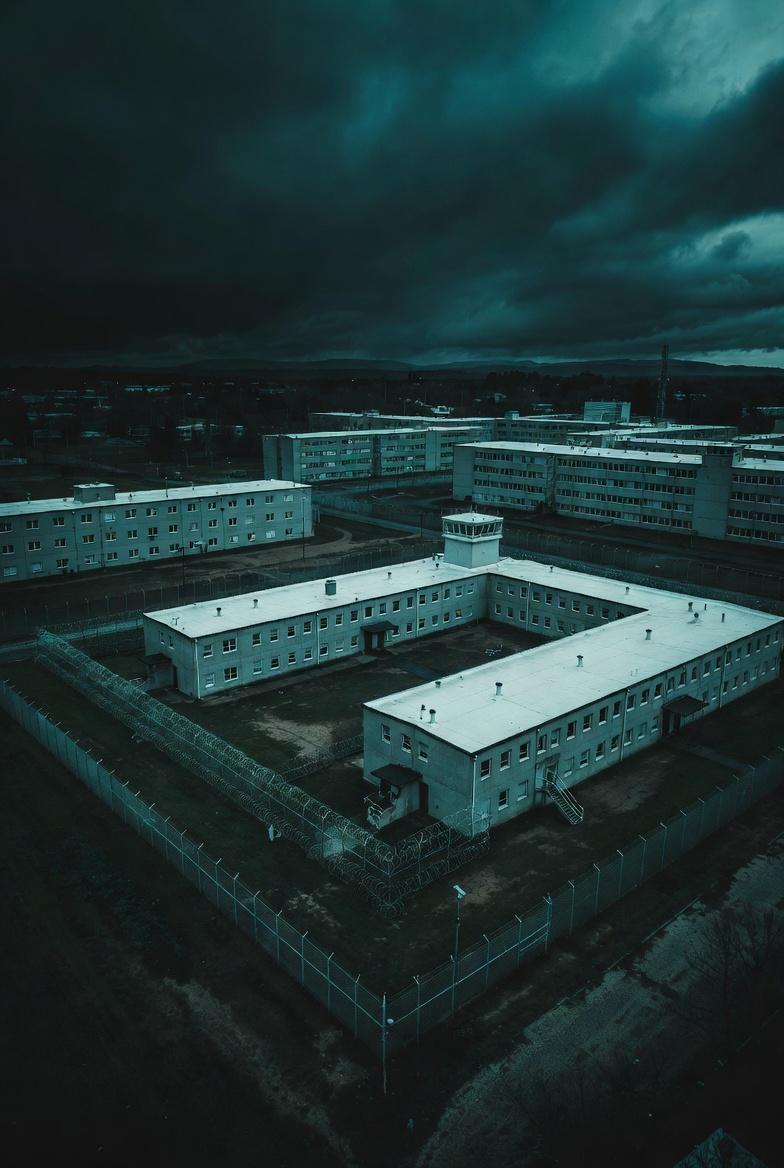
Southwest Oklahoma Juvenile Center
State Prison | United States County — Oklahoma
Southwest Oklahoma Juvenile Center is a state-operated juvenile correctional facility located at 300 Broadway, Manitou, Oklahoma 73555, in Tillman County. The center serves the entire state of Oklahoma as part of the Oklahoma Office of Juvenile Affairs (OJA) system, providing secure confinement and rehabilitative programming for adjudicated youth. It is one of several Oklahoma correctional facilities dedicated specifically to juvenile offenders, distinguishing it from adult county jails and state prisons.
Unlike adult correctional institutions, juvenile centers like this one operate under a dual mandate: to hold youth who have been adjudicated delinquent by a court, and to actively work toward their rehabilitation and successful reintegration into society. Young people placed here have typically been committed through the juvenile court system following adjudication for offenses serious enough to warrant secure placement outside of community-based alternatives. The facility is designed to balance accountability with the developmental needs of adolescents.
Because the function and population of juvenile facilities can differ significantly from adult jails and prisons, it is important for families to understand why their child or loved one has been placed at Southwest Oklahoma Juvenile Center. Placement may be the result of a delinquency adjudication, a probation violation, or a court-ordered evaluation. Families seeking to confirm a youth's placement or understand the circumstances of their confinement are encouraged to contact the facility directly at (580) 397-3511. If you need help locating a young person in the Oklahoma juvenile justice system, you can also search criminal records and public court records to better understand the case history involved.
The facility's rural location in Manitou, in southwestern Oklahoma, means that some families may face significant travel distances when visiting. Planning ahead and maintaining consistent communication with case managers and staff can help families stay engaged in their loved one's progress throughout their commitment.
One of the most notable characteristics of Southwest Oklahoma Juvenile Center is its status as a dedicated juvenile correctional facility within Oklahoma's state system — a distinction that sets it apart from the many adult jails and prisons that dominate corrections at the county and state level. The facility is specifically designed and staffed to house adolescent offenders, meaning that its physical environment, daily routines, programming, and staff training are all oriented around the unique developmental needs of young people rather than adult incarceration standards.
Its location in rural Manitou, Oklahoma, also gives the center a relatively small, contained environment compared to large urban juvenile detention centers. This smaller scale can allow for more individualized attention from staff and case managers, potentially fostering stronger relationships between youth and the adults responsible for their supervision and rehabilitation. The facility's integration into the Oklahoma Office of Juvenile Affairs network ensures that residents have access to statewide resources, including educational services, vocational training, and reentry planning support.
Southwest Oklahoma Juvenile Center houses adjudicated juvenile offenders committed to the facility through Oklahoma's juvenile court system. The population consists entirely of youth — generally ranging in age from early adolescence through age 18, though in some circumstances individuals may remain in OJA custody until age 21 depending on the terms of their commitment. These are young people who have been formally adjudicated delinquent and determined by a court to require secure placement rather than community supervision or a less restrictive residential program.
The facility serves youth from counties across Oklahoma, meaning the population can be geographically diverse despite the center's rural setting. Residents may have been committed for a range of offenses, from property crimes and drug-related offenses to more serious violent offenses. The OJA works to place youth in facilities that match their security and programming needs, so the population at Southwest Oklahoma Juvenile Center reflects those individuals assessed as requiring this level of structured, secure care.
Living conditions at Southwest Oklahoma Juvenile Center are structured around providing a safe, stable, and rehabilitative environment for the young people in its care. Residents are housed in supervised units and follow a structured daily schedule that includes mandatory educational programming, meals, physical activity, and therapeutic or counseling sessions. Consistent routine is considered an important component of juvenile correctional practice, helping youth develop self-regulation skills and preparing them for more independent living upon release.
The facility is operated in compliance with standards set by the Oklahoma Office of Juvenile Affairs, which establishes requirements for physical space, staffing ratios, medical care, mental health services, and programming. Residents have access to basic amenities, recreational opportunities, and communication with family members through approved phone calls and visitation.
Because the population consists of minors, staff at the facility are trained in adolescent development and juvenile-specific supervision techniques. Behavioral management approaches are intended to be rehabilitative rather than purely punitive, with an emphasis on skill-building and addressing the underlying factors that contributed to a youth's involvement in the justice system. Families are encouraged to stay involved, as research consistently shows that family engagement is one of the strongest predictors of positive outcomes for incarcerated youth.
Programming is a central component of the mission at Southwest Oklahoma Juvenile Center. Under the direction of the Oklahoma Office of Juvenile Affairs, the facility offers a range of educational, therapeutic, and vocational services designed to address the needs of its juvenile population and reduce the likelihood of reoffending after release.
Educational programming is among the most important offerings. All residents of juvenile age are entitled to education under state and federal law, and the facility provides accredited academic instruction to help youth maintain progress toward a high school diploma or GED. Educational staff work to assess each resident's academic level and provide instruction tailored to their needs, including support for youth with learning disabilities or other special education requirements.
In addition to academics, the facility typically provides:
- Individual and group counseling and mental health services
- Substance abuse education and intervention programs
- Cognitive-behavioral programs designed to address thinking patterns related to delinquent behavior
- Life skills training, including financial literacy, conflict resolution, and decision-making
- Recreational and physical fitness programming
- Reentry planning and transition services to prepare youth for release
Family involvement is actively encouraged as part of the rehabilitative process, and case managers work with families to develop transition plans that support successful reintegration into the community. Families interested in understanding available family services can explore additional resources to stay engaged throughout their loved one's commitment.
Southwest Oklahoma Juvenile Center has operated as part of Oklahoma's state-managed juvenile justice infrastructure for several decades. The facility falls under the oversight of the Oklahoma Office of Juvenile Affairs, the state agency established in 1995 to consolidate the administration of juvenile correctional programs that had previously been spread across multiple state departments. The creation of the OJA reflected a nationwide shift in juvenile justice philosophy during the 1990s — one that sought to balance secure confinement for serious offenders with a stronger emphasis on education, treatment, and youth development.
Tillman County and the surrounding region of southwestern Oklahoma have historically had limited access to social services and youth programming, making state-operated facilities like Southwest Oklahoma Juvenile Center an important resource for courts across the region. Over the years, the facility has adapted its programming and operational approach in response to evolving standards in juvenile justice, including greater attention to trauma-informed care, mental health services, and evidence-based rehabilitative practices.
Oklahoma's juvenile justice system has undergone significant reform efforts in recent years, driven by advocacy groups, legislative action, and federal guidance encouraging states to reduce reliance on secure confinement for lower-level offenders and to invest in community-based alternatives. Southwest Oklahoma Juvenile Center has been part of this evolving landscape, serving a more targeted population of youth who genuinely require secure placement while the broader system works to divert eligible youth to less restrictive settings.
No widely documented famous former inmates are associated with Southwest Oklahoma Juvenile Center.
Visitation is an important part of maintaining family bonds during a young person's commitment at Southwest Oklahoma Juvenile Center, and the Oklahoma Office of Juvenile Affairs encourages family participation throughout the process. Visitation schedules and procedures at juvenile facilities are typically more structured than those at adult prisons, and families should contact the facility directly to confirm current visiting hours, approved visitor requirements, and any scheduling procedures that may be in place.
Before visiting, family members and approved guests are generally required to be on an approved visitor list established by the resident's case manager. Visitors may be subject to identification checks and facility search procedures upon arrival. It is important to dress appropriately and follow all facility rules, as failure to comply can result in a visit being denied.
To prepare for a visit, families should:
- Contact the facility at (580) 397-3511 to confirm current visitation hours and policies
- Ensure they are on the approved visitor list prior to arriving
- Bring valid government-issued photo identification
- Review any restrictions on items that may be brought to a visit
In addition to in-person visits, families may be able to send money to their loved one's commissary account to help cover personal expenses during their stay. Staying connected — whether through visits, letters, or phone calls — plays a meaningful role in a young person's rehabilitation and successful return home.
Families wishing to stay in contact with a young person housed at Southwest Oklahoma Juvenile Center have several options available. The facility can be reached directly by phone at (580) 397-3511 to speak with staff, confirm placement, or ask about approved communication methods. Written correspondence is generally permitted and encouraged, as regular contact from family has been shown to positively impact outcomes for incarcerated youth.
Phone calls from residents are typically arranged through the facility and may be subject to scheduling and monitoring in accordance with OJA policy. Families should ask staff about the process for setting up and receiving calls from their loved one. If you are trying to confirm whether someone is housed at this facility or need to locate a juvenile in the Oklahoma system, see our guide on how to find an inmate for step-by-step assistance. You can also search public criminal records to review court and case information related to an individual's juvenile adjudication history.
Sponsored and Powered by our Partner TruthFinder
Quick Facts
Should I Be Concerned? — Family Guide
Southwest Oklahoma Juvenile Center maintains strict security measures and controlled visiting environments to ensure the safety of families and guests. All visitors are screened upon entry, subject to facility rules, and supervised during visitation periods. The facility operates under Oklahoma Department of Juvenile Justice standards and protocols.
Families should expect security procedures including ID verification, bag checks, and restricted items policies. Visiting hours are limited and scheduled in advance. For specific safety concerns or questions about what to expect during your visit, contact the facility directly before arrival. Minors visiting should be accompanied by authorized adults at all times.
Neighborhood & Getting There
Southwest Oklahoma Juvenile Center is located in Tillman County in the panhandle region of Oklahoma. The area is rural with limited commercial amenities nearby. The closest significant town is Mangum, Oklahoma, approximately 15-20 minutes away, which offers basic services including gas stations, restaurants, and small retail shops. Frederick, Oklahoma is roughly 30 minutes south and provides additional hotel and dining options for families traveling from longer distances.
Visitors should plan for at least a 1-2 hour drive from the Oklahoma City metropolitan area. The nearest hotels are located in Frederick (approximately 30 minutes away) and Altus (approximately 45 minutes away). Families are advised to fill up on gas before arriving in the rural area surrounding the facility and to plan visits during daylight hours when possible. Cell service can be limited in some areas, so having directions saved beforehand is recommended.