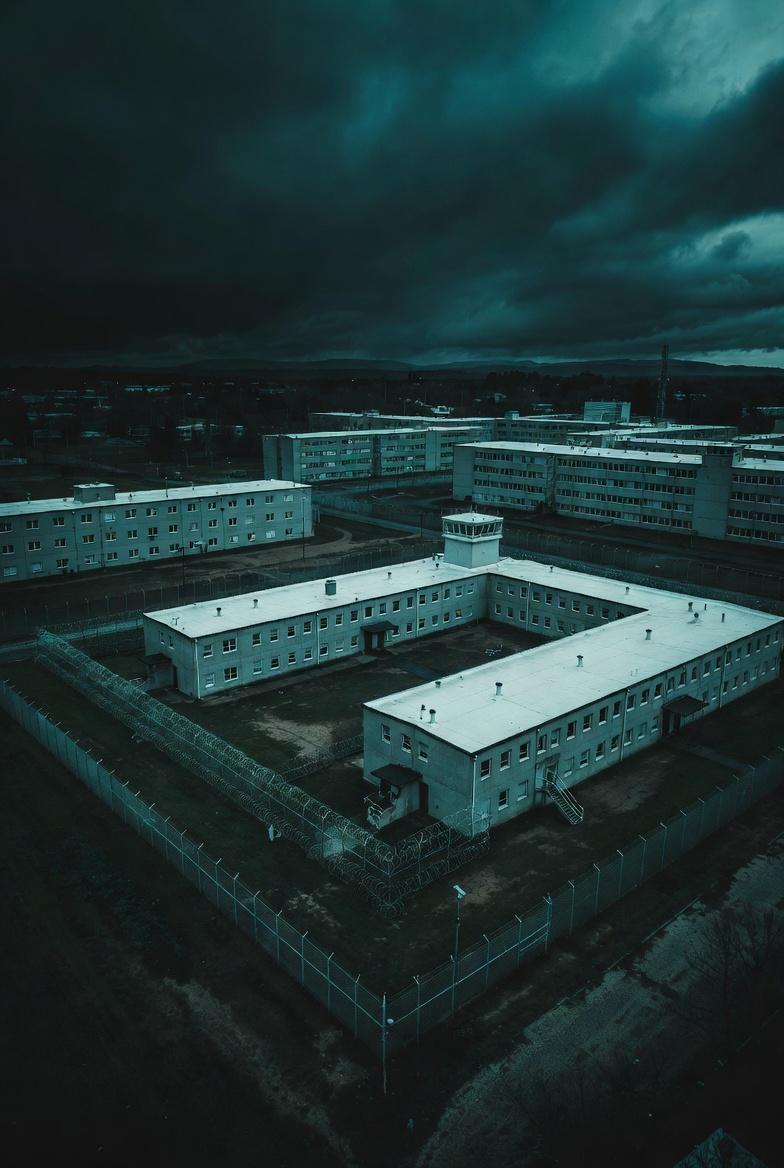
Montana State Prison (MSP), operated by the Montana Department of Corrections (MT DOC), is the state's primary maximum- and medium-security correctional facility for adult male offenders. Located at 400 Conley Lake Road in Deer Lodge, Montana 59722, the prison occupies a sweeping valley setting in Powell County and serves as the backbone of Montana's adult corrections system. As one of the most important institutions in the Montana correctional facilities network, MSP is responsible for the long-term incarceration, rehabilitation, and structured reintegration of sentenced offenders from across the state.
Unlike county or municipal jails, which typically hold pre-trial detainees or individuals serving short-term sentences, Montana State Prison is a post-conviction facility. Inmates housed here have been sentenced to terms that generally exceed one year — often for violent offenses, repeat felonies, sexual crimes, or other serious violations of Montana state law that require a higher level of supervision and security infrastructure. The facility houses inmates across multiple classification levels, from minimum security to maximum security, allowing the MT DOC to appropriately manage a diverse incarcerated population within a single institution.
If you have a family member or loved one you believe may be housed at Montana State Prison, it's essential to confirm their current location and custody status before making any contact or travel arrangements. The MT DOC maintains an online offender search tool through its official Montana Department of Corrections website, which allows you to search by name or offender ID number. Families can also search criminal records to find current incarceration status, conviction details, and other publicly available background information for individuals in the Montana corrections system.
MSP is more than just a holding facility — it functions as a self-contained correctional community that provides medical care, mental health services, educational programming, vocational training, and substance abuse treatment. These services are central to the MT DOC's mission of reducing recidivism and preparing inmates for a successful return to Montana communities upon release. For families navigating the system for the first time, understanding how MSP operates can make a significant difference in staying connected and supporting a loved one through incarceration.
One of the most distinctive characteristics of Montana State Prison is the unique combination of historical significance and active correctional operation that defines both the facility and its surrounding community. MSP sits near the site of the original 1871 Montana Territorial Prison — now preserved as the Old Montana Prison, a National Historic Landmark and heritage museum — giving Deer Lodge a dual identity found almost nowhere else in the country. Visitors to the Deer Lodge area can tour the preserved cell blocks, execution chamber, and frontier-era artifacts of the old prison just miles from where the modern facility continues to operate today.
Beyond its historical context, Montana State Prison stands out within the MT DOC system for the breadth and depth of its programming infrastructure. As the state's largest and most resource-intensive correctional facility, MSP is equipped to deliver services that smaller regional facilities simply cannot offer — including specialized vocational training shops, an in-house print factory, dedicated mental health housing units, and a licensed medical clinic capable of handling complex health needs. This concentration of resources makes MSP a hub not just for incarceration, but for rehabilitation and workforce readiness across the Montana corrections system.
The prison's location in Deer Lodge — a small, close-knit community in Powell County — also shapes its character in meaningful ways. Many staff members and correctional officers are long-term local residents, creating an institutional culture with deep community roots. For families visiting from other parts of Montana, the rural setting can feel remote, but it also reflects the broader reality of correctional geography in a large, sparsely populated state like Montana. Planning ahead for visits is especially important for families traveling long distances across the state.
Montana State Prison primarily houses adult male offenders who have been convicted of felony-level offenses under Montana state law and sentenced to serve time in a state correctional facility. The prison is not a pre-trial detention center — all individuals housed at MSP have been through the criminal justice process and are serving active sentences following conviction.
The facility operates across multiple security classification levels, including minimum, medium, and maximum security, as well as a dedicated administrative segregation unit for inmates who require heightened supervision due to behavioral or safety concerns. An inmate's classification is determined by a structured assessment process that takes into account factors such as the severity of their offense, prior criminal history, institutional behavior, escape risk, and the results of standardized risk assessment tools used by the MT DOC. Classifications are not static — inmates can be reclassified upward or downward over the course of their sentence based on conduct and program participation.
The inmate population at MSP is diverse in terms of offense type and sentence length. The facility houses individuals convicted of violent crimes such as homicide, assault, and sexual offenses, as well as those convicted of property crimes, drug trafficking, and other serious felonies. Some inmates are serving life sentences, while others are working toward eventual release and parole eligibility. Because MSP is the state's primary maximum-security institution, it also receives transfers from other Montana correctional facilities when inmates require higher supervision levels than those facilities can provide.
Montana's relatively small and geographically dispersed population means that MSP's total inmate count is modest compared to prison systems in larger states, but the facility consistently operates at or near capacity. The MT DOC actively monitors population levels and uses a combination of transfers, programming incentives, and parole processes to manage facility crowding in accordance with state policy and federal standards.
Living conditions at Montana State Prison vary considerably depending on an inmate's security classification, housing assignment, and behavioral record. For inmates in the general population, housing typically consists of cell blocks or dormitory-style units where residents share communal spaces for meals, recreation, and programming. These units are structured to encourage routine and accountability, with defined schedules governing daily activities from waking hours through lights-out.
Inmates at higher security levels — including those in administrative segregation or close-custody housing — face significantly more restricted conditions. Movement is limited, time outside the cell is reduced, and access to shared programming spaces may be curtailed depending on the individual's security status. Administrative segregation is typically used for inmates who pose a demonstrated safety risk to staff or other inmates, and placement in these units is reviewed on a regular basis in accordance with MT DOC policy.
The facility provides all inmates with the basic necessities of daily life, including three meals per day prepared by the institution, access to clean clothing and laundry services, and basic hygiene items. Inmates are also entitled to access medical and dental care through the facility's licensed health services unit, which handles routine health needs and coordinates outside specialist care when required. Mental health services are available through a dedicated unit staffed by licensed clinicians, reflecting the MT DOC's recognition that a significant portion of the incarcerated population has mental health treatment needs.
Recreational opportunities are available to most inmates, including access to outdoor exercise areas, an indoor gymnasium, and in some cases, organized sports leagues or fitness programming. Access to reading materials, including books and approved periodicals, is also permitted, and the facility maintains a library for inmate use. Inmates may also purchase additional approved items — including hygiene products, snacks, and stationery — through the facility's commissary system, which can be funded by family members. For guidance on supporting your loved one financially, see our resource on how to send money to an inmate at Montana State Prison.
Montana State Prison offers a comprehensive array of rehabilitative and educational programs designed to address the root causes of criminal behavior and equip incarcerated individuals with the skills and stability they need to successfully reintegrate into Montana communities. These programs are central to the MT DOC's broader mission of reducing recidivism and promoting public safety through meaningful intervention — not just confinement.
Academic programming is a foundational component of MSP's rehabilitation offerings. Adult Basic Education (ABE) courses serve inmates who need to improve foundational literacy and numeracy skills, while GED preparation classes give those without a high school diploma the opportunity to earn an equivalency credential that will significantly improve their employment prospects upon release. For inmates seeking post-secondary education, MSP has partnered with external educational providers to offer college coursework, though availability may vary depending on funding and institutional capacity at any given time.
Vocational and trades training is another major pillar of programming at MSP. The facility operates several working vocational shops where inmates can develop marketable skills in areas such as welding, carpentry, printing, and automotive mechanics. These programs are designed not just to teach technical skills, but to instill workplace habits — reliability, attention to detail, teamwork — that will serve inmates well in the job market after release. Some vocational programs result in industry-recognized certifications, giving participants a documented credential to show prospective employers.
Substance abuse treatment is a critical component of programming given that a significant percentage of incarcerated individuals have histories of addiction that contributed to their criminal behavior. MSP offers evidence-based treatment programs, including therapeutic community models and cognitive-behavioral approaches, to help inmates address the underlying patterns that fueled substance use and criminal conduct.
The facility also offers cognitive and life skills programming, including anger management courses, parenting classes, financial literacy training, and victim awareness curricula. These programs address the social and behavioral dimensions of reintegration, helping inmates build the interpersonal tools they need to maintain healthy relationships, manage stress, and make constructive decisions. Faith-based programming and volunteer-led initiatives also play a role in the MSP environment, providing additional community support and mentorship for interested inmates.
Montana State Prison carries one of the longest and most storied histories of any correctional institution in the American West. Its origins trace back to 1871, when the Montana Territorial Prison was established in Deer Lodge — making it one of the oldest continuously operating prison sites in the entire region. At the time of its founding, Montana was still a U.S. territory, and the prison was constructed to meet the growing law enforcement demands of a rapidly expanding frontier population drawn by mining, ranching, and westward migration.
The original Deer Lodge facility operated for the better part of a century, holding some of the most notorious criminals of the frontier era and witnessing dramatic episodes in the history of American criminal justice. Over time, however, overcrowding, deteriorating infrastructure, and evolving standards in correctional management made it clear that a modern replacement facility was necessary. In 1979, the Montana Department of Corrections officially opened the current Montana State Prison on a new site just outside of Deer Lodge, designed to meet contemporary security standards and accommodate a growing state population.
The original 1871 facility — now known simply as the Old Montana Prison — was decommissioned as an active penal institution and has since been preserved as a National Historic Landmark. Today it operates as a heritage museum and cultural attraction, drawing visitors from across the country who come to explore its preserved cell blocks, guard towers, and artifacts from over a century of frontier justice. The proximity of the historic prison museum to the active modern facility gives Deer Lodge a rare dual identity: it is simultaneously a working correctional town and a living monument to the history of American law and punishment.
Since the opening of the current facility in 1979, MSP has undergone numerous expansions and infrastructure improvements to keep pace with Montana's evolving correctional needs. The prison has navigated periods of population growth, policy reforms, federal oversight, and shifting rehabilitation philosophies, all while remaining the cornerstone of the Montana corrections system. Its decades of operation reflect the broader national conversation about the purpose of incarceration — balancing public safety with meaningful opportunities for rehabilitation and eventual reintegration.
No widely documented famous former inmates are publicly associated with Montana State Prison at this time. This is not unusual for state prisons in less populous states — while high-profile criminal cases do occur in Montana, they often receive significant regional media coverage without rising to the level of national notoriety that leads to broader public documentation. Cases involving serious crimes such as homicide or major drug trafficking may attract attention within the state and surrounding region, but detailed public records about specific individuals housed at MSP are not always readily available through mainstream sources.
If you are researching the background or incarceration history of a specific individual — whether a former MSP inmate or someone you believe may currently be held there — you can search public criminal records to access publicly available conviction data, arrest history, and incarceration information. Public records searches can be a useful first step for families, legal professionals, or journalists seeking to verify someone's criminal justice history in Montana.
Maintaining meaningful family connections during incarceration is one of the most important factors in both inmate well-being and long-term rehabilitation outcomes. Research consistently shows that inmates who maintain strong family ties during their sentence are significantly more likely to successfully reintegrate into their communities upon release. Montana State Prison recognizes this and permits visitation for approved friends and family members, subject to scheduling requirements, facility rules, and MT DOC policies.
Before visiting for the first time, all prospective visitors must complete a formal visitor application and receive written approval from the MT DOC. This process typically involves a background check and a review of the inmate's approved visitor list. Approval is not automatic, and individuals with certain criminal histories may be denied visitation privileges. It is important to submit your application well in advance of your planned visit, as processing times can vary. Once approved, visitors are added to the inmate's authorized visitor list and may schedule visits according to the facility's posted schedule.
Visitation at MSP is generally conducted in a designated visiting room, and visitors are expected to follow all facility rules regarding dress code, prohibited items, and conduct during the visit. Children may visit with an approved adult guardian, though specific rules regarding minors should be confirmed directly with the facility before arrival. Contact visits — where physical contact such as hugging is permitted — are available to general population inmates in good standing, while inmates in higher-security classifications may be limited to non-contact visits conducted through a partition.
Visiting hours and scheduling procedures are subject to change, so it is strongly recommended that families verify current visit times and any special requirements by contacting the facility directly or checking the Montana Department of Corrections official MSP page before making travel arrangements. Given MSP's location in Deer Lodge, families traveling from other parts of Montana should plan for the journey and confirm their visit is confirmed before departing. In addition to in-person visits, staying connected through mail, phone calls, and electronic messaging can help bridge the gap between visits.
Staying in regular contact with an incarcerated loved one at Montana State Prison is possible through several channels, including postal mail, telephone calls, and approved electronic messaging platforms. Each method is subject to MT DOC policies regarding monitoring and content restrictions, but together they provide meaningful ways to maintain connection throughout an inmate's sentence.
Postal mail is one of the most accessible ways to stay in touch. All incoming and outgoing mail at MSP is subject to review by facility staff in accordance with MT DOC security policy. When sending a letter or package, always include the inmate's full legal name, their MT DOC offender identification number, and the complete facility address: 400 Conley Lake Road, Deer Lodge, Montana 59722. Mail that does not include the correct offender ID number may be delayed or returned. Inmates are generally permitted to receive standard letters, cards, and approved publications — but packages containing food, electronics, or other non-approved items may be rejected. Always verify current mail rules with the facility before sending anything other than a standard letter.
Telephone calls from MSP are made by the inmate to pre-approved numbers using the facility's contracted phone service provider. Calls are typically collect or billed through a prepaid account system, and families will need to set up an account with the designated phone provider to receive calls. All calls are recorded and subject to monitoring by facility staff unless the call is designated as a privileged legal communication. Rates and procedures vary depending on the service provider contracted by MSP at any given time.
Electronic messaging services may also be available, allowing families to send and receive messages through a secure digital platform approved by the MT DOC. These services typically charge a per-message or subscription fee and are subject to the same monitoring standards as physical mail. Check with the facility or the MT DOC's official communications provider for current availability and enrollment instructions.
If you are unsure whether your loved one is currently housed at Montana State Prison or need help locating someone in the Montana corrections system, our guide on how to find an inmate walks you through the steps for conducting an official offender search. Families can also look up an inmate's arrest history and public criminal records to verify incarceration details and access additional background information available through public records databases.
Sponsored and Powered by our Partner TruthFinder
Quick Facts
Should I Be Concerned? — Family Guide
Montana State Prison maintains rigorous security protocols designed to protect the safety and well-being of all visitors, staff, and inmates. Upon arrival, all visitors undergo comprehensive screening procedures including metal detection, bag inspection, and identity verification. Designated visitation areas are continuously monitored by trained corrections officers who enforce clear behavioral guidelines and facility rules to maintain a secure, orderly environment.
To ensure a smooth visit, families should arrive early, bring valid photo identification, dress according to facility guidelines, and follow all officer instructions. Contact and non-contact visitation options are available based on inmate classification and behavioral record. Visitors with questions about current security protocols or safety procedures are encouraged to call the facility directly before their visit.
Neighborhood & Getting There
Montana State Prison is located in Deer Lodge, Montana, a historic community in Powell County in the western region of the state. Situated in a rural setting approximately 60 miles northwest of Missoula and 85 miles southeast of Helena, the facility is accessible via I-90. Deer Lodge offers essential visitor amenities including gas stations, restaurants, grocery stores, and several motels within a short drive of the prison.
For overnight stays, visitors will find basic lodging options including the Super 8 Deer Lodge, Schatz Motel, and several bed-and-breakfasts in town, typically ranging from 15-25 minutes from the facility. The town center provides additional dining and shopping options. Given the rural location, visitors are advised to plan ahead, check weather conditions, and allow extra travel time during winter months. The facility is open year-round, though visitation schedules may be affected by seasonal weather or facility lockdowns.