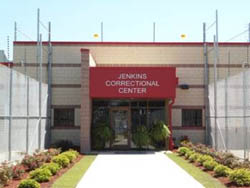
Jenkins Correctional Center
Private Facility | Jenkins County — Georgia | Georgia Department of Corrections (GDC)<br>Owned and Operated by Corrections Corporation of America (CCA)
Jenkins Correctional Center is a privately operated adult male correctional facility situated in Millen, Georgia — the county seat of Jenkins County, a rural community in eastern Georgia with a population of roughly 3,120 residents. The facility is managed by CoreCivic (formerly known as Corrections Corporation of America, or CCA), one of the largest private prison management companies in the United States, under a long-standing contract with the Georgia Department of Corrections (GDC). With a rated capacity of 1,124 inmates, Jenkins Correctional Center ranks among the larger private correctional institutions in the state and plays a meaningful role in housing Georgia's adult male offender population. It is one of many facilities listed among Georgia correctional facilities that families rely on when searching for information about their incarcerated loved ones.
The facility opened in 2012 following the completion of its original construction, making it one of Georgia's more modern correctional institutions. Since its opening, it has undergone updates and expansions to meet the Georgia Department of Corrections' evolving operational standards. Inmates are classified and assigned to specific housing units based on a combination of factors including the nature of their offenses, individual risk assessment scores, disciplinary history, and participation in rehabilitative programming. This structured classification system is designed to promote safety for both staff and the inmate population while supporting each individual's path toward reintegration.
Jenkins Correctional Center houses adult male offenders serving a broad range of sentence lengths, from shorter-term sentences to longer commitments requiring more intensive supervision. The facility is overseen by a warden who manages day-to-day operations in coordination with GDC oversight staff. Families trying to locate a loved one who may have been transferred to this facility can search public criminal records to help confirm current incarceration status and facility assignment. For additional guidance, visit our how to find an inmate resource page.
One of the most significant distinguishing characteristics of Jenkins Correctional Center is its status as a privately operated facility managed by CoreCivic under a formal contract with the Georgia Department of Corrections. This public-private partnership model means that while all inmates housed at Jenkins remain under the legal custody and jurisdiction of the GDC, the day-to-day management of the facility — including staffing, inmate programming, healthcare delivery, food services, and facility maintenance — is handled by CoreCivic's professional corrections staff. This arrangement allows the state of Georgia to house inmates at a competitive per-diem cost while leveraging CoreCivic's specialized expertise in correctional facility management.
Another distinguishing feature is the facility's modern infrastructure. Having been built in 2012, Jenkins Correctional Center was designed according to contemporary correctional standards, incorporating safer housing layouts, more efficient supervision sight lines, and updated utility systems compared to many of Georgia's older state-run institutions. This translates to a physical environment that is generally better equipped to support both staff safety and inmate well-being.
Additionally, CoreCivic has made a notable institutional commitment to offering structured rehabilitative programming at its managed facilities, and Jenkins Correctional Center reflects that priority. From educational opportunities to vocational training and cognitive behavioral programs, the facility's program offerings are designed to go beyond simple incarceration and work toward preparing inmates for a successful return to society — a feature that distinguishes it from facilities that offer more limited programming options.
Jenkins Correctional Center is designated exclusively to house adult male offenders in the custody of the Georgia Department of Corrections. With a rated capacity of 1,124 beds, it functions as a medium-to-large correctional institution by Georgia standards and typically maintains a population that approaches or reaches that capacity. The inmate population is drawn from across the entire state of Georgia, meaning that an individual can be transferred to and housed at Jenkins regardless of the county where they were convicted or sentenced.
The facility houses inmates across a range of security classifications, though it primarily operates as a medium-security institution. Inmates are assigned to specific housing units based on their individual classification level, which takes into account factors such as the nature and severity of their offense, prior criminal history, current behavior and disciplinary record, and participation in available programs. Classification is not static — inmates may be reclassified over the course of their sentence as their circumstances change, which can result in transfers to different units within the facility or to other GDC-managed institutions elsewhere in the state.
Because Jenkins draws its population from across Georgia, it is common for inmates to be housed far from their home communities and families. This geographic distance can make regular visitation and family contact more challenging, which is why maintaining communication through phone, mail, and approved visits is especially important for both the inmate's well-being and their family's peace of mind. Families who are uncertain of a loved one's current facility assignment may find it helpful to look up an inmate's arrest history and records through public records tools to help confirm their location.
As a facility constructed in 2012, Jenkins Correctional Center offers a notably more modern physical environment than many of Georgia's older correctional institutions, some of which date back several decades. Inmates are generally housed in dormitory-style or cell-block units depending on their security classification and housing assignment. The newer construction allows for better climate control, improved sanitation systems, and more efficient supervision layouts, all of which contribute to a safer and more manageable daily environment for both inmates and correctional staff.
Housing assignments at Jenkins are made based on each inmate's risk level, behavioral history, and current program participation. Inmates may be moved between housing units as their classification changes over time, either as a result of positive behavior and program completion or in response to disciplinary issues. The facility aims to maintain a structured and orderly living environment where the daily routine includes scheduled meals, programming, recreation, and work assignments.
Meals are served in a central dining area and are prepared to meet the basic nutritional standards established by the Georgia Department of Corrections. CoreCivic is required to provide adequate caloric intake and to accommodate medically prescribed dietary needs under the terms of its contract with the GDC. Inmates with specific dietary requirements due to health conditions or religious observance can typically make requests through the appropriate channels within the facility.
Medical and mental health care are available on-site, as required by both Georgia state standards and federal constitutional obligations. The facility maintains healthcare staff to address routine medical needs, chronic condition management, and emergency situations. Mental health services are also available to inmates who require them, including counseling and psychiatric support where needed. Inmates who feel their medical needs are not being met have access to a formal grievance process through CoreCivic's internal procedures as well as through the Georgia Department of Corrections' oversight mechanisms.
Jenkins Correctional Center offers a comprehensive range of rehabilitative and educational programs designed to reduce recidivism and prepare inmates for a more successful reintegration into society following their release. These programs reflect CoreCivic's stated operational philosophy and align closely with the Georgia Department of Corrections' commitment to evidence-based correctional practices that go beyond simple confinement.
Educational opportunities available at the facility typically include:
- Adult Basic Education (ABE) — Foundational literacy and numeracy instruction for inmates who need to strengthen core academic skills before pursuing further education or workforce training.
- GED Preparation and Testing — Structured preparation courses and access to GED examinations, enabling inmates who did not complete high school to earn an equivalency credential that significantly improves employment prospects upon release.
- Vocational and Career Technical Education — Hands-on training in skilled trades and technical fields, providing inmates with marketable, in-demand job skills that can be applied immediately after release.
- Cognitive Behavioral Programs — Structured programs such as Thinking for a Change (T4C) or similar curricula designed to help inmates identify and change the thought patterns and behaviors that contributed to their criminal conduct.
- Substance Abuse Treatment and Education — Programs addressing alcohol and drug dependency, which are critical for inmates whose offenses were connected to substance use disorders.
- Life Skills and Reentry Preparation — Practical instruction covering areas such as financial literacy, job application skills, resume writing, and navigating community resources after release.
- Religious and Faith-Based Programming — Chaplaincy services and faith-based programs that provide spiritual support and community for inmates of various religious backgrounds.
Program availability may change over time based on funding, staffing, and inmate population needs. Families are encouraged to contact the facility directly to inquire about the current program offerings and how their loved one can enroll. Active participation in programming can positively impact an inmate's classification level, parole eligibility, and overall reentry prospects.
Jenkins Correctional Center was established as part of a broader, state-level effort to expand Georgia's correctional capacity through strategic public-private partnerships. The facility officially opened in 2012, constructed and operated by CoreCivic — then still operating under its original name, Corrections Corporation of America — a company with decades of experience managing correctional institutions across the country. Georgia has long relied on a carefully managed blend of state-run and privately operated facilities to accommodate its substantial incarcerated population, and Jenkins County was selected as the site for this facility due to its available land, relatively accessible transportation infrastructure along U.S. Route 25, and the significant economic development potential the project represented for an economically challenged rural region.
The arrival of the correctional center brought hundreds of stable, full-time jobs to Millen and the surrounding Jenkins County area, providing a meaningful boost to the local economy. Construction work, ongoing facility maintenance contracts, vendor supply chains, and administrative employment have all contributed to the financial vitality of the region in the years since the facility opened. For a small community like Millen, the presence of a facility of this size has had a lasting impact on local commerce, tax revenues, and employment rates.
Over the years since its opening, Jenkins Correctional Center has continued to operate under CoreCivic's management while remaining subject to rigorous oversight and performance standards set by the Georgia Department of Corrections. The GDC monitors all contract facilities — including Jenkins — to ensure compliance with state correctional policies, constitutional standards of care, and operational benchmarks. This oversight relationship reflects Georgia's broader commitment to accountability in corrections, whether facilities are state-run or privately managed. The facility's relatively recent construction date means it was built to contemporary correctional design standards, giving it structural and operational advantages over many of the state's older institutions.
No widely documented famous former inmates are known to have been held at Jenkins Correctional Center. As a relatively new institution that only opened in 2012, the facility does not yet carry a lengthy public record of high-profile incarcerations. If you are researching a specific individual's incarceration history or trying to verify whether someone has been housed at Jenkins or any other Georgia correctional facility, you can search public criminal records to access available arrest, conviction, and incarceration information.
Visitation plays a vital role in supporting the mental and emotional well-being of incarcerated individuals and can have a measurable positive impact on behavior, program participation, and long-term reintegration outcomes. Jenkins Correctional Center follows the Georgia Department of Corrections' visitation policies, and all visitors — without exception — must be pre-approved before they are permitted entry to the facility.
To be added to an inmate's approved visitor list, prospective visitors must submit a visitor application form and pass a background screening process. The inmate must also list the visitor on their approved visitor roster. Approval is not guaranteed and may be denied based on an applicant's criminal history, prior disciplinary issues related to the facility, or other factors determined by facility administration. Visitors are strongly encouraged to submit their applications well in advance of their planned visit to allow adequate time for processing.
On the day of the visit, all visitors must present a valid government-issued photo identification and are subject to search upon entry, which may include metal detection and pat-down procedures. Visitors should dress appropriately — clothing that resembles inmate attire or that violates the facility's dress code will result in denial of entry. Children visiting must be accompanied by an approved adult guardian at all times.
Visitation hours and scheduling are subject to change, and it is always advisable to confirm current schedules directly with the facility before making travel arrangements. For the most up-to-date official visitation information, visit the Georgia Department of Corrections facility page for Jenkins Correctional Center. You can also explore our guide on how to send money to an inmate's commissary account to help your loved one prepare for a visit or purchase approved personal items.
Maintaining regular contact with a loved one incarcerated at Jenkins Correctional Center is important for both the inmate's well-being and the family's peace of mind. There are several methods available for staying connected, each with its own procedures and associated costs.
Phone Calls: Phone access is the most common and convenient method of communication. Inmates at Jenkins have access to telephone services through a contracted telecommunications provider. Calls are typically made on a prepaid or collect basis, and families are strongly encouraged to set up a prepaid account with the provider in advance to reduce per-minute costs. Outgoing calls from the facility may be monitored and recorded, and inmates are generally restricted in the phone numbers they are permitted to call.
Mail Correspondence: Sending and receiving mail remains one of the most meaningful ways to stay connected. Letters, cards, and approved publications may be sent to inmates at the facility. All incoming and outgoing mail is subject to inspection by correctional staff. When mailing correspondence, always include the inmate's full legal name and GDC identification number on the envelope to ensure proper delivery. Packages and large parcels are generally not permitted through standard mail and must be sent through approved vendors.
Email and Electronic Messaging: Many CoreCivic-managed facilities, including Jenkins, offer electronic messaging services through platforms such as JPay or a similar contracted provider. These services allow family members to send text-based messages and, in some cases, photos and video messages directly to an inmate's account. Fees typically apply on a per-message basis, and accounts can be set up online.
Mailing Address: When sending mail to an inmate at Jenkins Correctional Center, use the following format:
- Inmate Full Legal Name, GDC ID#
- Jenkins Correctional Center
- 655 Perimeter Road
- Millen, Georgia 30442
For additional guidance on locating an incarcerated individual or navigating the communication process, see our detailed guide on how to find an inmate in the Georgia correctional system. You can also visit the official CoreCivic facility page for Jenkins Correctional Center for additional contact and operational information.
Sponsored and Powered by our Partner TruthFinder
Quick Facts
Should I Be Concerned? — Family Guide
Jenkins Correctional Center maintains comprehensive security protocols designed to protect all visitors and facility staff. All guests must pass through metal detectors and thorough security screening before entering visitation areas. Professional security personnel enforce strict rules regarding contraband, appropriate behavior, and facility regulations to ensure a safe environment for everyone.
To ensure a safe and smooth visit, families should arrive early, bring valid government-issued identification, dress appropriately in accordance with facility dress codes (no revealing clothing or gang-affiliated items), and familiarize themselves with the facility's rules before arrival. Keep personal belongings minimal, avoid bringing prohibited items, and be prepared for professional but thorough security procedures. If you have questions about an inmate's security level or history, you can search criminal records at https://tracking.truthfinder.com/?a=650&oc=27&c=282&s1=jd&s2=gdc-jenkins-correctional-center-cca for background information.
Neighborhood & Getting There
Jenkins Correctional Center is located in rural Jenkins, Georgia, approximately 40 miles south of Augusta and 85 miles northwest of Savannah. The facility sits in a rural area with limited commercial development, characteristic of this region of central Georgia. The drive from Augusta typically takes 50-60 minutes via Highway 25, while Savannah is approximately 90-100 minutes away.
The nearest lodging options are in Millen, Georgia, about 8 miles from the facility, where several budget-friendly hotel chains operate near Highway 25. These include basic but clean accommodations suitable for families visiting the area. Gas stations, restaurants, and convenience stores can be found along Highway 25 and in Millen. Visitors traveling from out of state should plan accordingly, as the facility's remote location means limited immediate services—groceries and supplies are best obtained before arriving at the facility.