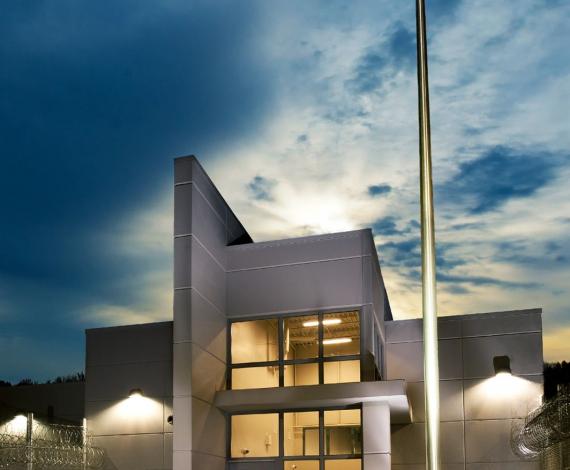
DeSoto County Adult Detention Facility
County Jail | Desoto County — Mississippi | DeSoto County Mississippi Sheriff's Department
The DeSoto County Adult Detention Facility is located at 3425 Industrial Drive West in Hernando, Mississippi, and serves as the primary adult detention center for DeSoto County. Operating under county jurisdiction, the facility has been housing both pre-trial detainees and sentenced inmates since it opened in 2012. Built to accommodate a wide range of security classifications — from minimum to maximum — the facility maintains gender-separated housing units for male and female inmates. With a designed capacity of 395 beds, the facility currently operates at a slightly over-capacity population of approximately 418 inmates, a reflection of DeSoto County's continued population growth and the corresponding demands placed on its criminal justice system. Day-to-day operations are overseen by Director Chad Wicker, who manages staff, programming, inmate services, and compliance with Mississippi's detention standards.
As one of the newer county detention centers in the state, DeSoto County Adult Detention Facility is an important part of the broader network of Mississippi correctional facilities providing county-level incarceration services. Families of incarcerated individuals can use the official DeSoto County inmate search tool to locate a loved one currently in custody. If you are unsure of someone's current incarceration status, need to verify booking details, or want to review prior arrest information, you can also search criminal records to access publicly available arrest and booking history. For additional assistance locating an incarcerated individual, see our guide on how to find an inmate.
The DeSoto County Adult Detention Facility stands out as one of Mississippi's newer and more purposefully designed county detention centers, having been purpose-built in 2012 to serve a jurisdiction experiencing faster population growth than nearly any other county in the state. Its location in Hernando, the DeSoto County seat, places it at the center of the county's government and public safety operations — just a short drive south of Memphis, Tennessee. This geographic position gives the facility a unique character: it serves a county that functions, in many respects, as a Southern extension of a major metropolitan area, with all of the law enforcement complexity that entails.
Unlike many rural Mississippi county jails that struggle with aging facilities and limited resources, DeSoto County Adult Detention Facility benefits from a relatively modern physical plant and a county tax base strengthened by decades of suburban growth. This has allowed the facility to invest in staff training, direct supervision architecture, and programming infrastructure that smaller, more rural counties often cannot afford. The facility's direct supervision model — in which corrections officers are stationed inside housing units and interact directly with inmates throughout the day — is considered a best practice in modern correctional management and contributes to a safer, more orderly environment for both staff and inmates.
The facility also reflects DeSoto County's position as a border county with close ties to the Memphis metro region, which means its inmate population and law enforcement caseload are often shaped by regional crime trends as well as local ones. This makes the DeSoto County Adult Detention Facility a particularly important node in the broader public safety landscape of the Mid-South region.
The DeSoto County Adult Detention Facility houses a diverse population that includes both pre-trial detainees awaiting arraignment, hearings, or trial in DeSoto County courts, and sentenced inmates serving county-level sentences typically of one year or less. The facility's current population of approximately 418 inmates slightly exceeds its designed capacity of 395 beds — a situation that is common across county jails throughout Mississippi and the broader South, where jail populations have grown faster than physical infrastructure in many jurisdictions.
The population reflects the demographic and criminal justice realities of a fast-growing suburban county adjacent to a major metro area. Inmates are housed across multiple gender-separated units, with classification assignments based on factors including the nature of the charges, criminal history, behavior, and medical or mental health needs. Individuals classified as higher security risks are housed separately from lower-risk and minimum-security inmates to reduce the potential for conflict and ensure appropriate supervision levels for each group.
In addition to locally arrested individuals, the facility may also hold inmates transferred from other jurisdictions, individuals awaiting transport to state facilities, and those held on federal detainers or immigration holds in some circumstances. The facility processes a substantial number of bookings annually, given the size and growth trajectory of DeSoto County's population. Families trying to confirm whether a loved one is currently housed at the facility can use the official inmate search tool or look up an inmate's arrest history through public records to verify current custody status.
Inmates at the DeSoto County Adult Detention Facility are housed in units organized according to security classification and gender, consistent with the facility's direct supervision design. Depending on their classification level, inmates may be assigned to individual cells or dormitory-style housing with shared common areas. The direct supervision model means that corrections officers are stationed inside housing units during waking hours, maintaining an active and visible presence that helps de-escalate tensions, deter rule violations, and address issues before they develop into serious incidents. This approach is widely regarded as more effective and safer than the traditional indirect supervision model, where officers monitor from control booths or external observation areas.
All inmates are provided with basic necessities including bedding, clothing, hygiene supplies, and access to shower facilities on a regular schedule. The facility offers access to a commissary, allowing inmates to purchase supplemental food items, personal hygiene products, writing materials, and other approved goods. Commissary purchases are funded through inmate accounts, which families can contribute to — a meaningful way to support a loved one's comfort and well-being during incarceration. For guidance on how to send money to an inmate at DeSoto County, contact the facility directly or visit the commissary provider's website for deposit instructions.
Meals are provided three times daily and are prepared to meet basic nutritional standards. Inmates with documented medical dietary needs or religious dietary requirements may request accommodations through the appropriate channels. Medical care is available on-site, with sick call procedures allowing inmates to request evaluation and treatment for health concerns. Mental health services are also accessible, recognizing that a significant portion of the jail population has mental health needs that must be addressed to maintain safety and support successful reintegration.
Recreational time is provided in accordance with facility policy and available space, giving inmates access to outdoor or indoor recreation areas on a scheduled basis. Access to reading materials, television in common areas, and religious programming further supports inmate well-being during what is often a stressful period of confinement.
The DeSoto County Adult Detention Facility offers a range of rehabilitative and educational programs designed to reduce recidivism and help inmates prepare for a productive return to their communities. While the scope of programming at a county jail is inherently more limited than what might be available at a long-term state or federal correctional institution, the facility makes meaningful efforts to address the core educational, vocational, and behavioral needs of its population during their time in custody.
Educational programming includes GED preparation and testing services for inmates who have not yet earned a high school diploma or equivalent credential. Facility staff and volunteer instructors work with eligible inmates to build academic skills and complete the requirements for the GED, a qualification that can significantly improve employment prospects upon release. Basic literacy instruction may also be available for individuals with lower reading levels who are not yet ready for GED coursework.
Substance abuse programming is a central component of the facility's rehabilitative efforts, given the well-documented relationship between addiction and criminal behavior. Structured programs address the underlying issues that contribute to substance use and help participants develop coping strategies, relapse prevention skills, and a framework for sustained sobriety after release. These programs may be delivered by facility staff, contracted providers, or trained volunteers depending on availability.
Faith-based programming is available through partnerships with local religious organizations and chaplaincy services. Volunteer-led services, Bible studies, and pastoral counseling provide spiritual support for inmates of various backgrounds and can serve as an important source of community and accountability both during incarceration and after release.
Life skills and reentry programming may also be offered, covering topics such as financial literacy, job readiness, resume writing, parenting skills, and navigating reentry challenges like housing and benefits access. The goal of these programs is to equip inmates with practical tools they will need to rebuild their lives and avoid reoffending after their release from custody.
Work assignments at the DeSoto County Adult Detention Facility provide inmates with structured activity while supporting facility operations. Eligible inmates with appropriate security classifications work in food service, assisting with meal preparation, serving, and kitchen cleanup under staff supervision. Facility maintenance crews handle cleaning, laundry services, and general upkeep of housing units and common areas. Trusty inmates may qualify for outdoor grounds maintenance work. These assignments offer modest compensation credited to inmate accounts, reduce idleness, teach work responsibility, and provide references for post-release employment. Selection for work assignments depends on security classification, behavior record, sentence status, and operational needs.
The DeSoto County Adult Detention Facility opened in 2012, replacing an aging and increasingly inadequate detention infrastructure that could no longer keep pace with the needs of one of Mississippi's most rapidly growing counties. DeSoto County sits along the Tennessee border in the northwest corner of the state, and over the past two decades it has experienced some of the most dramatic population growth of any county in Mississippi. As suburban development from the greater Memphis metropolitan area pushed steadily southward across the state line, DeSoto County absorbed a surge of new residents, businesses, and economic activity — all of which brought a corresponding increase in the demands placed on local law enforcement and the county's criminal justice system.
The decision to build a modern, purpose-built detention facility was driven by a combination of chronic overcrowding in the older county lockup, deteriorating physical infrastructure, and evolving state and federal standards for inmate housing and care. County officials recognized that a facility built for a much smaller population could not safely or legally accommodate the volume of individuals being processed through the DeSoto County court system. After years of planning, funding deliberations, and site selection, construction began on the new facility, which was completed and placed into service in 2012.
The new facility represented a significant investment in public safety infrastructure for DeSoto County. Designed from the ground up using modern correctional architecture — including a direct supervision model that places officers inside housing units rather than observing through barriers — the facility was intended to be safer, more efficient, and more conducive to programming and rehabilitation than its predecessor. Since opening, it has served as the central hub for adult detention in the county, processing thousands of bookings annually and housing individuals at every stage of the criminal justice process, from initial arrest through sentencing.
No widely documented famous former inmates are associated with the DeSoto County Adult Detention Facility. As a county jail primarily serving the local Hernando and DeSoto County population, the facility handles the full range of criminal charges typical of a fast-growing suburban Mississippi county, but has not been prominently linked to high-profile national cases or well-known public figures in available records. If you are researching the background of a specific individual who may have been held at this facility, you can search public criminal records to access available arrest, booking, and court history information for individuals in the DeSoto County area.
Maintaining meaningful personal connections during incarceration has been shown to significantly benefit inmates' mental health, behavior while in custody, and long-term reintegration outcomes. The DeSoto County Adult Detention Facility provides several approved pathways for family members and other approved individuals to stay in contact with their incarcerated loved ones. Understanding the visitation process and adhering to all facility rules is essential to ensuring that visits proceed smoothly and are not denied or terminated prematurely.
All prospective visitors must complete an approval process before their first visit. This typically involves submitting a visitor application with valid government-issued photo identification, which the facility will review and approve or deny based on factors including the applicant's criminal history and the inmate's current status and housing assignment. It is advisable to submit visitor applications well in advance, as the review process can take time and unapproved visitors will not be permitted entry on visiting day.
Visitation schedules at the DeSoto County Adult Detention Facility are set by housing unit and may vary based on an inmate's classification level or disciplinary status. Families should contact the facility directly to confirm current visiting days and times for their loved one's specific unit, as schedules can change. Visitors are expected to arrive on time, as late arrivals may not be admitted once a session has begun.
All visitors are subject to a security screening process upon arrival, which may include metal detector screening and inspection of any items brought into the facility. Dress code policies apply and visitors wearing clothing deemed inappropriate — such as clothing resembling inmate uniforms or excessively revealing attire — will be turned away. Children visiting with an adult guardian may be subject to additional policies; confirm requirements with the facility in advance.
In addition to in-person visits, the facility may offer video visitation services through a contracted provider, allowing approved contacts to conduct visits remotely via video call. This option can be particularly convenient for family members who live at a distance or have difficulty traveling to Hernando. Visit Securus Technologies' video visitation page to learn more about remote visit scheduling and setup. For additional information about the facility's visitation policies, visit the official DeSoto County detention page.
Families and approved contacts have several ways to stay in touch with an inmate at the DeSoto County Adult Detention Facility, including traditional postal mail, telephone calls, and electronic messaging where available. Each method comes with specific rules that must be followed to ensure correspondence is delivered and communication privileges are maintained.
Sending mail: To send a letter or card, address your correspondence to the inmate using their full legal name and booking number, followed by the facility address: 3425 Industrial Drive West, Hernando, MS 38632. All incoming mail is screened by facility staff before delivery. Do not include contraband of any kind — this includes items such as stickers, glitter, staples, or paper clips that are prohibited under facility mail policies. Photographs may be permitted under certain guidelines; contact the facility to confirm current policies before sending. Packages are generally not accepted through the mail; instead, inmates may receive approved items through the commissary ordering system.
Telephone calls: Inmates at DeSoto County Adult Detention Facility may place outgoing calls to approved numbers through the facility's contracted phone service provider. Calls are typically collect or prepaid, and family members wishing to receive calls should set up an account with the provider to fund calls and add their phone number to an approved list. Call rates and available features vary by provider and plan. All calls are recorded and subject to monitoring except those designated as privileged legal communications.
Electronic messaging: Some county detention facilities contract with third-party services to offer electronic messaging between inmates and approved contacts. If this service is available at DeSoto County Adult Detention Facility, it will be accessible through the provider's website or app. Families should inquire with the facility or check with the commissary provider for details on current messaging options.
If you are having difficulty locating your loved one or confirming which facility they are currently housed at, our guide on how to find an inmate provides step-by-step assistance. You can also use the official DeSoto County inmate search tool to confirm current custody status by name.
Sponsored and Powered by our Partner TruthFinder
Quick Facts
Should I Be Concerned? — Family Guide
DeSoto County Adult Detention Facility maintains rigorous security standards and professional visiting protocols appropriate for a multi-custody correctional facility. All visits are conducted through a scheduled appointment system with established procedures tailored to each inmate's security classification. The facility employs comprehensive screening processes, controlled access points, and trained staff to ensure the safety of visiting families, detainees, and personnel.
Visitors should expect security procedures including identification verification, personal screening, and brief searches before entry. These measures are standard practice and reflect the facility's commitment to maintaining a secure environment. Families are encouraged to contact the facility in advance to understand specific protocols for their inmate's housing unit and to schedule visits during designated time blocks that accommodate their needs.
Neighborhood & Getting There
Hernando, the DeSoto County seat, is conveniently located approximately 20 miles south of Memphis, Tennessee, making the facility easily accessible for visitors from the greater Memphis metropolitan area and surrounding regions. The facility sits on Industrial Drive West near Highway 51, providing straightforward regional access via major highway corridors. Memphis International Airport is approximately 45 minutes away, offering practical air travel options for out-of-state family members.
The Hernando area offers multiple lodging options for overnight visitors, including hotels near Highway 51 and downtown Hernando, typically located 5-15 minutes from the facility. Highway 51 provides direct access to Memphis attractions and amenities. The location's proximity to Memphis combined with reasonable hotel availability makes extended visits manageable for families traveling from distance.