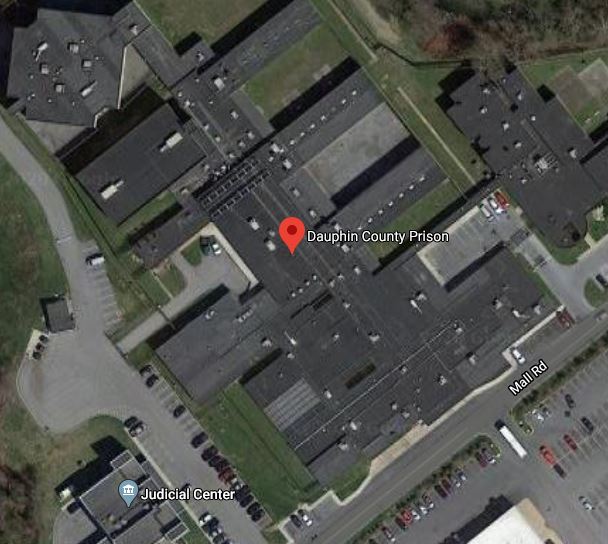
Dauphin County Prison is a county correctional facility located at 501 Mall Road, Harrisburg, Pennsylvania 17111, serving as the primary detention center for Dauphin County — home to Pennsylvania's state capital. The facility operates under county jurisdiction and maintains minimum to medium security classifications, housing male inmates ranging from pre-trial detainees awaiting their day in court to sentenced offenders serving shorter terms. Under the leadership of Warden Leonard K. Carroll, the prison currently holds approximately 1,000 inmates, a population that notably exceeds its original designed capacity of 716 — a long-standing challenge that has shaped everything from daily operations and programming to facility policy and infrastructure planning.
As a county-level institution, Dauphin County Prison serves a dual function that distinguishes it from state or federal prisons. It houses individuals who have been arrested and are awaiting arraignment, bail hearings, or trial in Dauphin County Court of Common Pleas, alongside those who have already been convicted and sentenced to terms typically not exceeding two years. This mixed population creates a dynamic and complex operational environment that demands flexible housing arrangements, diverse support services, and responsive programming.
Dauphin County Prison is one of many facilities listed among Pennsylvania correctional facilities on our directory. Families of incarcerated individuals often find it difficult to locate a loved one, understand their legal status, or determine which facility they've been transferred to. You can search criminal records to find current incarceration status, booking information, and other public records that may help you stay informed. The facility is administered by Dauphin County government and works in close coordination with local law enforcement agencies, the county court system, and community reentry organizations.
Perhaps the most significant and defining operational characteristic of Dauphin County Prison is its persistent population overcrowding. With a designed capacity of 716 inmates and a current population hovering around 1,000, the facility routinely operates at roughly 140% of its intended capacity — placing it among the more population-stressed county correctional institutions in Pennsylvania. This chronic overcrowding is not simply a numbers problem; it has wide-ranging effects on nearly every aspect of daily life inside the facility, from housing configurations and program availability to staffing ratios and inmate health services.
To manage the excess population, the prison has relied on measures such as double-bunking in cells originally designed for single occupancy, expanded use of dormitory-style housing, and careful case-by-case classification to ensure that housing assignments reflect appropriate security levels. Staff have had to adapt continuously to these conditions, and the administration has worked with county officials to explore long-term solutions including potential facility expansion and greater use of alternatives to incarceration for low-risk individuals.
Another distinguishing aspect of Dauphin County Prison is its location within Pennsylvania's seat of government. As a facility that operates in direct view of state legislators and policymakers, it has occasionally served as a focal point in broader discussions about criminal justice reform, bail policy, and the funding of county corrections. This visibility has both advantages and challenges — it invites greater accountability but also means the facility operates under a level of public and political scrutiny that many comparable county jails do not face. For families trying to navigate the system, understanding these dynamics can help contextualize the experiences their loved ones may describe.
Dauphin County Prison houses approximately 1,000 male inmates across minimum and medium security classifications. The population is broadly divided into two distinct groups: pre-trial detainees, who have been arrested and are awaiting arraignment, bail hearings, or trial in Dauphin County Court of Common Pleas, and sentenced offenders, who have been convicted of crimes and are serving terms typically not exceeding two years. In Pennsylvania, sentences of two years or more are generally served in state correctional institutions rather than county facilities, which means Dauphin County Prison primarily handles shorter-term sentences and the pre-conviction phase of incarceration.
The pre-trial population is particularly significant because it includes individuals who have not yet been found guilty of any crime and are being held either because they cannot afford bail or because a judge determined that detention was necessary to protect public safety or ensure their appearance in court. This population can turn over relatively quickly depending on how cases move through the court system, while the sentenced population tends to remain more stable over longer periods.
In terms of offense types, the inmate population at Dauphin County Prison reflects the broader criminal justice landscape of the Harrisburg area, with significant numbers of individuals held on drug-related charges, property crimes, assault offenses, and violations of probation or parole. The facility does not house female inmates; women arrested in Dauphin County are typically transferred to another appropriate facility. For families trying to locate a specific individual, our guide on how to find an inmate provides step-by-step instructions for navigating the county jail system.
Living conditions at Dauphin County Prison reflect both the realities of operating a county-level institution and the ongoing challenges posed by a population that significantly exceeds the facility's original design. Inmates are housed in a variety of configurations depending on their security classification, behavior record, and available space — including individual cells, dormitory-style housing units, and double-bunked cells. Given that the facility operates well above its designed capacity, shared living arrangements are the norm rather than the exception, and personal space can be notably limited.
The facility provides three meals per day prepared in the facility's kitchen and served according to a structured schedule. Meals are required to meet basic nutritional standards, and special dietary accommodations are available for inmates with documented medical needs or religious dietary requirements, subject to review and approval by facility staff. Access to medical and mental health services is provided on-site, with nursing staff typically available around the clock and arrangements in place for more specialized care when needed. Dental and vision services are generally available on a scheduled basis.
Inmates have access to recreational time, which may include use of an outdoor or indoor recreation area depending on weather, classification, and facility scheduling. Personal hygiene supplies are provided, and inmates also have the option to supplement these through the commissary. The commissary system allows inmates to purchase additional food items, toiletries, writing materials, and other approved goods using funds deposited into their inmate account by family members or earned through work assignments. Maintaining reasonable living conditions under the strain of overcrowding is an ongoing effort for facility staff and administration.
Despite the challenges posed by chronic overcrowding and the resource constraints that accompany it, Dauphin County Prison maintains a range of rehabilitative and educational programs designed to reduce recidivism and prepare inmates for a more successful return to the community. Program availability can fluctuate based on funding cycles, volunteer capacity, and available space within the facility, but the administration has demonstrated a consistent commitment to offering meaningful programming options to those who seek them out.
Educational opportunities include GED preparation and testing for inmates who have not completed their high school diploma or equivalency. These classes are typically facilitated by trained instructors or through partnerships with local educational organizations. Basic literacy instruction may also be available for those with more fundamental educational needs. Participation in educational programming has been shown to significantly reduce the likelihood of reoffending after release, making these offerings among the most impactful the facility provides.
Substance abuse treatment and counseling represent another core component of the facility's programming portfolio. Given that a substantial portion of the incarcerated population has histories involving drug or alcohol dependency, access to structured treatment programs and individual or group counseling is considered essential. These services may be delivered through county health agencies, nonprofit providers, or faith-based organizations with established relationships with the facility.
Additional programming may include life skills classes covering topics such as financial literacy, job readiness, anger management, and parenting. Vocational training opportunities, where available, give inmates the chance to develop practical skills that can improve employability after release. Religious services and chaplaincy are also offered, with volunteers from various faith traditions regularly visiting the facility. Families interested in understanding the full range of available family services and support resources should consult with facility staff or the county's reentry coordination office directly.
Work assignments at Dauphin County Prison include institutional maintenance positions that keep the facility operating, such as kitchen workers who assist with meal preparation and service, janitors who maintain cleanliness in housing units and common areas, and laundry workers who process institutional linens and inmate clothing. Trustee positions may be available for minimum security inmates with demonstrated good behavior. These work assignments provide inmates with structure, job skills, and small compensation while reducing operational costs for the county. Assignment decisions consider security classification, behavior record, and time remaining on sentences.
Dauphin County Prison opened its doors in 1957, constructed to replace the aging and increasingly inadequate jail facilities that had previously served Harrisburg and the surrounding Dauphin County region. The site at 501 Mall Road was carefully selected to provide a modern, purpose-built correctional environment suited to the needs of a growing county centered on Pennsylvania's state capital. At the time of its construction, the facility was designed with a capacity of 716 inmates — a figure that reflected mid-century population projections and the law enforcement demands of the era.
Over the following decades, Dauphin County experienced significant population growth, increased urbanization, and a series of shifting law enforcement priorities that collectively placed mounting pressure on the prison's resources and infrastructure. The rise in drug-related arrests beginning in the 1980s, combined with tougher sentencing guidelines at both the state and county level, accelerated inmate intake beyond what the original facility was ever intended to absorb. By the late 20th century, the prison was regularly operating above its designed capacity, a condition that has persisted into the present day.
Throughout its history, the facility has undergone a number of renovations and operational adjustments aimed at improving safety, modernizing living areas, and expanding program offerings. Administrative leadership has changed multiple times over the decades, with each administration confronting the ongoing tension between limited physical space and growing inmate populations. The prison's location in Harrisburg — a city that serves as both the state capital and the county seat — means it is also subject to heightened public scrutiny and political attention compared to facilities in less prominent locations. Today, Dauphin County Prison continues to serve as the cornerstone of the county's criminal justice infrastructure, playing a central role in everything from pre-trial detention to post-conviction programming and community reentry planning.
No widely documented famous former inmates are publicly associated with Dauphin County Prison at this time. As a county jail primarily serving pre-trial detainees and short-term sentenced offenders in the Harrisburg, Pennsylvania area, the facility's population tends to reflect local and regional criminal justice activity rather than high-profile national cases. Individuals who attract significant public attention and face more serious charges are typically processed through the county system before being transferred to state or federal custody. If you are researching a specific individual's incarceration history or arrest record, you can search criminal records using publicly available data to find booking details, charge information, and case history.
Maintaining meaningful family connections during incarceration is critically important for both inmates and their loved ones — research consistently shows that strong family ties contribute to lower rates of reoffending after release. Dauphin County Prison provides a structured visitation program to support those relationships, and understanding the rules and procedures in advance will help ensure your visit goes smoothly.
All individuals wishing to visit an inmate must complete an approved visitor registration process before their first visit. This typically involves submitting personal identifying information that the facility uses to conduct a background review. Approval is not guaranteed, and individuals with certain criminal histories may be denied visitation privileges. It is strongly recommended that prospective visitors contact the facility directly or review the official visitation rules document to understand eligibility requirements before making plans to visit.
Visitation hours are scheduled and vary depending on the inmate's housing unit and classification. Visits are typically conducted in a designated visitation area and may be contact or non-contact depending on the inmate's security level and disciplinary status. All visitors are required to present a valid, government-issued photo ID at the time of the visit. Visitors should dress appropriately — clothing that resembles inmate uniforms or is otherwise deemed inappropriate may result in denial of entry.
Children are generally permitted to visit with a parent or legal guardian, though specific rules regarding minors may apply. Visitors should arrive on time, as late arrivals may not be accommodated. Any behavior that violates facility rules — including attempting to pass unauthorized items — can result in immediate removal and permanent revocation of visitation privileges. Beyond visitation, families can also send money to an inmate's commissary account to help them purchase approved personal items and stay more comfortable during their time at the facility.
There are several ways to stay in contact with an inmate housed at Dauphin County Prison, and understanding each available option can make a meaningful difference in maintaining your relationship throughout the incarceration period.
Mail Correspondence: Sending letters and cards remains one of the most reliable and appreciated forms of communication for incarcerated individuals. To ensure delivery, address all correspondence using the inmate's full legal name and their assigned DCP identification number, sent to:
Dauphin County Prison
501 Mall Road
Harrisburg, PA 17111
All incoming mail is subject to inspection by facility staff before being delivered to the inmate. Avoid sending cash, prohibited items, or materials that violate facility mail policies, as these will be confiscated and may result in disciplinary action. Photographs are generally permitted within established size and content guidelines.
Telephone Calls: Inmates at Dauphin County Prison have access to telephone services through a contracted phone provider. Calls are typically made collect or through a prepaid account system that family members can fund in advance. All calls are recorded and monitored, with the exception of properly designated legal calls. Families should set up an account with the phone service provider as early as possible to minimize delays in communication.
Electronic Messaging: Depending on current facility contracts and technology availability, electronic messaging services may be offered as an additional communication option. These services typically allow families to send and receive messages through a secure online platform, often at a lower cost than traditional phone calls.
Inmate Locator: If you are unsure whether a person is currently held at Dauphin County Prison, you can check the official Dauphin County inmate locator to search by name. For a broader search across facilities, our guide on how to find an inmate walks you through the process step by step. You can also look up an inmate's arrest history using public records to better understand their charges and case status before reaching out to the facility directly.
Sponsored and Powered by our Partner TruthFinder
Quick Facts
Should I Be Concerned? — Family Guide
Dauphin County Prison maintains a safe and secure environment for visitors with well-established security procedures, a zero recorded staff assault rate, and consistent minimum to medium security protocols. All visitors undergo thorough screening before entry, and staff are trained to manage the facility safely and professionally.
Due to current overcrowding at 140% capacity, visitors should expect possible delays in processing and check-in procedures. We recommend arriving 15 minutes early, confirming your visit in advance by calling (717) 558-6500, and being prepared for longer wait times during peak visitation hours. These precautions help maintain the safety and security standards that protect everyone in the facility.
Neighborhood & Getting There
Dauphin County Prison is conveniently located in Harrisburg, Pennsylvania's capital city, on Mall Road near the downtown corridor. The facility benefits from excellent regional accessibility via Interstate 81 and Interstate 83, making it reachable from most surrounding areas within 30 minutes to 2 hours. The location places the prison approximately 90 miles west of Philadelphia, 100 miles north of Baltimore, and 30 miles north of the Maryland border.
Visitors traveling from out of town will find numerous accommodations nearby, including hotels along the I-81 corridor and in downtown Harrisburg. The area offers dining options, rest stops, and gas stations for travelers. For those requiring overnight stays, chains such as Holiday Inn, Comfort Inn, and local boutique hotels are located within 5-15 minutes of the facility. The Harrisburg International Airport is approximately 15 minutes away for those flying in to visit loved ones.