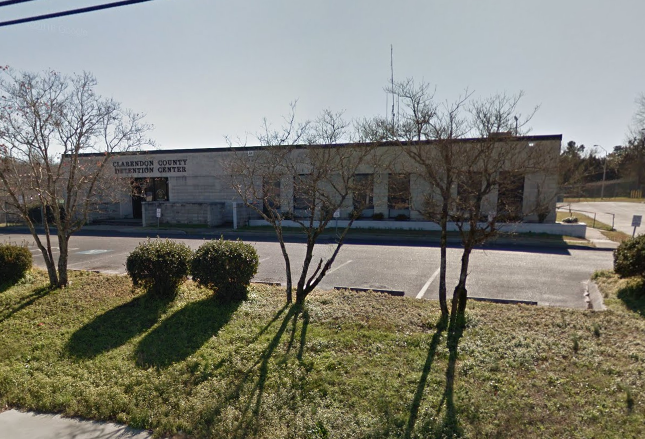
Clarendon County SC Detention Center
County Jail | Clarendon County — South Carolina | Clarenton County South Carolina Sheriff's Office
The Clarendon County SC Detention Center is located at 320 East Boyce Street in Manning, South Carolina, where it serves as the primary detention facility for Clarendon County's criminal justice system. Operating as a medium-security county jail, the facility is listed among the many South Carolina correctional facilities that support communities across the state, and it functions under oversight consistent with South Carolina Department of Corrections standards and applicable state law.
With a maximum capacity of 152 inmates, the facility maintains strictly gender-separated housing units for both male and female populations, ensuring compliance with state and federal correctional standards. The relatively compact size of the facility allows staff to maintain a closer level of supervision than is possible at larger regional or state institutions, which contributes to better day-to-day management of the inmate population.
Daily operations and inmate management are overseen by Col. Shelton L. Hughes, Jr., who leads a trained correctional staff responsible for maintaining the safety, security, and well-being of all individuals housed at the facility. Staff are tasked with enforcing institutional rules, coordinating inmate programming, facilitating communication between inmates and their families, and ensuring the facility remains in full compliance with applicable South Carolina correctional regulations.
Families seeking information about an incarcerated loved one can initiate an inmate search directly through the detention center's administrative office or consult online public record databases for booking and incarceration status. If you are trying to locate someone who may have been recently arrested or transferred to this facility, you can search criminal records to find current incarceration status and recent booking information. For a broader guide on locating someone in custody, visit our resource on how to find an inmate.
The Clarendon County SC Detention Center holds the rare distinction of being one of South Carolina's oldest continuously operating correctional facilities, with documented origins dating back to 1856. This remarkable institutional longevity places it in a category shared by very few county jails anywhere in the United States — a facility that has functioned without interruption through the Civil War, Reconstruction, two World Wars, sweeping civil rights reforms, and the dramatic modernization of the American correctional system over the past century and a half.
For a county-level jail serving a largely rural region of South Carolina, this historical continuity is a testament to both the enduring importance of the institution within the local community and the commitment of successive generations of county officials and correctional staff to maintaining a functional, compliant, and professionally managed detention facility. Very few jails of this scale can point to an unbroken operational record spanning more than 165 years.
Beyond its age, the facility also stands out for its relatively stable administrative leadership and its ongoing efforts to expand programming and services for its inmate population despite the resource constraints typical of rural county jails. This combination of historical depth and operational commitment makes the Clarendon County SC Detention Center a genuinely distinctive institution within the South Carolina correctional landscape.
The Clarendon County SC Detention Center houses both male and female inmates within its 152-bed capacity, maintaining strictly gender-separated housing units in full compliance with South Carolina correctional standards. As a county-level facility, the inmate population is predominantly composed of pre-trial detainees — individuals who have been arrested and are awaiting arraignment, bond hearings, or trial — alongside a smaller portion of sentenced individuals serving shorter terms, typically for misdemeanor or low-level felony convictions.
The population at any given time reflects the full range of charges processed through the Clarendon County criminal justice system, including property crimes, drug offenses, traffic-related violations, and various misdemeanor charges. Because the facility processes both new arrests and longer-term holds, the daily population can fluctuate, and the length of stay for any given individual varies widely depending on their legal circumstances, bond status, and the pace of court proceedings.
The facility also periodically holds individuals on behalf of other agencies, including those detained on immigration-related matters or awaiting transfer to state correctional facilities following sentencing. This mix of populations requires staff to manage a dynamic and diverse inmate roster, balancing security considerations with the varying needs of detainees at different stages of the criminal justice process.
Families trying to determine whether a loved one is currently housed at this facility are encouraged to contact the detention center directly or to look up an inmate's arrest history using available public records tools to confirm booking and housing status.
Inmates at the Clarendon County SC Detention Center are housed in gender-separated units with cell-based accommodations designed to meet the medium-security standards defined by South Carolina correctional guidelines. The physical environment is maintained to ensure basic safety, sanitation, and habitability for the incarcerated population. Regular facility inspections and ongoing administrative oversight help ensure that the detention center remains in compliance with state standards governing inmate housing conditions.
The facility provides three daily meals, prepared or sourced to meet established nutritional guidelines for incarcerated populations. Inmates with documented medical dietary needs — including allergies, religious dietary restrictions, or physician-ordered requirements — may be accommodated with alternative meal options upon review by facility medical staff. Access to clean drinking water and basic hygiene supplies is maintained as a standard provision throughout the facility.
Medical care at the facility is provided through on-site health services and referrals to outside providers when necessary. Inmates with chronic medical conditions, mental health needs, or acute health concerns are evaluated by qualified staff and referred for appropriate treatment. Prescription medications are managed and distributed by health services personnel in accordance with applicable protocols.
Recreational opportunities and access to outdoor areas are provided in accordance with facility scheduling, allowing inmates to maintain a minimal level of physical activity. Reading materials, limited television access in common areas, and participation in scheduled programming provide additional outlets during non-lockdown hours. The overall living environment, while necessarily restrictive, is maintained with the goal of ensuring that basic standards of dignity and safety are upheld for all individuals in the facility's care.
The Clarendon County SC Detention Center offers a range of programming designed to address the educational, spiritual, vocational, and personal development needs of its incarcerated population. While the scope of available programs is naturally more focused than what might be offered at larger state prisons, the facility is committed to providing meaningful resources that can help reduce recidivism and support successful reentry into the community following release.
Educational programming at the facility includes GED preparation courses for inmates who have not yet earned a high school equivalency credential. These courses are typically facilitated in coordination with local educational partners or volunteer instructors and are available to eligible inmates on a scheduled basis. Earning a GED while incarcerated is one of the most impactful steps an individual can take toward improving long-term employment prospects following release.
Substance abuse and behavioral programming is also available, recognizing that a significant portion of the jail population has underlying substance use disorders that contributed to their involvement in the criminal justice system. Programs in this area may include structured group sessions, evidence-based curricula, and referrals to community-based treatment providers upon release.
Faith-based programming is offered through partnerships with local religious organizations and volunteer chaplains who provide services, counseling, and support groups. These programs are open to inmates of all faiths and provide an important source of spiritual support and community connection during incarceration.
Life skills and reentry preparation programming helps inmates develop practical tools for navigating life after release, including job readiness, financial literacy, and accessing community services. Participation in these programs is encouraged for all eligible inmates, particularly those approaching the end of their sentence.
Inmates at Clarendon County SC Detention Center participate in work assignments that support daily facility operations and maintenance. Inside job assignments include kitchen duties such as meal preparation and cleanup, laundry services for processing inmate uniforms and linens, and janitorial tasks throughout housing units and common areas. Trustees who demonstrate appropriate behavior and meet security criteria may be assigned to facility maintenance work including groundskeeping and minor repairs. These work assignments provide structure to daily routines while reducing operational costs for the county. Participation in work programs is generally voluntary but may be considered favorably during classification reviews and may offer modest incentives within facility guidelines.
The Clarendon County SC Detention Center has a remarkably deep institutional history, with its origins tracing back to 1856 — placing it among South Carolina's most historically significant correctional facilities and making it one of the rare county jails in the United States with documented roots in the antebellum period. Founded nearly a decade before the outbreak of the Civil War, the facility reflects the early efforts of rural South Carolina communities to establish formal law enforcement and detention infrastructure during the mid-nineteenth century, a time when county-level governance was rapidly expanding across the region.
Throughout the latter half of the nineteenth century and into the twentieth century, the Clarendon County jail evolved alongside the broader social and legal transformation of South Carolina. The post-Civil War Reconstruction era brought significant changes to the state's criminal justice system, and county-level facilities like this one were at the center of those shifts — absorbing new populations, adapting to changing legal frameworks, and gradually modernizing their physical infrastructure and administrative practices to reflect contemporary standards.
The twentieth century brought continued development, including periodic expansions and renovations to accommodate a growing county population and an evolving body of state and federal regulations governing inmate housing and correctional administration. Each generation of facility management has been tasked with balancing the demands of a functioning county jail against the financial realities of a rural county budget, a challenge that has shaped both the physical footprint and the operational philosophy of the detention center over the decades.
Today, the Clarendon County SC Detention Center stands as a living piece of South Carolina's correctional history — a facility that has served its community continuously for more than 165 years, adapting to meet the demands of each era while remaining rooted in its original civic mission of public safety and lawful detention.
No widely documented famous former inmates are publicly associated with the Clarendon County SC Detention Center at this time. As a county-level facility serving a primarily rural region of South Carolina, the jail's population has historically consisted of local residents involved in county-level criminal proceedings rather than high-profile cases attracting regional or national media attention. This is consistent with the profile of most rural county detention centers across the state and the broader Southeast.
If you are researching the background of a specific individual who may have been booked or held at this facility, you can search criminal records to access publicly available arrest, booking, and court records associated with individuals processed through Clarendon County. Public records searches can provide useful information about charges, case status, and incarceration history for individuals held at this or other South Carolina facilities.
Visiting an incarcerated loved one at the Clarendon County SC Detention Center requires careful advance preparation and strict compliance with the facility's visitation policies. All visitors must present valid government-issued photo identification upon arrival — acceptable forms typically include a state driver's license, a state-issued ID card, or a U.S. passport. Visitors who cannot produce appropriate identification will be denied entry, and no exceptions are made regardless of the circumstances.
Visitation at the facility is conducted according to a scheduled visitation program. Visits are typically separated by gender of the inmate and may be further divided by housing unit assignment. It is strongly recommended that families contact the facility directly before planning a visit to confirm current visitation schedules, available time slots, and any temporary changes to normal procedures. Schedules are subject to change due to facility lockdowns, staffing issues, or other operational needs.
All visitors are subject to search upon entry to the facility. Personal belongings, including bags and electronic devices, may not be brought into the visitation area. Visitors are expected to comply with the facility's dress code — clothing that resembles inmate attire, exposes excessive skin, or is otherwise deemed inappropriate may result in a denied visit. Children who accompany adult visitors must remain under adult supervision at all times.
Individuals with prior felony convictions may be subject to additional screening before being approved to visit. The facility reserves the right to deny visitation to any individual who poses a potential security risk or who has been previously barred from the facility. For full details on current visiting hours and approved visitor procedures, refer to the official Clarendon County Detention Center website. You may also want to explore ways to send money to an inmate as another means of supporting your loved one between visits.
Staying in contact with an incarcerated loved one at the Clarendon County SC Detention Center is one of the most important things families can do to provide emotional support and help maintain meaningful connections during a difficult time. Research consistently shows that regular family contact during incarceration is associated with better behavioral outcomes, reduced likelihood of reoffending after release, and improved mental health for both the incarcerated individual and their family members on the outside.
Phone calls are the most common form of communication at the facility. Inmates typically have access to a monitored telephone system during designated hours. Calls are generally made collect or through a prepaid account system managed by the facility's contracted phone service provider. Families will need to set up an account with the provider to receive calls, and per-minute rates vary. It is advisable to contact the facility directly to identify the current phone vendor and account setup process.
Mail correspondence is another important channel for staying connected. Incoming mail is inspected for contraband before delivery to inmates. Letters should be sent to the inmate's full name and booking number at the facility's address: 320 East Boyce Street, Manning, South Carolina 29102. Packages and certain types of materials may be restricted — check with the facility for current guidelines before sending anything other than standard first-class letters.
Electronic messaging services may also be available through the facility's contracted communications provider, allowing families to send messages digitally that are then delivered to inmates. This can be a faster and more convenient alternative to traditional mail for families who want to communicate more frequently.
If you are uncertain whether your loved one is currently housed at this facility or are trying to track their location within the South Carolina correctional system, see our guide on how to find an inmate for step-by-step instructions on conducting an inmate search. You can also search our prison directory to locate other facilities where they may be held. For any questions specific to this facility, you can reach the Clarendon County SC Detention Center administrative office directly at the phone number listed on the official Clarendon County Detention Center website.
Sponsored and Powered by our Partner TruthFinder
Quick Facts
Should I Be Concerned? — Family Guide
Clarendon County SC Detention Center maintains a strong safety record, reflecting the effectiveness of established security protocols and professional management standards. The medium-security classification ensures appropriate supervision levels and structured daily operations designed to protect all facility occupants. Visitors can expect secure entry procedures, compliance checkpoints, and professional staff oversight throughout their visit.
The facility prioritizes the safety and security of inmates, staff members, and visiting families through consistent enforcement of policies and regular operational reviews. All visitors must adhere to facility rules and procedures during visitation. Professional correctional staff remain present to ensure orderly conduct and maintain a secure environment for everyone on premises.
Neighborhood & Getting There
Manning, South Carolina, the county seat of Clarendon County, is nestled in the scenic Lowcountry region approximately 60 miles southeast of Columbia and 90 miles northwest of Charleston. The area offers a quiet, rural setting with a tight-knit community atmosphere, providing a peaceful environment for local residents. Interstate 95 is conveniently accessible within 30 minutes, facilitating visitor travel from surrounding regions and major population centers.
The Manning area offers essential visitor services including several nearby hotels, restaurants, and gas stations within short driving distances. The Clarendon County Detention Center's location provides convenient access for families and legal representatives traveling for visitation or official business. The surrounding community maintains basic commercial services to accommodate the needs of visitors and residents.