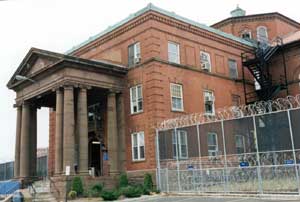
Cheshire Correctional Institution
State Prison | New Haven County — Connecticut | Connecticut DOC
Cheshire Correctional Institution is a level 4 high-security facility located at 900 Highland Avenue in Cheshire, Connecticut. Opened in 1913, this Connecticut Department of Corrections facility houses male inmates and currently holds approximately 1,351 inmates with a capacity of 1,404. Under the leadership of Warden Scott Erfe, the institution serves as one of Connecticut's primary high-security correctional facilities, managing inmates who require enhanced supervision and secure housing within the state corrections system.
Families seeking information about inmates at Cheshire Correctional Institution can search inmate records, learn about visitation procedures, and find guidelines for sending money and mail. Understanding the facility's rules and procedures helps maintain communication with incarcerated loved ones. Arrest records and booking information are also available through official Connecticut Department of Corrections channels.
Cheshire Correctional Institution stands as one of Connecticut's oldest continuously operating correctional facilities, with over a century of service to the state corrections system. Its designation as a level 4 high-security facility means it manages some of Connecticut's most challenging inmate populations requiring enhanced security measures and specialized supervision. The facility's location in Cheshire provides a balance between security needs and accessibility for family visits from throughout Connecticut. Its substantial capacity of over 1,400 inmates makes it one of the larger institutions in the state system, allowing Connecticut to maintain adequate high-security housing within its borders.
Cheshire Correctional Institution houses adult male offenders classified as level 4 high-security inmates. The population primarily consists of sentenced individuals convicted of serious felonies including violent crimes, aggravated assaults, robberies, and other offenses requiring maximum supervision. Some inmates may be serving lengthy sentences while others await transfer or classification decisions. The facility manages various custody levels within its high-security designation, separating inmates based on behavior, security threat levels, and program participation. Special management units accommodate inmates requiring protective custody or administrative segregation. The population includes both younger offenders and long-term inmates, with classification staff continuously evaluating placement and security needs to maintain institutional safety and order.
Inmates at Cheshire Correctional Institution are housed in secure cellblocks designed for maximum security supervision. Most inmates reside in single or double-occupancy cells with controlled movement throughout the facility. Daily routines include structured meal times with food prepared in institutional kitchens and served in designated dining areas or delivered to housing units depending on security classifications. Recreation opportunities occur in controlled yard areas and indoor recreation spaces, with access determined by custody level and behavior. Medical services are provided through an on-site healthcare unit staffed by medical professionals who address routine care, chronic conditions, and emergency situations. Mental health services include counseling, psychiatric care, and crisis intervention for inmates experiencing psychological difficulties. The facility operates a formal grievance process allowing inmates to address concerns about conditions, staff interactions, or policy applications through written submissions reviewed by administrative staff. Access to commissary items provides inmates opportunities to purchase approved personal items and food products.
Cheshire Correctional Institution offers educational programming including adult basic education and GED preparation for inmates seeking to complete their high school equivalency. Vocational training programs provide skills development in various trades to enhance employment prospects upon release. Substance abuse treatment addresses addiction issues through counseling groups, therapeutic communities, and educational classes focusing on recovery and relapse prevention. Religious services accommodate multiple faiths with chaplaincy staff coordinating worship services, spiritual counseling, and faith-based programming. Re-entry preparation programs help inmates nearing release develop essential life skills including job readiness, financial literacy, and community resource awareness. Program participation is often tied to custody level and institutional behavior, with inmates demonstrating positive conduct gaining expanded access to educational and treatment opportunities that support successful community reintegration.
Work assignments at Cheshire Correctional Institution provide inmates with structured activities and skill development opportunities. Inside facility jobs include kitchen workers who assist with meal preparation and service, maintenance crews responsible for facility upkeep and repairs, laundry workers, and porters who maintain cleanliness in housing units and common areas. Some inmates work in administrative support roles or facility operations under staff supervision. These work assignments provide modest compensation while teaching responsibility, work habits, and vocational skills. Assignment to work positions depends on custody classification, institutional behavior, and available openings, with eligibility determined by security staff and program coordinators.
Cheshire Correctional Institution was established in 1913, making it one of Connecticut's oldest operating correctional facilities. The institution was constructed during a period of prison reform and expansion in the early twentieth century when Connecticut sought to modernize its corrections system and increase capacity for long-term incarceration. Over its 110-year history, the facility has undergone numerous expansions, renovations, and security enhancements to meet evolving correctional standards and population demands. Various incidents throughout its history have influenced policy changes and security protocols. The facility has adapted from its original construction to incorporate modern surveillance technology, secure housing designs, and specialized management units. Today, Cheshire Correctional Institution continues serving as a critical component of Connecticut's corrections system, providing high-security housing for male offenders under the management of Warden Scott Erfe and the Connecticut Department of Corrections.
Visitation at Cheshire Correctional Institution requires advance approval through the Connecticut Department of Corrections visitor application process. All visitors must provide valid government-issued photo identification and undergo background checks before approval. Visitors should dress appropriately in modest clothing that meets facility dress code requirements, avoiding clothing resembling inmate uniforms or containing inappropriate content. Scheduling procedures vary, and families should contact the facility directly to confirm current visitation days, hours, and scheduling requirements. The visitation process includes security screening with metal detectors and possible searches. Approved visitors should arrive early and follow all staff instructions during visits. Rules regarding physical contact, items brought into visiting areas, and conduct are strictly enforced. Families are strongly encouraged to call ahead before traveling to confirm visitation status and current procedures.
Mail sent to inmates at Cheshire Correctional Institution must include the inmate's full name, identification number, and the facility address: 900 Highland Avenue, Cheshire, CT 06410. All incoming mail undergoes inspection for contraband and prohibited items. Books and publications must typically come directly from approved vendors or publishers rather than personal senders. Inmates can make outgoing telephone calls through facility phone systems using prepaid accounts established by family members through approved vendors. These calls are monitored and recorded except for privileged legal communications. Families should contact the Connecticut Department of Corrections to learn about available electronic messaging systems if offered at this facility.
Sponsored and Powered by our Partner TruthFinder
Quick Facts
Should I Be Concerned? — Family Guide
Cheshire Correctional Institution maintains a strong safety record with zero staff assaults and operates at 96% capacity, indicating stable management conditions. As a level 4 high-security facility, visitors should expect thorough security screening and controlled visitation procedures. Plan to arrive early for processing, bring valid identification, and review the facility's current visiting policies before your trip to ensure a smooth experience.
Neighborhood & Getting There
Cheshire is located in New Haven County in south-central Connecticut, approximately 20 minutes north of New Haven and 90 minutes from Hartford. The facility sits in a suburban area with nearby highway access via Route 10. Wallingford and Durham offer nearby hotels and services. The region features typical New England infrastructure with restaurants and amenities along main commercial corridors. Driving from the Greater New York area takes approximately 2 hours.