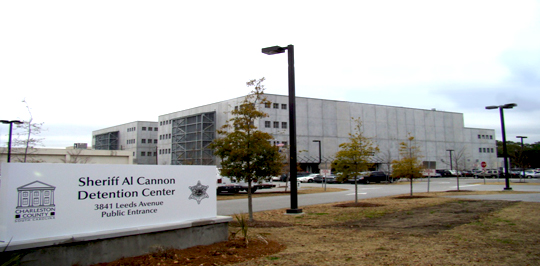
Sheriff Al Cannon Detention Center
County Jail | Charleston County — South Carolina | Charleston County, South Carolina Sheriff's Departments
Sheriff Al Cannon Detention Center is a medium-security county jail located at 3841 Leeds Ave in North Charleston, Charleston County, South Carolina. Operated by the Charleston County Sheriff's Office, the facility serves as the primary detention hub for the greater Charleston metropolitan area and ranks among the largest county-operated jails in the entire state. The center houses both male and female inmates across a range of housing configurations, with a current population of approximately 1,079 individuals and a total rated capacity of 1,917 beds. Day-to-day operations are overseen by the Chief Deputy of Detention — a credentialed professional who holds certifications in jail management and correctional executive administration through nationally recognized bodies such as the American Jail Association.
As one of many facilities listed among South Carolina correctional facilities, Sheriff Al Cannon Detention Center plays a critical and multifaceted role in the region's criminal justice infrastructure. The jail processes newly arrested individuals around the clock, seven days a week, and houses pre-trial detainees awaiting arraignment, bail hearings, or trial proceedings. It also manages sentenced inmates serving shorter terms under county jurisdiction. Families trying to locate a loved one who may have been recently arrested can search criminal records to help confirm current incarceration status before reaching out to the facility directly.
The facility operates in close coordination with the Charleston County court system, local law enforcement agencies, and state correctional authorities to ensure the safe and orderly movement of individuals through the justice process. Beyond detention, the center actively supports programming, mental health services, and case management resources that serve both the incarcerated population and the broader community. For families navigating this process for the first time, our guide on how to find an inmate can help you get started quickly and understand your options.
Sheriff Al Cannon Detention Center stands as the largest and most operationally comprehensive detention facility in South Carolina's Lowcountry region, a distinction that sets it apart from virtually every other county jail in the state. With a rated capacity of nearly 1,917 beds, the facility is significantly larger than most county-operated jails in South Carolina and functions with a level of operational complexity typically associated with state correctional institutions rather than local county facilities.
One of the center's most notable features is its fully integrated on-site medical and mental health infrastructure. Rather than relying solely on outside contractors for routine care, the facility maintains dedicated clinical space and healthcare staff capable of addressing a wide spectrum of medical needs — from routine sick calls and chronic disease management to psychiatric evaluations and crisis intervention. This is a meaningful distinction in a population where undiagnosed or untreated mental health conditions are disproportionately common.
The facility also operates a robust classification system that goes well beyond simple gender separation. Inmates are evaluated at intake using standardized risk and needs assessment tools, and housing assignments are made based on a combination of charge severity, behavioral history, vulnerability factors, and programming eligibility. This structured approach reduces violence within the facility, protects vulnerable populations, and helps staff allocate programming and supervision resources more effectively. Together, these features make Sheriff Al Cannon Detention Center a regional model for professional county-level detention operations.
Sheriff Al Cannon Detention Center houses a diverse population representing multiple categories of individuals within the criminal justice system. The largest segment consists of pre-trial detainees — individuals who have been arrested and are awaiting arraignment, bail hearings, or trial proceedings on charges ranging from minor misdemeanors to serious felonies including violent crimes and drug-related offenses. Because these individuals have not yet been convicted, they retain a presumption of innocence and are entitled to specific legal protections under both state and federal law.
In addition to pre-trial detainees, the facility holds sentenced inmates serving shorter terms of incarceration under county jurisdiction — typically sentences of one year or less. Some individuals may also be held on detainers or holds placed by other jurisdictions, immigration authorities, or state correctional officials pending transfer. The facility houses both male and female inmates in separate housing areas, with specialized units available for individuals with serious medical needs, documented mental health conditions, or identified vulnerabilities that require additional supervision and protection.
The inmate population at any given time reflects the full spectrum of criminal justice involvement in Charleston County, from individuals charged with low-level offenses who may be released within hours to those facing serious charges who may remain detained for extended periods while their cases progress through the court system. With a current population of approximately 1,079 individuals against a rated capacity of 1,917 beds, the facility currently operates below maximum capacity — a factor that supports better programming delivery, safer housing conditions, and more individualized staff attention.
Sheriff Al Cannon Detention Center operates a range of housing configurations designed to accommodate its diverse inmate population while maintaining appropriate separation by gender, security classification, and custodial status. Inmates may be housed in direct supervision pods, dormitory-style open units, or individual cells, depending on the results of their initial classification assessment and any subsequent behavioral evaluations conducted during their stay. Direct supervision units place correctional officers inside the housing area rather than behind a control booth — a model designed to encourage more normalized interaction, reduce tension, and allow staff to identify and address problems before they escalate.
Standard housing areas include access to basic amenities such as bunks, personal storage space, restroom and shower facilities, and common areas for meals, recreation, and programming activities. Inmates receive three meals daily that meet state-mandated nutritional standards, access to hygiene products through the commissary or indigent supply program, and opportunities for regular outdoor or indoor recreation depending on their classification status.
Medical care is provided on-site through a contracted healthcare provider, with services available around the clock for urgent needs and scheduled sick call available for routine concerns. Mental health services are also available, including counseling, psychiatric evaluation, and crisis stabilization for individuals experiencing acute episodes. Inmates with serious medical or mental health needs may be housed in designated specialty units where staff with appropriate clinical training provide closer monitoring and more targeted support. The overall standard of living reflects the facility's commitment to maintaining safe, sanitary, and constitutionally compliant conditions for everyone in its custody.
Sheriff Al Cannon Detention Center is committed to providing programming that supports inmate rehabilitation and prepares individuals for a more successful transition back into the community. Given that many of the facility's residents are pre-trial detainees or short-term sentenced individuals, the programs are thoughtfully designed to deliver meaningful impact within a relatively limited timeframe — focusing on skills, interventions, and knowledge that can produce lasting change even after a brief period of incarceration.
Educational programming includes GED preparation classes for individuals who have not yet earned a high school equivalency credential, as well as basic literacy instruction for those who need foundational academic support. Vocational training opportunities may be available depending on current partnerships and facility resources, providing practical skills that can improve employment prospects after release. Life skills courses cover topics such as financial literacy, conflict resolution, job readiness, and parenting — addressing many of the practical challenges that contribute to recidivism when left unaddressed.
Substance abuse programming plays a particularly important role at the facility, given the well-documented connection between addiction and criminal justice involvement. Evidence-based treatment programs, including group counseling and peer support models, help individuals begin the work of recovery during incarceration rather than waiting until after release. Faith-based organizations and community volunteers also contribute programming and support services, offering mentorship, spiritual guidance, and connections to community resources. Cognitive behavioral programs aimed at changing thought patterns associated with criminal behavior round out the facility's rehabilitation-focused offerings, helping individuals develop the decision-making skills and self-awareness needed to build more stable, law-abiding lives after release.
Inmates at Sheriff Al Cannon Detention Center can participate in various work assignments that maintain facility operations while providing constructive activity. Inside work details include kitchen assignments assisting with meal preparation and service, custodial crews responsible for maintaining cleanliness throughout housing units and common areas, and laundry operations processing facility linens and inmate clothing. Trustees who demonstrate responsible behavior may be assigned to administrative support roles or facility maintenance tasks. These work assignments provide inmates with structure and routine during their detention while reducing operational costs for Charleston County. Participation in work programs is considered a privilege earned through good behavior and compliance with facility rules, and inmates may lose work assignments due to disciplinary infractions.
Sheriff Al Cannon Detention Center was established in 1966 to address the growing detention needs of Charleston County as the region's population expanded dramatically during the post-World War II era. The original structure was a comparatively modest facility designed to serve a much smaller county population, but rapid urban and suburban growth throughout the greater Charleston metropolitan area quickly created demand for expanded capacity, improved infrastructure, and more sophisticated operational systems capable of handling a far larger and more complex inmate population.
Over its nearly six-decade history, the detention center has undergone multiple significant expansions and renovations. New housing pods were added in phased construction projects to increase bed capacity as the county's needs evolved, and the facility's infrastructure was repeatedly modernized to meet updated state and national standards for health, safety, and inmate management. These improvements included upgraded medical and mental health service areas, enhanced security technology, expanded programming space, and improved intake and classification systems that allow staff to more accurately assess and appropriately place incoming detainees.
The facility was named in honor of Sheriff Al Cannon, a longtime and widely respected figure in Charleston County law enforcement whose tenure helped shape the professional standards and community-oriented philosophy that the department still reflects today. His legacy is evident in the facility's ongoing commitment to balancing public safety with humane and effective detention practices. Over the decades, the detention center has adapted to shifting populations, evolving legal requirements, and changing best practices in correctional management — making it one of the most experienced and institutionally mature county jail operations in South Carolina.
No widely documented famous former inmates are publicly associated with Sheriff Al Cannon Detention Center at this time. As a county jail serving the Charleston metropolitan area, the facility has processed a very large number of individuals over its nearly six-decade history, and while it has undoubtedly held individuals involved in high-profile local criminal cases, specific prominent cases are not consistently documented in widely available public records. Individuals researching whether a specific person was previously booked or detained at this facility can search public criminal records to review booking history, charges, and other publicly available information.
Sheriff Al Cannon Detention Center offers scheduled visitation opportunities that allow families and approved contacts to maintain meaningful connections with incarcerated loved ones. Research consistently shows that regular family contact during incarceration is associated with improved mental health outcomes for inmates, better behavior within the facility, and significantly lower rates of reoffending after release. The facility supports both in-person visitation and video visitation to give families flexibility in how they stay connected, particularly for those who live at a distance or cannot easily travel to North Charleston.
All visitors must be on the inmate's approved visitation list and are required to present a valid government-issued photo ID at check-in. Visitors who have not been previously approved should contact the facility well in advance of their planned visit, as the approval process can take several days. Individuals with prior criminal convictions may be subject to additional review before visitation is approved. Children must be accompanied by an approved adult guardian at all times during visits.
Video visitation is available through the facility's official video visitation platform, which allows families to schedule remote visits from home or another approved location. This option is especially valuable for family members who live far away, have transportation challenges, or wish to visit more frequently without the logistical demands of traveling to the facility each time. Visit the official video visitation portal to schedule a session and review technical requirements. While you're supporting your loved one, you may also want to explore options to send money to their commissary account so they can purchase additional necessities during their stay.
Maintaining regular contact with an incarcerated loved one can make a meaningful difference in their mental well-being, their behavior during incarceration, and their eventual reintegration into the community. Sheriff Al Cannon Detention Center supports several methods of communication between inmates and their families, including postal mail, telephone calls, and approved electronic messaging through the facility's contracted service providers.
Postal mail is one of the most reliable and cost-effective ways to stay in touch. All incoming mail is screened for contraband and must follow facility guidelines regarding acceptable content, packaging, and addressing format. Letters should be addressed clearly with the inmate's full name and booking number to ensure timely delivery. Do not include cash, staples, stickers, or other prohibited materials, as these will cause your mail to be rejected or delayed.
Phone calls are initiated by the inmate through the facility's contracted phone provider and are billed to either a prepaid account set up by the family or through collect call arrangements where available. Rates and setup instructions are available through the phone provider's website. Electronic messaging — where available — functions similarly to email and can be a convenient supplement to traditional mail, especially for families who want faster back-and-forth communication without the cost of a phone call.
If you are unsure whether someone is currently being held at this facility, the Charleston County official inmate search tool allows you to look up current inmates by name. You can also look up an inmate's arrest history using public records to better understand their situation. For a broader overview of resources available to families, visit our family services page for guides, tips, and support tools.
Sponsored and Powered by our Partner TruthFinder
Quick Facts
Should I Be Concerned? — Family Guide
Sheriff Al Cannon Detention Center maintains an exemplary safety record with zero reported staff assaults and maintains medium-security protocols that prioritize both security and humane treatment. The facility operates at 56% capacity, allowing sufficient staff-to-inmate ratios that reduce pressure-related incidents and ensure consistent supervision. All visitors can be confident that comprehensive security screening, trained personnel, and modern facility management create a safe environment for visitation.
Family visits are conducted in designated secure areas with professional staff present. The facility follows Charleston County Sheriff's Office protocols for visitor safety, including background screening and clear conduct guidelines. Families are encouraged to contact the facility in advance at (843) 202-0270 to understand security procedures and prepare for their visit.
Neighborhood & Getting There
Sheriff Al Cannon Detention Center is conveniently located on Leeds Avenue in North Charleston, South Carolina's third-largest city. The facility sits just minutes from Interstate 26 and Interstate 52, providing easy access from throughout the Lowcountry region. Visitors can reach downtown Charleston's historic district in approximately 10-15 minutes, and Charleston International Airport (CHS) is just 20 minutes away by car.
The North Charleston area offers numerous accommodations for visiting families, including hotels and restaurants within a 5-mile radius of the detention center. Major chains such as Holiday Inn, La Quinta, and Comfort Inn are located nearby on major commercial corridors. The surrounding neighborhood is well-developed with retail, dining, and service options to support visitor needs during extended stays.