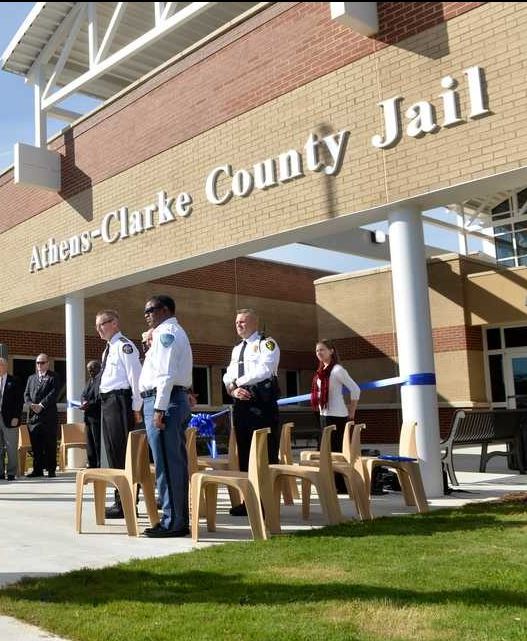
Athens-Clarke County Jail
County Jail | Clarke County — Georgia | Clarke County Georgia Sheriff's Office
Athens-Clarke County Jail is a county detention facility located in Athens, Georgia — a vibrant university city with a population of approximately 127,000 residents and home to the University of Georgia. The facility serves as the primary pretrial and short-term detention center for Clarke County, operating under the authority of the Athens-Clarke County Sheriff's Office. With a rated capacity of 780 beds, the jail is designed to securely house a diverse population of pretrial detainees and sentenced misdemeanor offenders in a structured, professionally managed environment.
The facility began operations in its current configuration in 2015 and has since undergone ongoing updates to improve safety, programming, and inmate management capabilities. It is one of many facilities listed among Georgia correctional facilities that play a critical role in the regional justice system. The jail houses both male and female offenders in separate housing units, classified according to offense type, risk level, and behavioral history, and is directly supervised by the elected Sheriff of Athens-Clarke County.
The jail operates as part of a unified city-county government structure — a relatively rare arrangement that promotes unusually strong coordination between the Sheriff's Office, local courts, and social service agencies. This integration allows for more streamlined case processing, faster access to support services, and better communication between agencies that all share responsibility for public safety in Clarke County.
If you have a loved one who may be incarcerated at Athens-Clarke County Jail, the most important first step is to confirm their location and current custody status. Families can search criminal records to find current incarceration status, booking information, and arrest history. You can also visit the official Athens-Clarke County inmate list for real-time custody information.
One of the most notable distinguishing features of Athens-Clarke County Jail is its location within a unified city-county government, a consolidated structure that is relatively uncommon across Georgia and much of the Southeast. This arrangement means that the Sheriff's Office, local courts, pretrial services, and social service agencies all operate under the same governmental umbrella — enabling a level of coordination and communication that many similarly sized counties simply cannot replicate.
This consolidation has practical benefits for incarcerated individuals and their families. Cases tend to move through the system more efficiently, communication between the jail and the courts is streamlined, and access to diversion programs or alternative sentencing options can be pursued more quickly. Families navigating the system often find it easier to get answers about their loved one's case status because fewer separate bureaucratic entities are involved.
Another distinguishing characteristic is the jail's proximity to the University of Georgia, which has fostered partnerships with academic programs in social work, criminal justice, and public health. These relationships have supported the development of inmate programming, reentry planning, and research initiatives that improve outcomes for people cycling through the facility. The university's presence in the community also influences the broader culture of the institution — encouraging a more rehabilitative orientation than might be found in more rural or isolated county jails.
Finally, the facility's direct supervision model — in which correctional officers work inside housing pods alongside inmates rather than monitoring from behind glass or barriers — sets it apart from older-design facilities. This approach is associated with lower rates of in-facility violence, better staff-inmate relationships, and a more structured daily routine that benefits everyone inside the facility.
Athens-Clarke County Jail typically holds between 500 and 700 inmates on any given day, though population levels fluctuate based on court schedules, law enforcement activity, arrest volumes, and the pace at which cases move through the local court system. The facility is rated for up to 780 beds, which provides some operational buffer during periods of elevated arrests or slower court processing.
The majority of the population at any given time consists of pretrial detainees — individuals who have been arrested and charged with a crime but have not yet been convicted or sentenced. These individuals may be held because they were denied bail, could not afford to post bail, or are awaiting a bond hearing. Because pretrial detention can last days, weeks, or even months depending on the complexity of a case, the jail must be equipped to provide meaningful services to people at various stages of the legal process.
A smaller portion of the inmate population consists of individuals serving short-term sentences — typically for misdemeanor offenses — who have been ordered to serve their time locally rather than in a state correctional facility. The jail also periodically houses individuals on federal detainers or those awaiting transfer to other facilities. This mix of legal statuses creates a diverse population with widely varying needs, from mental health and substance use support to educational programming and reentry planning.
The demographic makeup of the jail generally reflects broader patterns seen across Georgia's county jails, with men comprising the large majority of the population and women housed in dedicated, separate units. The facility also houses inmates across a wide age range and works to classify individuals appropriately so that vulnerable populations are not placed in housing units with higher-risk individuals. Classification decisions are based on factors including the nature of the current charge, criminal history, and behavior during prior incarcerations.
Inmates at Athens-Clarke County Jail are housed in a variety of unit types, ranging from general population dormitory-style housing to more restrictive single-cell units for those who require separation from the general population for safety, protective custody, or disciplinary reasons. The facility was designed around the principles of direct supervision, meaning correctional officers are stationed within housing pods and interact regularly with inmates throughout the day. This model is associated with lower rates of in-facility violence and a more stable, predictable daily environment compared to older remote-supervision designs.
Meals are provided three times daily and are prepared to meet basic nutritional standards established by Georgia county correctional guidelines. Inmates with documented medical dietary needs — including those related to diabetes, religious observance, or allergies — may request accommodations through the facility's medical staff. The kitchen operates under sanitation and food safety standards consistent with state requirements.
Each inmate has access to basic hygiene supplies and is provided with bedding and a uniform. The facility includes indoor common areas, access to showers on a regular schedule, and recreational space, though access to outdoor recreation may vary depending on housing classification and facility operations on a given day. Inmates in general population typically have access to dayroom areas where they can socialize, read, or watch television during designated hours.
Medical and mental health services are available on-site, with nursing staff present to handle routine health needs and to triage more serious medical issues. Inmates requiring higher levels of medical care may be transported to an outside facility. Mental health screenings are conducted at intake, and inmates identified as having mental health needs are connected with appropriate services. Substance use assessment and referral services are also available given the high prevalence of substance-related issues among the jail population.
Athens-Clarke County Jail offers a range of programs designed to address the underlying factors that contribute to criminal behavior and to support successful reintegration into the community upon release. While the facility's primary function is secure pretrial detention, jail administration recognizes that programming — even during relatively short stays — can have a measurable impact on recidivism rates and long-term community outcomes. Programs are offered to eligible inmates based on their classification level, sentence length, and individual needs assessments.
Available programs and services include:
- Education and GED Preparation: Inmates without a high school diploma or equivalency certificate can participate in educational programming aimed at improving literacy and preparing for the GED exam. Basic adult education classes help participants build foundational skills in reading, writing, and math.
- Substance Use Treatment and Counseling: Given the strong connection between substance use disorders and criminal justice involvement, the jail offers counseling and group-based programming to address addiction and recovery. Participants may also be connected with community-based treatment resources to support continued recovery after release.
- Cognitive Behavioral Programs: Structured programs targeting criminal thinking patterns and impulse control help participants recognize the thought processes that lead to poor decision-making and develop healthier behavioral responses.
- Reentry Planning: Case managers and reentry coordinators work with inmates approaching release to help them plan for housing, employment, transportation, and access to benefits. Early planning significantly improves outcomes in the weeks immediately following release.
- Religious and Spiritual Services: Volunteer chaplains and community faith organizations provide religious services, individual pastoral counseling, and faith-based programming for inmates of various traditions.
- Mental Health Services: On-site mental health professionals provide individual and group counseling, psychiatric evaluation, and medication management for inmates with diagnosed mental health conditions.
- Life Skills Training: Practical workshops covering topics such as financial literacy, parenting, conflict resolution, and job readiness help participants develop skills that support stable, law-abiding lives after release.
The jail's programming partnerships with community organizations, including those affiliated with the University of Georgia, help extend the reach of available services beyond what the facility could offer on its own. For families who want to understand what support is available during a loved one's incarceration, these programs represent meaningful opportunities for positive change. You can also explore our family services page for additional resources available to families of incarcerated individuals.
The history of detention in Athens-Clarke County reflects the broader evolution of local law enforcement and criminal justice across northeastern Georgia. Clarke County has maintained a jail facility for well over a century, tracing its roots back to a small, rudimentary holding facility in the late 1800s that served a much smaller and less complex community. Over the following decades, as Athens grew into a regional hub for commerce, education, and government, the demands placed on local detention infrastructure grew substantially.
Through much of the twentieth century, the county's jail facilities underwent periodic expansions and renovations to keep pace with population growth and evolving legal standards for inmate housing. Federal and state mandates related to inmate rights, overcrowding, and facility conditions pushed counties across Georgia to modernize their detention infrastructure, and Clarke County was no exception. By the early 2000s, it had become clear that the aging facilities could no longer adequately serve the county's needs in terms of capacity, safety, or programming capability.
The current Athens-Clarke County Jail facility was brought into service in 2015, representing a significant public investment in modern correctional infrastructure. The new building was purpose-built to replace aging detention structures that had struggled to keep pace with the region's growing population and the increasingly complex demands of managing a diverse pretrial population. The design incorporated modern principles of direct supervision — a correctional philosophy in which officers are stationed inside housing pods rather than observing from a distance — resulting in a safer, more interactive environment for both staff and inmates.
Since opening, the facility has continued to evolve, introducing expanded programming, improved mental health services, and enhanced safety protocols. Its history reflects a commitment by Athens-Clarke County officials to balance secure detention with humane treatment and evidence-based practices that reduce recidivism over the long term.
No widely documented famous former inmates are publicly associated with Athens-Clarke County Jail at this time. If you are researching the background or incarceration history of a specific individual, you can search public criminal records to access arrest history, booking records, and other publicly available information.
Visitation at Athens-Clarke County Jail is an important way for families to maintain meaningful connections with incarcerated loved ones. Research consistently shows that regular contact with family members during incarceration supports better mental health outcomes, reduces disciplinary incidents inside the facility, and significantly improves the likelihood of successful reintegration after release. The facility offers both in-person visitation and video visitation options, though schedules and eligibility depend on an inmate's housing assignment and current classification level.
Before visiting, all guests must be approved and placed on the inmate's authorized visitor list. Inmates are typically responsible for submitting visitor requests, and approval may take several days to process. Visitors who arrive without being on the approved list will not be permitted entry, so it is essential to complete this process before attempting a visit. Visitors should bring a valid, government-issued photo ID and should be prepared to pass through a security screening upon arrival.
Visitation schedules vary by housing unit and are subject to change based on facility operations, staffing, or lockdowns. Visitors are strongly encouraged to confirm current schedules and any applicable rules — including dress code requirements and prohibited items — before making the trip to the facility. Children are generally permitted to visit with a parent or legal guardian, but age restrictions and supervision requirements may apply.
Video visitation is available as an alternative to in-person visits and can be especially convenient for family members who live at a distance or have transportation challenges. Remote video visits allow families to connect with their loved one from a computer or mobile device without traveling to the facility. For complete, up-to-date visitation rules and scheduling information, visit the official Athens-Clarke County visitation page.
In addition to visits, families can support their loved one by sending money to their commissary account, which allows inmates to purchase additional hygiene items, snacks, writing materials, and other approved goods that can make day-to-day life more comfortable.
Staying in touch with an incarcerated loved one at Athens-Clarke County Jail is possible through several channels, each with its own procedures and costs. Understanding your options can make communication more consistent and less stressful for both you and the person you care about.
Phone calls are the most common and immediate method of staying in contact. Inmates at Athens-Clarke County Jail have access to phones through a contracted telephone service provider. Calls are typically collect or charged to a prepaid account, and rates vary depending on the plan. Families should set up an account directly with the phone service provider to receive and fund calls — doing so in advance will prevent delays once your loved one tries to reach you. Incoming calls to your personal number from the jail will not work unless you have an active account with the provider.
Mail is also accepted at the facility and remains one of the most meaningful ways to stay connected, especially for longer messages, photos, or cards. All incoming mail is subject to inspection for contraband and must comply with facility guidelines regarding acceptable content and formats. It is important to write the inmate's full legal name and booking number on the outside of the envelope to ensure proper delivery. Some facilities have transitioned to a mail scanning service in which physical mail is converted to digital copies — check current facility policy before sending anything that may be sensitive.
Email services may be available through the facility's inmate communications vendor, allowing families to send messages electronically that the inmate can read on an in-unit tablet or kiosk. This can be faster than traditional mail and is often available at a lower cost per message.
If you are unsure whether a loved one is currently held at Athens-Clarke County Jail or need to confirm their booking status before attempting contact, our guide on how to find an inmate walks you through the steps for locating someone in custody. For the most current contact information and mailing address, visit the Athens-Clarke County Corrections page.
Sponsored and Powered by our Partner TruthFinder
Quick Facts
Should I Be Concerned? — Family Guide
The Athens-Clarke County Jail maintains rigorous security protocols to ensure the safety of all visitors, staff, and inmates. All guests undergo thorough screening before entry, including metal detection and ID verification. The facility is staffed by trained correctional professionals who monitor activities continuously throughout the jail. Visitors should expect standard security procedures and strictly adhere to all facility rules to maintain a secure environment.
Families planning visits should arrive early to allow time for security screening, dress appropriately in accordance with facility guidelines, and be prepared for possible wait times. Contact the jail at least 24 hours in advance to confirm visiting eligibility and current procedures. The jail operates a no-contact visitation policy for security purposes. For your safety and the safety of incarcerated individuals, all visitors must comply with security protocols and facility regulations.
Neighborhood & Getting There
Athens-Clarke County Jail is located in Athens, Georgia, home to the University of Georgia and a vibrant downtown cultural district. The facility is conveniently situated approximately 3 miles from downtown Athens, which offers numerous restaurants, shops, and cultural attractions including galleries and historic landmarks. The area is easily accessible via major highways, with I-75 located approximately 15 miles away, making the jail accessible for visitors traveling from throughout the region.
The surrounding Athens area provides comfortable accommodations for families visiting inmates. Several hotels and motels are located within 2-5 miles of the jail facility, ranging from budget-friendly options to mid-range establishments. The downtown Athens district, just minutes away, features dining options from casual restaurants to upscale establishments, as well as retail shopping and entertainment venues. Ample parking is available at the jail facility for visitors.