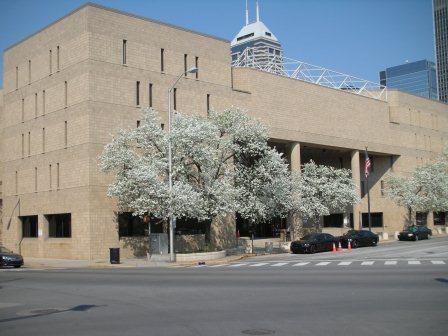
Marion County Jail is a medium security facility located in Indianapolis, Marion County, Indiana. Established in 1965, this Indianapolis Indiana correctional facility operates under the Indiana Department of Corrections and is led by Warden Michael A. Wolley. The facility has a capacity of 778 inmates and houses male offenders. Situated at 40 South Alabama Street in downtown Indianapolis, the jail serves as a critical component of the Marion County criminal justice system, processing and housing individuals awaiting trial or serving shorter sentences.
Families seeking information about loved ones incarcerated at Marion County Jail can perform a Marion County Jail inmate search through official channels. Relatives traveling to Indianapolis can access resources to schedule visits, learn about Marion County Jail visiting hours, and send money to Marion County Jail commissary accounts. Families can also search criminal records to verify incarceration status and obtain Marion County Jail arrest records for booking details.
Marion County Jail stands as one of the largest detention facilities in central Indiana, strategically located in the heart of downtown Indianapolis. With a capacity of 778 inmates, the facility plays a vital role in processing arrests and detentions for Indiana's most populous county. Since its establishment in 1965, Marion County Jail has adapted to serve the evolving needs of the Indianapolis metropolitan area's criminal justice system. The facility's downtown location at 40 South Alabama Street positions it near the Marion County courts and prosecutor's office, facilitating efficient transportation for court appearances and legal proceedings. This proximity streamlines the judicial process for inmates while providing convenient access for attorneys and family members visiting from throughout Marion County and surrounding Indiana communities.
Marion County Jail houses a male inmate population representing diverse demographics from Indianapolis and surrounding Marion County areas. The facility primarily holds individuals awaiting trial on charges ranging from misdemeanors to serious felonies, as well as those serving shorter sentences for county-level offenses. Pre-trial detainees constitute a significant portion of the population, reflecting the jail's role in the local criminal justice process. Common offense types include property crimes, drug-related charges, assault, theft, and violations of probation or parole conditions. The medium security classification allows the facility to manage inmates with varying custody levels while maintaining appropriate supervision. Special populations within Marion County Jail include individuals requiring medical monitoring, mental health services, and protective custody arrangements for vulnerable inmates who cannot safely interact with the general population.
Marion County Jail provides housing appropriate for its medium security classification, with inmates assigned to units based on custody level, behavioral history, and specific needs. The facility utilizes a combination of dormitory-style housing and individual cells, with housing assignments determined by classification assessments conducted upon intake. Inmates receive three meals daily prepared in the facility's kitchen, with menus designed to meet basic nutritional standards and accommodate medical dietary restrictions. Recreation opportunities include scheduled yard time and access to dayrooms, though availability varies by housing unit and security considerations. Medical care is provided through on-site nursing staff and contracted physicians who conduct sick call and manage chronic health conditions. Mental health services address the needs of inmates experiencing psychological distress or managing pre-existing mental health diagnoses. The facility maintains a formal grievance process allowing inmates to address concerns about conditions, treatment, or policy violations through written submissions reviewed by administrative staff. Daily routines are structured around count times, meal service, and programming schedules that maintain institutional security while providing limited movement within the facility.
Marion County Jail offers educational and rehabilitative programs designed to address the needs of its inmate population during incarceration. Educational opportunities include GED preparation classes for inmates lacking high school diplomas, providing foundational skills for employment after release. Substance abuse treatment programs address addiction issues common among the Marion County inmate population, offering group counseling and cognitive behavioral interventions to support recovery. Faith-based programming provides spiritual support through religious services and volunteer-led Bible studies for inmates seeking connection with religious communities. The facility also offers cognitive behavioral programs targeting criminal thinking patterns and decision-making skills that contribute to offending behavior. Re-entry planning services help inmates preparing for release to develop employment plans, secure housing, and connect with community resources in Indianapolis and Marion County. Program availability may vary based on funding, staffing levels, and security considerations, with priority often given to sentenced inmates serving longer stays at the facility.
Work assignments at Marion County Jail provide inmates with structured activity and contribute to facility operations. Common job assignments include kitchen duties such as food preparation and dishwashing, laundry services handling facility linens and inmate clothing, janitorial maintenance of housing units and common areas, and general facility maintenance tasks. These work assignments help inmates develop basic employment skills and work habits while reducing operational costs for the facility. Inmates selected for work details typically demonstrate good behavior and pose minimal security risks. Participation in work programs may earn inmates credits toward sentence reduction or commissary privileges, though specific incentive structures vary based on facility policy and custody status. Medium security classification allows for supervised work assignments both within housing units and in designated work areas throughout the Marion County Jail facility.
Marion County Jail was established in 1965 to serve the growing incarceration needs of Indianapolis and Marion County as Indiana's capital city expanded during the post-war era. The facility was constructed to modernize detention capabilities and replace older, inadequate jail infrastructure that could no longer accommodate the county's population growth. Over nearly six decades of operation, Marion County Jail has undergone various operational changes and administrative improvements to address evolving correctional standards and population demands. The facility has remained at 40 South Alabama Street in downtown Indianapolis, maintaining its central role in the Marion County criminal justice system. Throughout its history, the jail has adapted to changing philosophies in corrections, incorporating classification systems, programming opportunities, and medical services that reflect contemporary correctional practices. Today, Marion County Jail continues to operate under the Indiana Department of Corrections, serving as a critical detention and short-term incarceration facility for male offenders in Marion County.
Marion County Jail visiting hours are subject to specific scheduling and registration requirements designed to maintain facility security while allowing family contact. Visitors must present approved government-issued photo identification such as a driver's license or state ID card upon arrival. The facility enforces a strict dress code prohibiting revealing clothing, gang-related attire, and clothing colors that resemble inmate uniforms. Prospective visitors should complete any required registration processes and ensure they appear on the inmate's approved visitor list before traveling to the facility. You can search public records to confirm current housing status before scheduling a visit. Entry screening includes metal detectors and possible pat-down searches, with prohibited items secured in lockers or vehicles. Families should contact Marion County Jail directly to confirm current visiting hours, as schedules may change due to facility operations or security concerns.
Sending mail to an inmate at Marion County Jail requires proper addressing to ensure delivery. The Marion County Jail mailing address format should include the inmate's full legal name, inmate identification number, followed by Marion County Jail, 40 South Alabama Street, Indianapolis, IN 46204. All incoming mail is subject to inspection for security purposes, with prohibited items confiscated. Books and magazines must typically be shipped directly from approved vendors or publishers rather than sent by individuals. Inmates can receive phone calls through prepaid phone accounts that families establish with the facility's contracted phone service provider. You can also look up arrest records to find booking information and inmate ID numbers. Some facilities offer email messaging or video visitation services as alternative communication methods for families unable to visit in person.
Sponsored and Powered by our Partner TruthFinder
Quick Facts
Should I Be Concerned? — Family Guide
Marion County Jail operates at Medium security with a zero staff assault record, indicating a controlled and monitored environment. Visitors should expect standard security procedures including ID verification and bag checks. For a safe visit, arrive during official visiting hours, follow all facility rules, and contact the jail ahead of time to confirm current visiting policies and any changes to procedures.
Neighborhood & Getting There
Marion County Jail is located in Indianapolis, Indiana, in the heart of Indiana's largest city. The facility is situated in an urban downtown area. Indianapolis is a major metropolitan center in central Indiana. Families visiting should plan to navigate urban Indianapolis streets and parking; lodging and dining options are available throughout the city. For current directions, parking information, and nearby accommodations, families should check online maps and contact the jail directly for specific guidance.