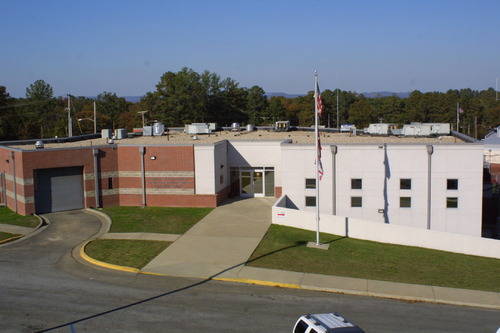
Cherokee County Detention Center
County Jail | Cherokee County — Alabama | Cherokee County Sheriff’s Office
Cherokee County Detention Center is a medium security facility located at 110 Cedar Bluff Road in Centre, Alabama. Opened in 1996, this detention center operates under the Alabama Department of Corrections and houses male detainees with a maximum capacity of 114 inmates. The facility serves Cherokee County in the northeast region of Alabama, providing secure detention for individuals awaiting trial and those serving shorter sentences.
Families seeking information about detainees at Cherokee County Detention Center can conduct inmate searches, access arrest records, and learn about visitation procedures. The facility provides options for sending money to inmates, making phone contact, and scheduling visits to maintain family connections during incarceration.
Cherokee County Detention Center serves a predominantly rural community in northeast Alabama's Appalachian foothills, positioned strategically near the Weiss Lake recreational area. Unlike larger urban facilities in Alabama, this 114-bed detention center operates with a more localized focus, handling detainees from Cherokee County's small towns and unincorporated areas. The facility's location on Cedar Bluff Road provides accessibility for families traveling from surrounding communities including Cedar Bluff, Gaylesville, and Spring Garden. Its medium security classification allows for somewhat less restrictive housing compared to maximum security prisons while maintaining appropriate supervision for the pre-trial and sentenced population it serves.
Cherokee County Detention Center primarily houses adult male detainees classified as medium security risks. The population consists of both pre-trial detainees awaiting court proceedings in Cherokee County Circuit Court and sentenced inmates serving county-level sentences typically under one year. Offense types range from misdemeanor violations and traffic offenses to felony charges including property crimes, drug-related offenses, and violent crimes. The facility occasionally houses state inmates awaiting transfer to Alabama Department of Corrections facilities. Given the rural nature of Cherokee County, the population reflects typical offenses seen in smaller Alabama communities, with a notable percentage related to substance abuse issues. The relatively small capacity of 114 beds means the population remains stable with less turnover than larger metropolitan detention centers.
Cherokee County Detention Center utilizes dormitory-style and cell block housing configurations typical of medium security facilities built in the mid-1990s. Detainees are classified and assigned housing based on security level, offense type, and behavioral history. The facility provides three meals daily prepared according to Alabama Department of Corrections nutritional standards. Recreation opportunities include scheduled outdoor time in designated yard areas and indoor common spaces, though availability depends on security considerations and facility operations. Medical services are provided through contracted healthcare providers who address routine medical needs, medication management, and emergency situations requiring outside hospital transport. Mental health services include screening and crisis intervention, with referrals to specialized providers when necessary. Detainees may file grievances through established procedures addressing concerns about conditions, treatment, or facility operations. The facility maintains climate-controlled housing units and ensures compliance with constitutional standards for detention environments.
Cherokee County Detention Center offers limited programming compared to larger state correctional facilities, reflecting its role as a county-level detention center with shorter average stays. Educational opportunities include access to GED preparation materials for detainees pursuing high school equivalency credentials. The facility provides substance abuse education programs addressing addiction issues prevalent among the inmate population, recognizing that many detainees struggle with drug or alcohol dependency. Religious services and faith-based programming are available through volunteer chaplains and local ministry groups who conduct regular services and provide spiritual counseling. Life skills classes may be offered periodically covering topics like anger management, parenting, and employment readiness. Re-entry planning assistance helps sentenced inmates prepare for release by connecting them with community resources, though the scope is limited compared to dedicated re-entry programs at state prisons.
Work assignments at Cherokee County Detention Center focus primarily on facility maintenance and operations rather than commercial production. Eligible detainees may be assigned to kitchen duties assisting with meal preparation and serving, maintaining cleanliness in dining areas. Janitorial work details handle cleaning of housing units, common areas, bathrooms, and administrative spaces throughout the facility. Laundry assignments involve processing bedding, towels, and facility linens. Outside work crews may perform grounds maintenance including landscaping, mowing, and general upkeep of the facility perimeter. These work assignments provide structure to daily routines while reducing operational costs, though participation is typically voluntary and reserved for detainees demonstrating good behavior and appropriate security classifications.
Cherokee County Detention Center opened in 1996 to address the detention needs of Cherokee County, replacing older, inadequate jail facilities that no longer met modern standards. The facility was constructed during a period when many Alabama counties upgraded their detention infrastructure to comply with federal court orders and constitutional requirements for jail conditions. Built with a capacity of 114 beds, the Centre location on Cedar Bluff Road provided centralized access for law enforcement agencies throughout the county. The mid-1990s construction incorporated design principles emphasizing direct supervision and improved classification systems. Over nearly three decades of operation, the facility has continued serving as the primary detention center for Cherokee County, housing pre-trial detainees and sentenced misdemeanants. The facility has maintained its role within the Alabama Department of Corrections framework while adapting to changing standards for detention operations, medical care, and inmate programming.
Visitation at Cherokee County Detention Center requires advance approval through the facility's visitor registration process. All visitors must be at least 18 years old or accompanied by a parent or legal guardian, and must present valid government-issued photo identification upon arrival. The facility enforces strict dress code requirements prohibiting revealing clothing, gang-related attire, and clothing resembling inmate uniforms. Visitors should expect to pass through security screening including metal detectors and possible searches of personal belongings. Visitation schedules vary and may be limited to specific days and times based on housing assignments. Contact visits may be restricted depending on inmate classification and behavior. Families should call Cherokee County Detention Center well in advance to confirm current visitation policies, scheduling procedures, and any temporary restrictions that may be in effect.
Mail sent to detainees at Cherokee County Detention Center must include the inmate's full legal name and booking number, addressed to 110 Cedar Bluff Road, Centre, AL 35960. All incoming mail undergoes inspection for contraband and prohibited items before delivery. The facility maintains restrictions on mail content, typically prohibiting cash, checks, stamps, and certain photographs. Books and magazines must be sent directly from approved vendors or publishers rather than individuals. Detainees can make outgoing phone calls through the facility's phone system, which requires families to establish prepaid accounts with the contracted phone service provider. Phone rates and policies vary, so families should inquire about current options and costs for maintaining contact.
Sponsored and Powered by our Partner TruthFinder
Quick Facts
Should I Be Concerned? — Family Guide
Cherokee County Detention Center maintains a medium-security classification with an excellent safety record—zero staff assaults reflect professional operations and effective security practices. While current occupancy levels are unknown, the facility's established protocols and management since 1996 support controlled visitation environments. Families visiting should plan ahead, verify inmate location before traveling, and follow all facility rules to ensure smooth visits and maintain facility security standards.
Neighborhood & Getting There
Centre, Alabama is located in northeast Alabama's Cherokee County, approximately 90 miles northeast of Birmingham and 45 minutes south of the Georgia state line. The facility sits on Cedar Bluff Road with access to US Highway 411, a major regional corridor. The rural community offers basic lodging options in Centre and nearby towns, with larger hotel selections available in Anniston (40 minutes south) and along Interstate 75. Regional highways provide straightforward driving access from across Alabama and neighboring states.