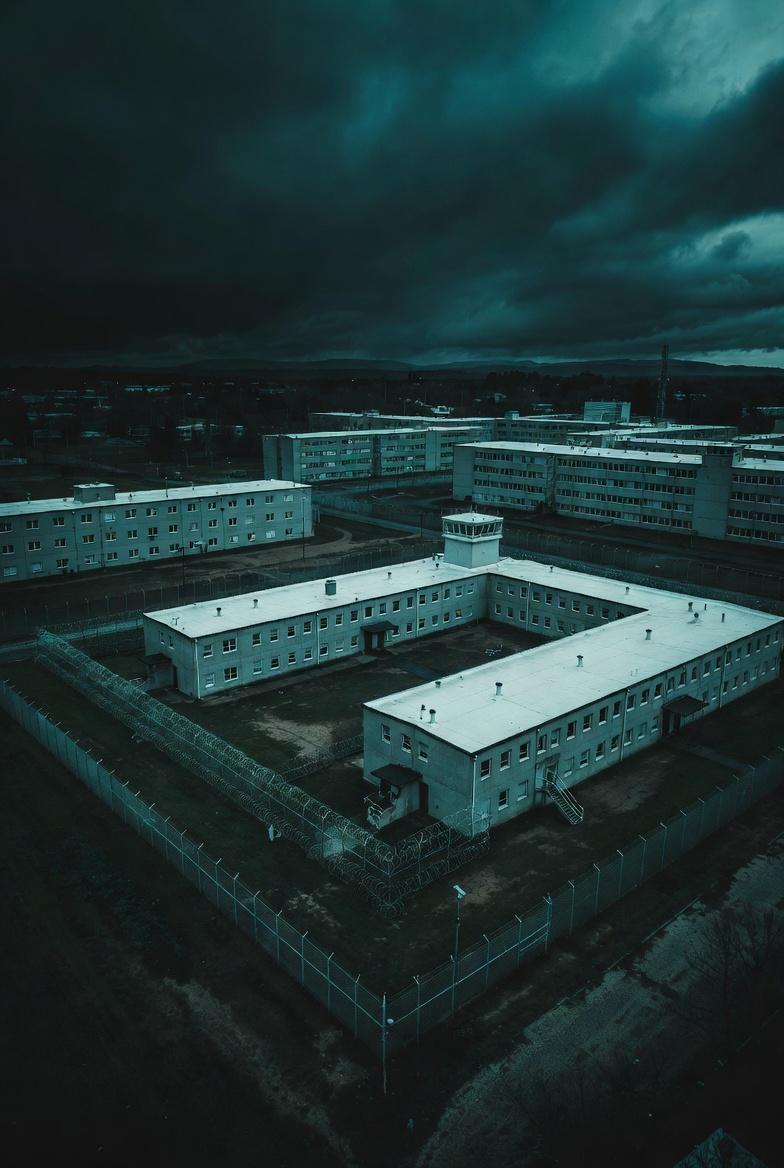
Catawba NC Juvenile Detention Center
County Jail | Burke County — North Carolina
The Catawba County Juvenile Detention Center is a secure, short-term detention facility located at 150 Government Drive, Morganton, North Carolina 28655. Despite its name referencing Catawba, this facility primarily serves Burke County and the surrounding region, providing safe and structured housing for juveniles taken into custody while they await court hearings, adjudication, or placement decisions. The facility can be reached by phone at 828-438-5435 and by fax at 828-438-5469. Families who believe their child may have been detained should call that number directly to confirm placement before making any other arrangements.
As a juvenile detention center, this facility operates under an entirely different framework than a traditional adult county jail. Youth are held here on a short-term basis — often days or weeks rather than months or years — while the juvenile court system processes their case. The guiding philosophy is rehabilitation, not punishment. Daily routines, supervision ratios, and available programs are all designed with the developmental needs of young people in mind, with the goal of connecting them to appropriate services as quickly as possible.
It is important for families to understand that locating a detained juvenile can sometimes be more challenging than finding an adult in custody. Juvenile records carry significant privacy protections under North Carolina law, meaning that the type of online inmate search tools available for adult facilities may not apply here. Families who are uncertain where their child has been taken should contact the facility directly or reach out to Burke County's Department of Juvenile Justice. You can also search public criminal records for background information on related cases or individuals involved. The Catawba County Juvenile Detention Center is one of many secure juvenile facilities that are part of the broader network of North Carolina correctional facilities overseen by the state's Division of Juvenile Justice and Delinquency Prevention.
One of the most significant distinguishing features of the Catawba County Juvenile Detention Center is its exclusive focus on serving juvenile populations. This is not a general-population county jail that houses a mix of adults and minors — it is a facility designed from the ground up to meet the specific needs of youth in custody. Supervision ratios are higher than in adult facilities, physical spaces are age-appropriate, and every aspect of daily life is structured around the developmental and emotional needs of young people rather than the punitive models common in adult corrections.
Another key distinction is the facility's integration with the juvenile court system and child-serving agencies. Detained youth at this facility are frequently assessed for mental health needs, educational gaps, substance use issues, and family instability. Case managers and juvenile court counselors work alongside detention staff to ensure that youth are connected with the right services — whether that means returning home with supports in place, being transferred to a youth development center, or entering a community-based program. This coordinated, wraparound approach sets juvenile detention apart from adult incarceration in meaningful ways.
The facility also operates under the regulatory oversight of North Carolina's Division of Juvenile Justice and Delinquency Prevention, which conducts regular inspections and sets mandatory standards for staffing, programming, and conditions of confinement. This layer of accountability helps ensure that youth held here receive consistent care regardless of the circumstances that brought them into custody.
The population at the Catawba County Juvenile Detention Center consists entirely of juveniles — generally individuals under the age of 18 — who have been taken into custody for alleged delinquent acts or undisciplined behavior under North Carolina law. These young people may be awaiting a first appearance before a juvenile court judge, a formal detention hearing, an adjudicatory hearing, or a transfer to another placement such as a youth development center or community-based program.
The facility serves Burke County as its primary jurisdiction, but may also house youth from neighboring counties on an as-needed or contractual basis when those jurisdictions lack their own secure detention capacity. The population at any given time tends to be relatively small compared to adult jails, reflecting both the facility's capacity and North Carolina's emphasis on using secure detention only when necessary — specifically, when a youth poses a danger to themselves or others, or when there is a substantial likelihood they will not appear for court.
Youth detained here represent a wide range of alleged offenses, from misdemeanor-level delinquent acts to more serious felony-level charges. In some cases, older juveniles may be subject to transfer proceedings that could move their case to adult superior court, though they remain housed in this juvenile facility during that process. The population is supervised around the clock by trained juvenile detention officers who are required to maintain the safety, dignity, and well-being of every youth in their care.
Living conditions at the Catawba County Juvenile Detention Center are governed by North Carolina's mandatory standards for juvenile detention facilities, established and enforced by the Division of Juvenile Justice and Delinquency Prevention. These standards cover everything from staffing ratios and sleeping arrangements to nutrition, medical care, and the physical environment. Youth are housed in a structured, secure setting that includes individual or shared sleeping quarters, common areas for meals and supervised activities, and dedicated spaces for education and programming.
Every youth detained at the facility is provided with meals, appropriate clothing, hygiene items, and access to medical and mental health care throughout their stay. Mental health screenings are typically conducted shortly after intake to identify any urgent needs, and medical staff are available to address health concerns as they arise. Youth with pre-existing medical conditions or mental health diagnoses should have those needs communicated to facility staff as early as possible so that appropriate care can be arranged without interruption.
Daily life at the facility follows a structured schedule that includes set times for meals, schooling, physical activity, programming, and personal time. This structure is intentional — consistent routines help reduce anxiety and behavioral incidents among youth in custody, and they reflect best practices in juvenile detention management. While conditions are secure by necessity, the environment is designed to be as supportive and non-traumatizing as possible, consistent with the rehabilitation-focused mission of North Carolina's juvenile justice system.
Programs at the Catawba County Juvenile Detention Center reflect North Carolina's strong emphasis on education and rehabilitation for youth in secure custody. By state law, juveniles held in secure detention for more than a short period are entitled to access educational instruction, ensuring that time in custody does not result in significant academic setbacks. Facility staff coordinate with local school systems to provide instruction aligned with each youth's grade level, individual education plan (IEP) if applicable, and academic needs — covering core subjects such as math, reading, science, and social studies.
Beyond academics, the facility typically offers structured programming designed to address the underlying factors that contributed to a young person's involvement in the justice system. This may include cognitive-behavioral skill-building activities, anger management exercises, substance use education, and life skills training. These programs are generally delivered by trained staff or contracted providers and are intended to give youth tools they can apply when they return to their communities.
Mental health and counseling services are also a critical component of programming at juvenile detention facilities in North Carolina. Youth may participate in individual or group sessions with licensed counselors, and family engagement is often encouraged as part of the therapeutic process. Physical education and recreational time are incorporated into the weekly schedule as well, supporting both physical health and emotional regulation. Families who want to understand more about the specific programs available should call the facility at 828-438-5435 for the most current information, as programming offerings can evolve over time.
The Catawba County Juvenile Detention Center was established to meet a critical and long-standing need in the region: a dedicated, purpose-built environment where juveniles taken into custody could be housed safely and separately from adult offenders. For much of the twentieth century, young people who were arrested in North Carolina faced the troubling reality of being held alongside adults in county jails, with little programming, limited oversight, and few protections. Federal standards and evolving state legislation gradually pushed counties to invest in specialized juvenile facilities that could appropriately address the unique physical, emotional, and developmental needs of youth in custody.
Burke County and the surrounding service area that this facility covers have experienced meaningful shifts in juvenile detention needs over the decades. North Carolina has been at the forefront of juvenile justice reform nationally, most notably through the Juvenile Justice Reinvestment Act of 2017, which raised the age of juvenile jurisdiction to include 16- and 17-year-olds — changes that affected detention populations across the state and required facilities like this one to adapt their capacity and programming accordingly.
The broader reform movement in North Carolina has also emphasized diversion, community-based alternatives, and early intervention, all of which have influenced how and when youth are placed in secure detention. As a result, facilities like the Catawba County Juvenile Detention Center have evolved over the years not just as holding facilities, but as the entry point into a system designed to assess youth needs and connect them to services. The history of this facility reflects that ongoing effort to balance public safety with the best interests of young people in the justice system.
No widely documented famous former inmates are associated with the Catawba County Juvenile Detention Center. As a juvenile facility, the identities of those detained here are protected by strict confidentiality laws governing juvenile records in North Carolina, which severely limit public access to information about individuals who have passed through the facility — regardless of the nature of their alleged offense. This confidentiality is a deliberate and important feature of the juvenile justice system, designed to give young people a meaningful opportunity to move forward without being permanently defined by actions taken during their youth. If you are researching the background of an individual and want to check for any adult criminal history that may have followed a juvenile record, you can search criminal records using publicly available data.
Visitation at the Catawba County Juvenile Detention Center plays an important role in supporting a detained youth's emotional well-being and maintaining family connections during what is often a frightening and disorienting experience. Research consistently shows that strong family involvement during juvenile detention reduces the likelihood of reoffending and improves outcomes after release. The facility recognizes this and works to accommodate family visits within the constraints of its operational schedule and supervision requirements.
Families — including parents, legal guardians, and other approved relatives — are generally permitted to schedule visits during designated visitation windows. Visit days and hours are set by facility administration and may vary based on staffing availability, the youth's behavior and status, or other facility needs. It is strongly recommended that families call ahead to confirm the current visitation schedule before traveling to the facility. Unscheduled visits may not be accommodated. Visitors are typically required to present valid photo identification, and individuals with certain criminal histories may be subject to restrictions. The facility can be reached at 828-438-5435 to confirm current visitation policies and to schedule a visit.
Visitors should be prepared to follow the facility's rules regarding clothing, items that may be brought in, and conduct during the visit. Youth in detention may also be eligible to receive cards and letters from approved family members, which can serve as a meaningful supplement to in-person contact. If you are supporting a detained youth and need help understanding how to navigate the system, our guide on how to send money to an inmate and related resources may also be helpful as you get oriented to the facility's processes.
Communicating with a juvenile detained at the Catawba County Juvenile Detention Center requires a bit more coordination than contacting an adult in a county jail, largely because of the structured environment and the privacy protections that surround juvenile cases. The first step for any family member is to call the facility directly at 828-438-5435 to confirm that their child is being held there and to ask about approved methods of communication. Staff can walk you through the process and let you know what options are currently available.
Phone calls are typically the most immediate form of contact and are generally available to detained youth on a scheduled basis during designated call times. Calls may be monitored or recorded by facility staff as a standard security and supervisory measure. Families should ask whether an account needs to be set up or whether calls are placed collect or through a specific telecom provider used by the facility.
Written correspondence — letters and cards — is another meaningful way to stay connected with a youth in detention. Mail sent to the facility is typically reviewed by staff before being delivered, and any prohibited content may result in the correspondence being withheld. When writing, always include the youth's full name and, if known, their case or booking number to ensure proper delivery. For broader guidance on navigating the detention system, see our resource on how to find an inmate, which covers steps families can take when a loved one has recently been taken into custody. Families can also look up an individual's arrest history using public records tools to better understand any related adult-court history that may be relevant to the case.
Sponsored and Powered by our Partner TruthFinder
Quick Facts
Should I Be Concerned? — Family Guide
The Catawba NC Juvenile Detention Center prioritizes the safety and security of visiting families through well-established protocols and professional staff oversight. All visitors must complete security screening procedures, which include identification verification and compliance with facility conduct rules. These measures create a controlled, monitored environment designed to protect visitors, detainees, and staff members alike.
Families should expect standard security procedures including personal item restrictions, bag checks, and facility orientation. The trained correctional staff maintain continuous supervision throughout visitation areas to ensure a safe and orderly environment. Visitors are required to follow all posted rules and staff instructions. These consistent security measures have proven effective in maintaining facility safety while allowing meaningful family connections during supervised visits.
Neighborhood & Getting There
The Catawba NC Juvenile Detention Center is located in Morganton, North Carolina, a small historic town in Burke County nestled in the foothills region of western North Carolina. The area offers essential services and accommodations for families visiting from out of town. Several budget-friendly hotel options are available within 10-15 minutes of the facility, including chain hotels located along Highway 70 and in downtown Morganton, with rates generally ranging from $60-$100 per night.
Morganton is approximately 60 miles northeast of Charlotte and easily accessible via I-40 and Highway 181. The town center offers basic dining options, gas stations, and convenience stores. Families traveling from longer distances may also consider nearby Hickory (20 minutes away) for additional lodging and restaurant choices. The rural setting provides a peaceful environment, though visitors should plan ahead for accommodations and services, as options are more limited than in larger metropolitan areas.